

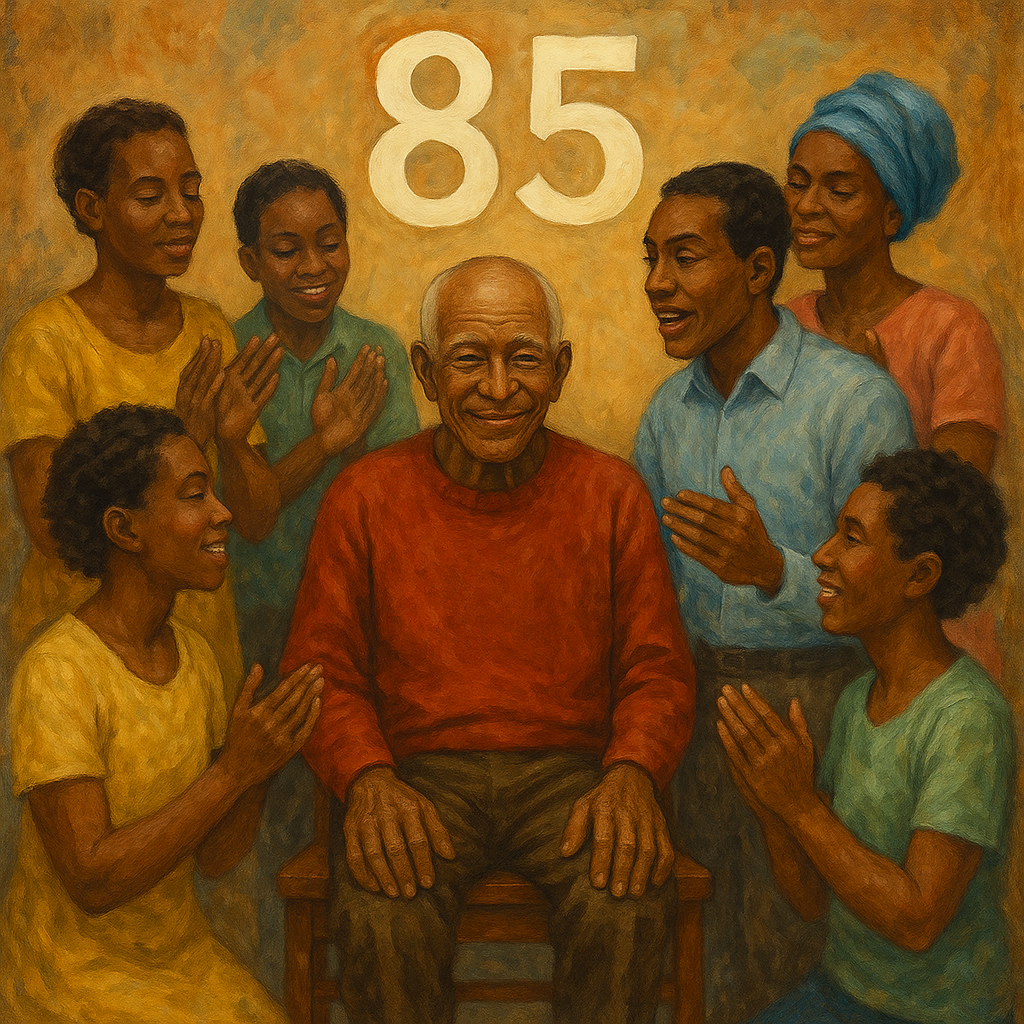
Hearty Garlands By S.O.H Afriyie
For a person who has lived as long
And one who, as well, has done much
As you
Life’s whole process blooms into stark beauty
And failures give no trite, crippling regrets
Yet. On occasion, shamed, horrid green-eyed
Envy fights benign Felicitation exclusively couched
For you
By us who won’t be left out of today’s joy
And must send you warm hearty birthday garlands
You must, you wondrous mentor of rouges like us,
Receive copious blessings today; d stay well blessed
To you
Age eighty-five is life’s smiley, cloudless dawn
It is the gainful twilight of fulfilled dreams
Hope now nods in contented concert with spent desires
Now restful Hope neither nags nor raves nor rants
At you
But your heart sits on garlanded satis shores
Looking out to sea for health delivering vessels
From the subdued heights of your lofty conquered toils
And from flights of vanquished steps, at five and eighty,
Must you
Watch us strive and beat your mahogany chest in pride
You must shake your own hands like iroko agama
March on, old boy, do, and clinch yonder untamed gain
For yon lies mop-up work and higher tasks still
By you
To be accomplished; then must you hear trumpet sound
That to a guru must blow solo musical bravo
As you give yourself a cozy comfy treat today
Reclining in reminiscing and fondling a lingering smile
Could you
A certain style of locomotion all your own recall,
Best and aptly but simply dubbed ‘poetic walking’?
Inspiration and Background
The poem, “Hearty Garlands” was penned by S.O.H. Afriyie-Vidza. The poet, a contemporary figure, focusses on celebrating life and acknowledging the beauty of lived experiences. The style of Afriyie-Vidza, based on his poem, is reflective and celebratory, engaging deeply with themes of aging, wisdom and legacy. The poem is a tribute, possible written for an elder, celebrating their life achievements and the grace that comes with advanced age. The period in which the poem was written is modern, considering its contemporary language and themes, though it retains a sense of respect and admiration often found in traditional poetry. The title “Hearty Garlands” hints a celebration and affectionate tone. “Hearty” conveys warmth, sincerity and enthusiasm, while “Garlands” are typically associated with honor, celebration, and tribute. The title sets the stage for poem that will likely offer praise, celebrate a milestone, or pay homage to someone cherished. The use of the word, “garlands” specifically indicates that the poem is metaphorically offering something of beauty and significance, often tied to festive occasions or moments or recognition.
SUBJECT MATTER
“Hearty Garlands” by S.O.H. Afriyie-Vidza is a thirty-five-line poem that celebrates the life, accomplishments, and wisdom of an individual who has reached the age of eighty-five. Thus, the poem is a panegyric poem that praises an individual who has just reached the ripe age of eighty-five. The way the celebrant is celebrated in the poem is a testament to the premium value most parts of Africa and elsewhere in the world have placed on aging for centuries. Old people are revered for their age which is evidence of their wealth of experience, wisdom, and accomplishments. A group of younger individuals had gathered to celebrate this person who has just clocked the ripe age of eighty-five, and remind him of his accomplishments and contributions to the society. One of these individuals, the speaker, begins by acknowledging the longevity and achievements of the celebrant. He notes that despite the passage of time and the inevitable failures that come with life, the celebrant has no regrets that cripple or overshadow the beauty of his existence. The speaker goes on to express his admiration for the celebrant, while he pays tribute to the aged person as a mentor figure who has guided others through life’s challenges. And by the end of the poem, the celebrant is urged to continue embracing life and its challenges even in the twilight of his years. He is advised to continue striving and pursuing new goals, regardless of the fact that he has lived past his best years. He is also implicitly told to live long enough in order to watch others strive and succeed.
Stanza Analysis
Stanza 1
The opening stanza, begins with a speaker who acknowledges the longevity and achievements of the person being celebrated. The person’s long life is seen as a journey where the entirety of existence “blooms with stark beauty” (l. 4). The addressee’s failures are depicted as experiences that do not lead to crippling regrets. The celebrant is seen as a benchmark by which others are measured. He has lived a very long life and has achieved as much. Not many people are going to reach his ripe age or have similar impact on the people around them. So, what’s a few failures beside these enviable feats for this towering figure?
Stanza 2 (lines 6 to 10)
Here, the speaker acknowledges the presence of occasional envy among those who are celebrating the person’s birthday and who must send their sincere birthday wishes to this old man who is an epitome of an age, experiences, and achievements only a few people can attain: “. . . on occasion . . ./envy fights benign Felicitation exclusively couched/For you/By us who won’t be left out of today’s joy/And must send you warm hearty birthday garlands” (l. 6-10). They are jealous of his old age and achievements because, as implied earlier, not many will have the opportunity to live to that age.
Stanza 3 (lines 11 to 15)
The speaker reveres the celebrated person as a mentor figure, someone who has guided others, including themselves, through life’s challenges: “wondrous mentor to rouges like us” (l. 11). In the process of praising the celebrant, the speaker has to downplay their behavioral conduct in a way that suggests that the celebrant has always been a beam of light that guides them to the right path especially when they are seemingly taking the wrong decisions. The stanza also pegs the celebrant’s new age as “eight-five.” It portrays “age eighty-five” (l. 14) as a time of contentment and fulfillment. It describes this age as “life’s smiley, cloudless dawn” (l. 14) and “the gainful twilight of fulfilled dreams” (l. 15). In other words, the age paints a picture of a sense of peace, satisfaction, and accomplishment that the celebrant must have grown accustomed to in the later stages of his life.
Stanza 4 (lines 16 to 20)
There is a reconciliation between the celebrated individual’s hope and his desires in the later stages of his life, as his hope now aligns harmoniously with his past aspirations: “Hope now nods in contented concert with spent desires” (l. 16). He has no cause to regret his actions and inaction. He has done the best he could do, which is why he is not bothered by the things he could not do or become. The celebrant is satisfied and at peace with himself. His heart, which is depicted as resting on “garlanded satis shores” (l. 19), is in tranquility. He now looks forward to good health and vitality in the future, and even more years of life on earth: “Looking out to sea for health delivering vessels” (l. 20).
Stanza 5 (lines 21 to 25)
Here, the speaker urges the celebrant to watch them, from the pedestal life has placed him on, as they make efforts to celebrate him and take pride in his achievements: “Watch us strive and beat your mahogany chest in pride” (l. 24). The speaker choice of “subdued heights of your lofty conquered toils” (l. 21) and “flights of vanquished steps” (l. 22) can only mean the pedestal overcoming challenges have placed the celebrant on in the process of living a long life. Similarly, the choice of “mahogany” as a modifier of chest in line 24 seems to point to the finesse, resilience, strength and longevity of the celebrant – attributes which can as well be ascribed to any mahogany products. The speaker equally encourages the celebrated individual to take pride in his own achievements like they are doing. The celebrant is expected to admire how long he has come and how much he has done. This is why the speaker says that the celebrant “must shake your own hands like iroko agama.” The comparison of this self-admiration and self-appreciation with iroko agama comes from the place of an African proverb that gives validation to appreciating one’s deserving efforts, regardless of whether everyone around one deem it fit or not to appreciate one for the efforts (see full explanation of this under the figure of speech section, specifically under allusion).
Stanza 6 (lines 26 to 30)
In this stanza, the speaker encourages the octogenarian to continue moving forward in pursuit of further “mop up work and higher tasks” (l. 27). He is advised to embrace new challenges and opportunities, so he can “clinch yonder untamed gain” (l. 26). Stanza 6 ends with the position that when the time comes, the octogenarian will hear a “trumpet sound” blown by a “guru” to cheer him for his exceptional achievements.
Stanza 7 (lines 31 – 35)
The last lines give an entitlement to the celebrant to celebrate his new attained achievements. There is an assurance of fond memories by the celebrant captured in the line, “Reclaiming in reminiscing and fondling a lingering smile”. Even in the seemingly disadvantaged part of old age, which is, unsteady walking, the lines 34 and 35, “A certain style of locomotion all your own recall, Best and aptly but simply dubbed, “poetic walking”? gives a hint of fulfillment even amidst that state. Its rhetorical nature gives an indication of pondering over fond memories even amidst any physical shortcomings as a result of the old age.
THEMES IN THE POEM
- Celebration of Aging and Wisdom
- The Role of Mentorship
- The Interplay of Envy and Felicitation
- The Continuation of Purpose in Old Age
- The Peace and Contentment of Fulfilled Desires
- The Legacy of a Well-lived Life
CREDIT TO H.K OCRAN/ LiTTROVE
Thank you so much