


SUMMARY OF DAWUNI’ S DREAM
The play is a social heroic drama with strong cultural and traditional elements, set in the Northern part of Ghana.
It follows the journey of Dawuni, a potential heir to the throne who initially refuses kingship because of his drunkenness and lack of leadership qualities such as governance and diplomacy. His brother, Azanzi, though competent, is arrogant and underestimates Dawuni as a serious contender for the Dagaani throne.
At the climax, Alheri (Dawuni’s girlfriend) sends him into hiding to train him for leadership. During this time, Azanzi and his men ambush Dawuni. In defending himself, Dawuni defeats them and transforms from a drunkard into a wise leader. The kingmakers confirm him as the rightful king. He rules alongside Queen Alheri, guided by the ancestors.
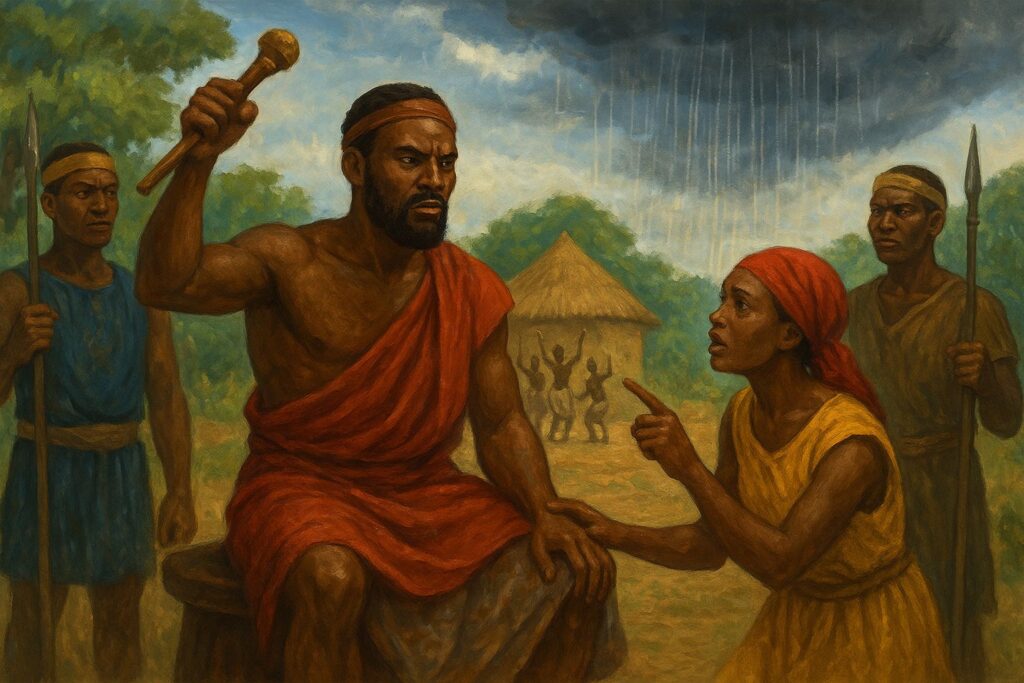
During his reign, Dawuni faces opposition from Azanzi and the challenge of a severe drought. With Alheri’s intervention, they perform a ritual rain dance, and the ancestors accept their sacrifice, bringing rainfall. They later give birth to an heir, Prince Andi, who succeeds Dawuni and rules with the combined wisdom of his father and the ancestors.
THEMES IN THE PLAY
Transformation and Redemption – Dawuni’s journey showcases the possibility of change and renewal.
Leadership and Responsibility – The play highlights the importance of wise leadership and decision-making.
Tradition and Culture – Celebrates African heritage, emphasizing honouring ancestors and customs.
Power Struggle and Ambition – The rivalry between Dawuni and Azanzi illustrates the dangers of unchecked ambition.
SETTING OF THE PLAY
The play is set in a tribal kingdom in Northern Ghana, reflecting the deep importance of culture and tradition.
Physical Setting
The Palace – Symbol of power and authority.
The Village Square – A communal gathering space, representing unity and social life.
Anfani’s Cousin’s Village – A rural setting, symbolizing peace and serenity.
It should be noted that the Cultural Setting of the play is rooted in Northern Ghanaian traditions, customs, and values.
This Highlights tribal heritage and the role of ancestor worship. Also, Social Setting
Reflects the royal hierarchy, with the king and queen at the top.In addition, the Historical Setting also depicts pre-colonial Ghana, reminiscent of tribal kingdoms. The setting has a symbolic value
as The Sacred Grove – Connection to ancestors and nature and The River – Symbol of transformation, renewal, and life.
Furthermore , the setting also establishes the atmosphere and mood of the mood of the play..
Also it shapes character development and interactions and reinforces key themes such as tradition vs. modernity, cultural identity, social responsibility, and connection to nature and ancestors.
CHARACTER ANALYSIS
Dawuni – The protagonist, who evolves from a flawed man into a wise and redeemed leader.
Alheri – Dawuni’s partner and catalyst for his transformation; she represents love, guidance, and ancestral wisdom.
Anfani – The wise elder who offers spiritual counsel and ancestral connection.
Azanzi – Dawuni’s brother, whose arrogance and ambition drive much of the conflict.
SYMBOLISM IN THE PLAY
The Rain Dance – Connection to ancestors and nature.
The Sacred Cloth – Symbol of royal heritage and responsibility.
The Throne – Represents power, leadership, and duty.
MOOD AND TONE
Mood: Shifts from despair and struggle to hope and triumph.
Tone: Inspirational and thought-provoking throughout
CREDIT TO VICTORIA KUKUA STEVENS, Dr. JEMIMA LARTELEY MENSAH,AND VERY REV. EBO EPHRAIM
I want an extract with it literary device
The plot structure
Alright. We will upload them soon