

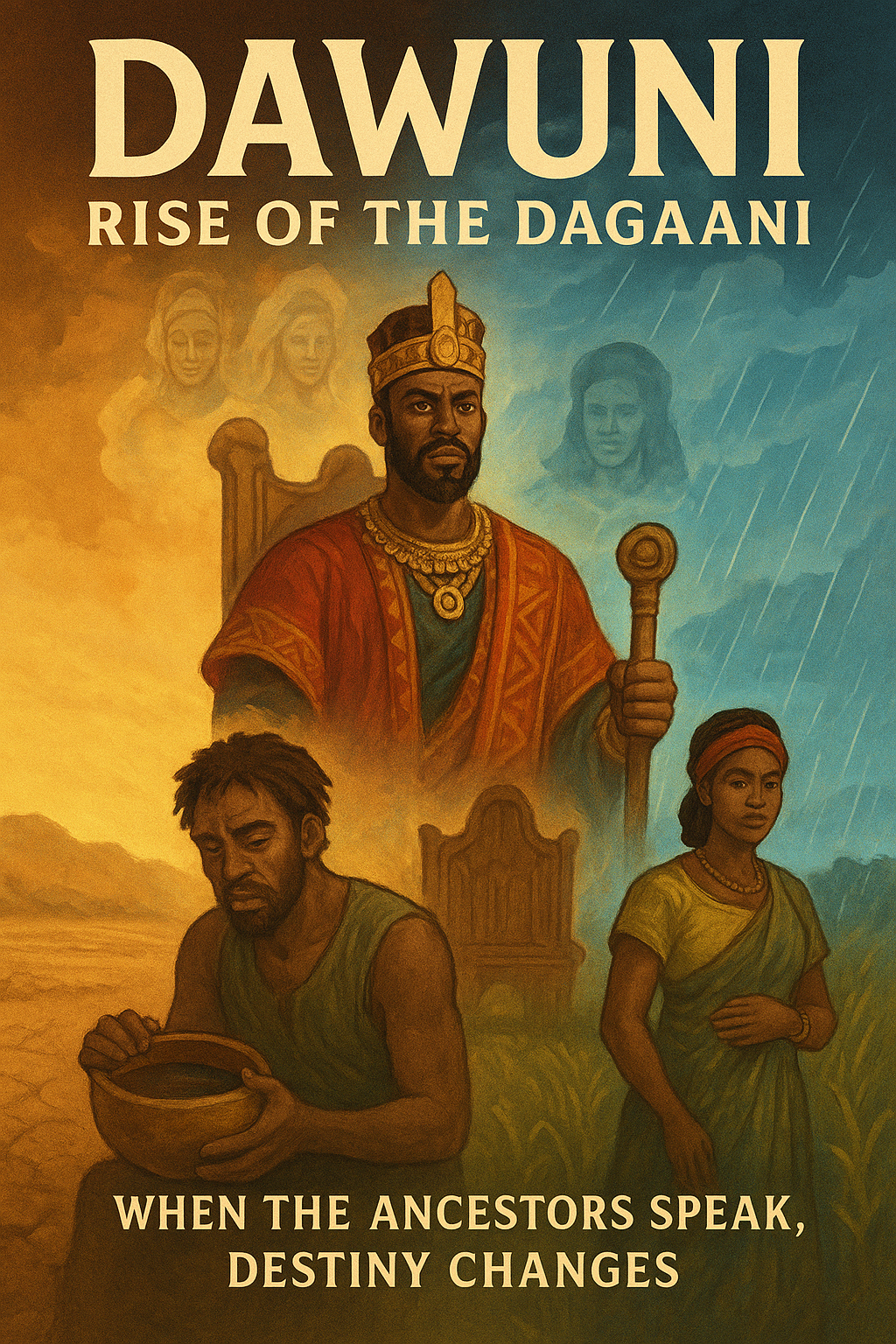
FIGURES OF SPEECH
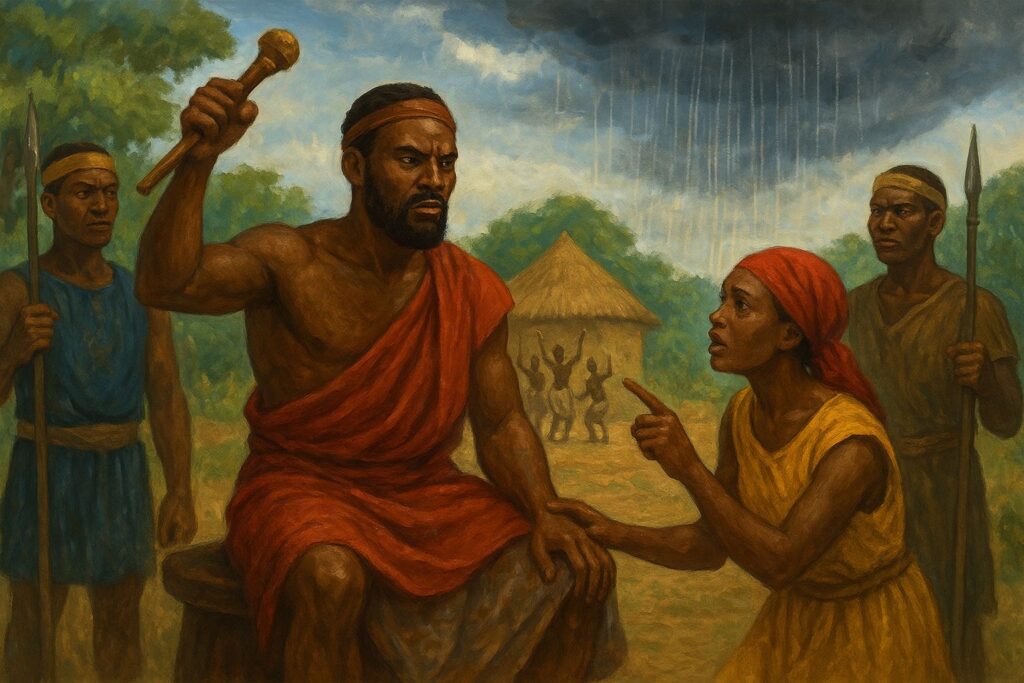
Metaphor
“Our land is reborn!” (Act 4, Scene 1).
Here, the land is compared to a living being, emphasizing renewal after drought. This metaphor highlights the theme of transformation, showing that just as Dawuni is redeemed, the land too experiences rebirth.
“The ancestors smile upon us” (Act 6, Scene 2).
The approval of the ancestors is likened to a smile, stressing the spiritual bond between the living and the dead. It affirms that Dawuni’s reign is legitimized by ancestral blessings.
Simile
“Like the great king who founded our kingdom” (Act 7, Scene 2).
Prince Andi is compared to the legendary founder, reinforcing continuity of leadership and the inheritance of wisdom. This device anchors the play within oral traditions, where rulers are often measured against mythical ancestors.
Personification
“The ancestors hear our plea” (Act 4, Scene 2).
By giving spirits human qualities, the play makes the supernatural world relatable, emphasizing that the ancestors are active participants in community affairs.
“The land cries out for help” (Act 4, Scene 1).
Here, the land is personified as suffering under drought, linking environmental distress to human neglect of cultural values.
Allusion
“The great king who founded our kingdom” (Act 7, Scene 2).
This reference evokes historical or mythical rulers, aligning Dawuni’s family line with heroic tradition. It reminds the audience that leadership is a sacred inheritance.
Imagery
“A severe drought has struck our land” (Act 4, Scene 1).
This vivid description paints a picture of barrenness, making the crisis palpable for the audience.
“The rain pours down” (Act 4, Scene 2).
The imagery here contrasts with drought, symbolizing hope, renewal, and divine acceptance of sacrifice.
Symbolism
The sacred cloth (Act 7, Scene 1) embodies ancestral heritage and continuity of leadership.
The throne (Act 5, Scene 2) represents not just power but the heavy responsibility of rulership.
Hyperbole
“Our kingdom will thrive once more!” (Act 5, Scene 1).
The exaggerated claim expresses hope and optimism, inspiring unity and resilience among the people.
Idiom
“Put the past behind us” (Act 5, Scene 1).
This common expression reflects forgiveness and the restoration of harmony after conflict.
Alliteration
“Sacred staff” (Act 7, Scene 1).
The repetition of the “s” sound makes the phrase memorable and rhythmic, reflecting the oral storytelling roots of African drama.
Irony
Azanzi’s downfall, despite his confidence (Act 3, Scene 1), demonstrates the irony of fate, showing that arrogance blinds him while humility empowers Dawuni.
Foreshadowing
Azanzi’s words, “You’ll never succeed. I’ll make sure of it” (Act 2, Scene 1), anticipate his later betrayal. This creates suspense and dramatic tension while preparing the audience for conflict.
Repetition
The recurring phrase “the ancestors” emphasizes their permanent presence in the lives of characters. It mirrors African oral tradition, where repetition is used for emphasis and memory.
Rhetorical Question
“What will the future hold?” (Act 8, Scene 1).
This device invites the audience to reflect on the destiny of the kingdom, extending the play’s message beyond the stage to the collective future of society.

CREDIT TO VICTORIA KUKUA STEVENS, Dr. JEMIMA LARTELEY MENSAH,AND VERY REV. EBO EPHRAIM
Very helpful for my Literature lesson. Grateful.
Thank you. We are glad it did
Im also a literature student and its helping me
We are glad it did
Can i get character analysis of the story “a beacon of light”
Noted. We will keep you updated