

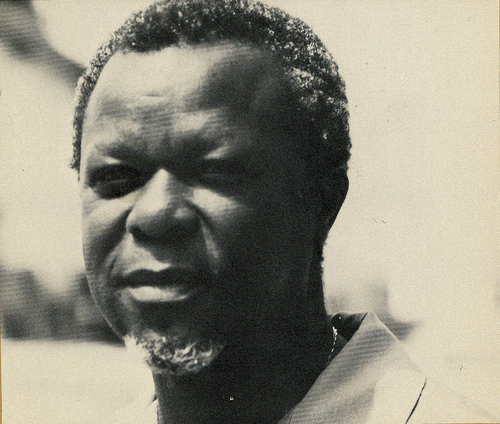
The Mesh by Kwesi Brew
We have come to the cross-roads
And I must either leave or come with you.
I lingered over the choice
But in the darkness of my doubts
You lifted the lamp of love
And I saw in your face
The road that I should take.
Subject Matter or Meaning of the Poem
The poem is a narrative poem that captures the powerful emotions of the speaker who relays that they (the speaker and a supposed lover) have arrived at a pivotal juncture in their existence as seen in the lines “We have come to the cross-roads”. The speaker also reveals that he is faced with the choice of either parting ways with their sweetheart or staying by their side. Nevertheless, it is unclear whether the individual in question is his romantic partner, acquaintance, or someone else but with mention of “You lifted the lamp of love” suggests that the person in question is the lover of the speaker.
In essence, the speaker harbors a deep affection for that person and has reached a point where he has no other choice. Similar to everyone else, he too finds himself in a state of uncertainty and pauses momentarily to contemplate. Later on, he observes that the individual in question is holding a lamp, which offers a distinct perspective of the roadways, enabling him to choose one.
“You lifted the lamp of love
And I saw in your face”
Yet again, it is ambiguous which road he chooses. We are only told that a decision was reached and the doubts or the confusion was finally settled when the supposed savior lifted the lamp of love.
THEMES IN THE POEM
Love is a powerful Force. Love is projected in the poem as a powerful tool that calms serious situations or conditions. In this poem, with the introduction of love or the “lamp of love”, the confusion and the doubts in the mind of the speaker vanishes abruptly, and then a decision is reached. This confirms that love is indeed a powerful game-changer.
Difficulty in decision-making or choice. It is also evident that making choices is somewhat very herculean. This poem reminds us that as humans sometimes we get to the “crossroads” where making a choice becomes very difficult as each choice comes with a price or a consequence. As seen in the lines
“ I lingered over the choice
But in the darkness of my doubts”
Another theme found in the poem is Ambiguity. Despite the provided clarifications and guidance about why the speaker was caught between two choices, the uncertainty around the one whom the speaker loves and the path he selects is still unclear.
Poetic Devices Used in the Poem
Alliteration: is the repetition of initial sounds in the same line. In the poem, we come across the sounds /k/,/l/ and /d/.
/k/. “We have come to the cross-roads”
/d/ in “But in the darkness of doubts”
/l/ in “You lifted the lamp of love”
Enjambment: It is defined as a poetic term for the continuation of a sentence or phrase from one line of poetry to the next. For instance
“You lifted the lamp of love
And I saw in your face
The road that I should take”
Imagery. This is used when Poets draw readers into a sensory experience. The poem shows the use of imagery such as “We have come to the cross-roads”, “I lingered over the choice” and “And I saw in your face.” This imagery appeals to our sense of sight, hence visual imagery.
Metaphor: It is a figure of speech in which the subject or object of a poem is described as resembling another object that is unrelated or different. The poem used “the lamp” and “the road” as metaphors for love. Another good metaphor is “But in the darkness of my doubts” where thinking is compared to darkness.
Assonance: Assonance is the repetition of vowel sounds in the same line, such as the sound of /ee/ in “And I must either leave or come with you”.
Symbolism: Symbolism is using symbols to signify ideas and qualities, giving them symbolic meanings that are different from the literal meanings. The poem shows the use of the lamp and roads as symbols of choice in life.
DICTION
The diction used is very simple English. The words used in the poem are associated with love and choices such as darkness, cross roads, lamp, etc.
Structure of the poem
The poem is written in Free Verse. That is to say that the poem does not follow any rhyme scheme. Again, it doesn’t conform to any metrical restrictions. Talking of the Stanzas, there are two stanzas in the poem with each having a different number of verses or lines. The first stanza addresses the confusion or the labyrinth in which the speaker was and the second stanza also addresses how the confusion was settled or decision was reached. The Inconsistency with the number of lines within the two stanzas seems to suggest the confusion of the speaker.