


A Performance Review of The Offending Corpse Staged at the Legon Drama Studio, Ghana – April 4th, 5th, and 6th, 2025
The Offending Corpse, written by Ben Okyere Asante and directed and produced by Fiifi Coleman under Fiifi Coleman Productions. It was staged as part of an academic initiative aimed at immersing first-year Theatre Arts students in the experiential aspects of drama. While many students may have previously encountered dramatic elements such as character, plot, and act through reading texts, this production brought those elements to life, offering them a first-hand experience of how performance enhances and animates the written word.
This review specifically reflects on the second night’s performance (April 5, 2025) and thus excludes commentary on the first and final nights of staging. The analysis focuses on key theatrical elements including acting, lighting, sound, costume, makeup, set design, props, audience response, and overall impact.
Plot of the play
The Offending Corpse follows the story of a young college student who befriends her senior, Peter, a newly posted teacher in her hometown. Her father warns her against the relationship, urging her to focus on her education. Ignoring his advice, she becomes pregnant. Out of fear of her father’s wrath, she attempts to terminate the pregnancy. When conventional means fail, Boadi—a close friend of Peter—suggests a traditional remedy, one he had previously used. Tragically, the medication turns out to be harmful, and Dora dies.
The horror deepens when Peter’s landlord, Agya Ntow, discovers the body in Peter’s room, alerted by the unbearable stench. Rather than report the crime, he helps Peter and Boadi bury Dora in the same room. Eventually, Boadi confides in his girlfriend, Margret, who reveals the truth to a disguised police officer posing as Peter’s uncle. In a devastating climax, Peter kills Boadi and then takes his own life, while the landlord is arrested.
Setting the Mood: The Chorus
Offending Corpse,
Offending Corpse,
Offending Corpse,
Ayɛ Offending Corpse!
This catchy and evocative chorus, from the play’s signature song by Johnson Edmundson Sam, set the atmosphere even before the first scene. Many in the audience become familiar with the song joined in, singing with excitement and anticipation. It was a lively and immersive way to start the performance.
Acting
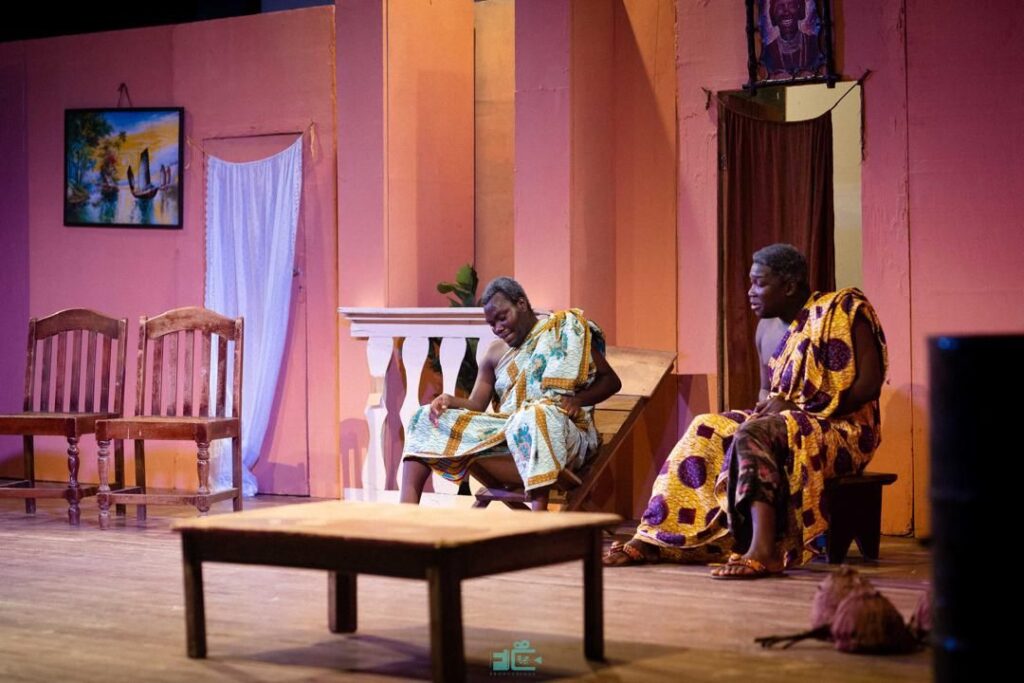
The lights dimmed, then rose to reveal Papa Asanyi’s house, the setting for the first scene. The cast members, including Kwesi, Dora, Kakraba, Papa Asanyi, and Peter, introduced the narrative with remarkable energy. Laughter and applause rippled through the audience right from the start.
The momentum continued into the second scene, set in Agya Ntow’s house, featuring Peter, Boadi, and Dora. While the energy was initially strong, the scene dragged slightly due to its length.
Scene three deepened the tension as Agya Ntow and his wife, Awo, detected the smell of Dora’s body. Interestingly, instead of reporting the incident, Agya Ntow chose to help bury the body, an unexpected plot twist that surprised and thrilled the audience.
The climax particularly was gripping, with standout performances from Agya Ntow, the undercover policeman, and Margret. Many expected Awo to reveal the secret through gossip in the market, but the narrative subverted that expectation by having Boadi confide in Margret, who then disclosed the truth.
The final scene was well-executed in terms of pacing, but lacked realism, particularly in the stabbing sequence, where the absence of blood from Boadi’s stab diminished its believability.
Notable Performances
The cast of The Offending Corpse delivered a generally commendable performance, with several actors standing out for their stage presence and emotional depth.
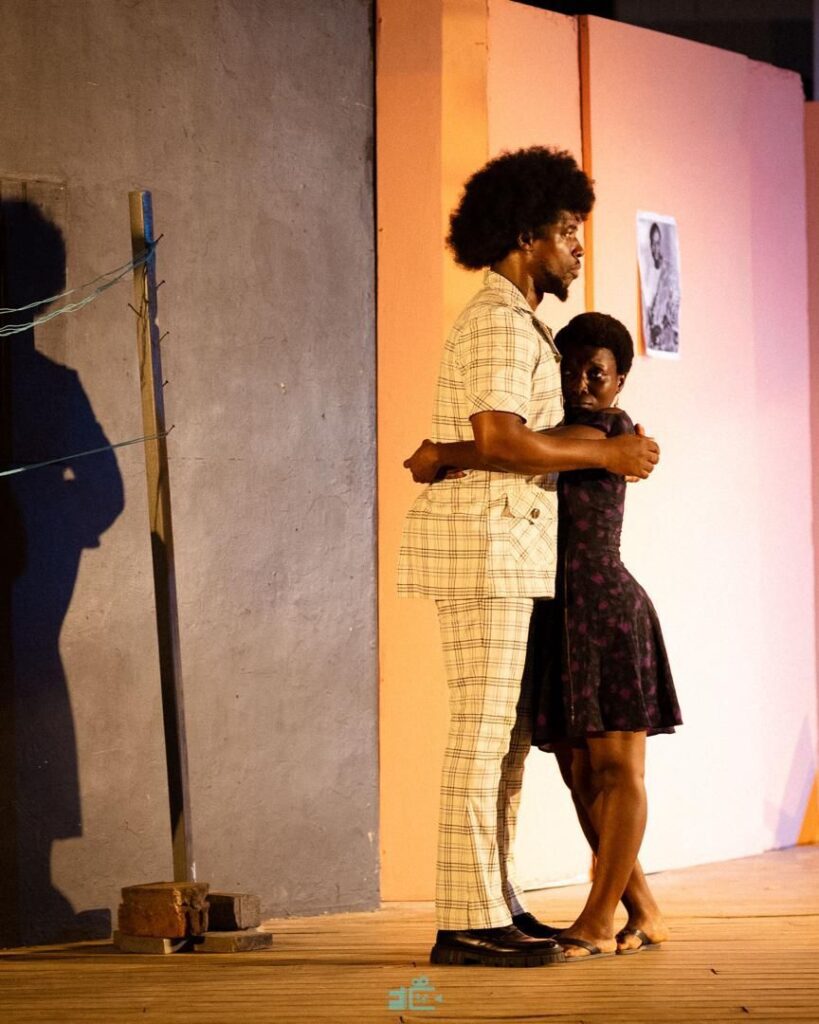
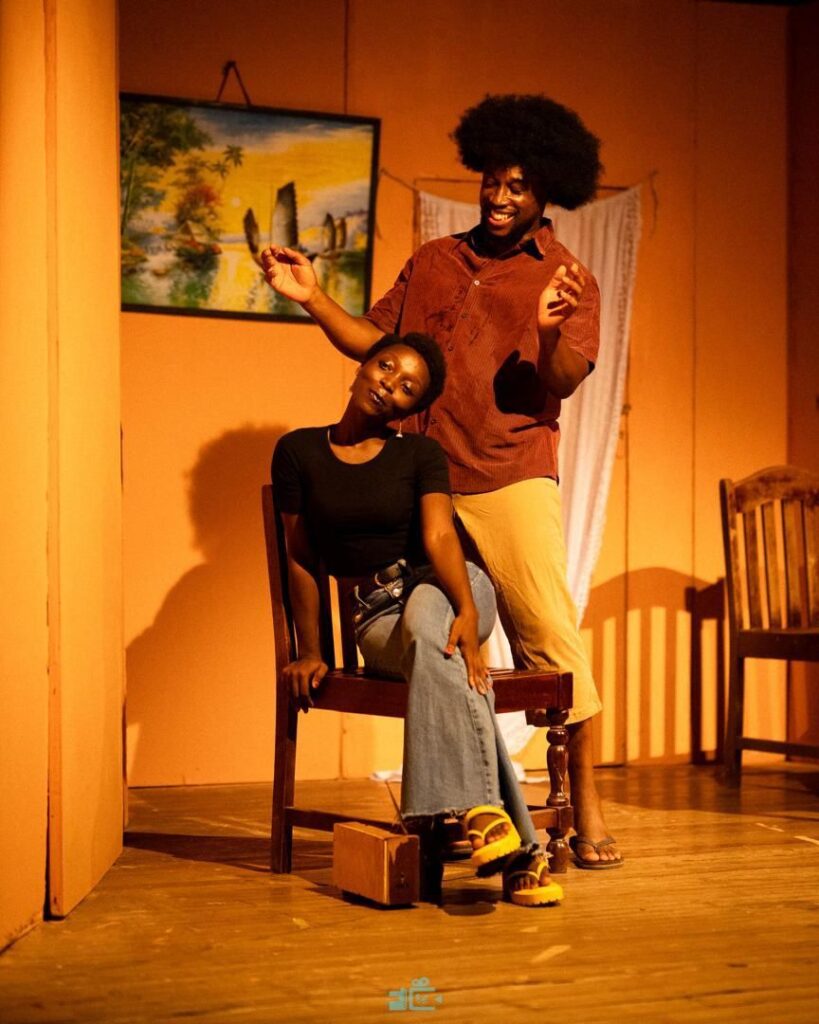
Araba Dansowaa (Dora/Esi) portrayed her role with striking believability. Her performance captured the innocence, vulnerability, and emotional struggle of a young girl caught between love and parental expectation. Her chemistry with Peter made their love story feel genuine, and her depiction of death was so lifelike it drew a quiet, reflective mood from the audience.
Nana Kwame (Kwesi) stole many hearts with his portrayal of a spirited 7-year-old boy. His exaggerated gestures, intonation, and childlike energy injected humor into the play. Though at times he leaned into overacting, especially with his constant running and loud delivery, he remained a crowd Favorite.
Fiifi Coleman (Peter) played the complex character of Dora’s lover with a calm yet expressive presence. His romantic scenes were tender, while his moments of guilt and fear were intense, though his final act lacked the emotional and visual believability needed for a strong climax.
In addition to the others,Nana Kwadwo (Papa Asanyi) gave a grounded performance as the stern, protective father. He embodied the archetypal African parent with authenticity, and his scenes resonated deeply with the audience, many of whom responded audibly to his discipline and wisdom.
Again, Maxwell Esiful (Boadi) handled his role as Peter’s close friend with confidence. His betrayal and emotional unravelling were well expressed, though his and peter’s reaction to Dora’s body when going to bury her lacked the realism expected in such a grim moment.
Also, Kwabena Okere (Agya Ntow) was charming and witty, bringing wisdom and warmth to the role of the old landlord. While his performance was strong, his makeup didn’t quite age him convincingly, blending too closely with other older male characters.
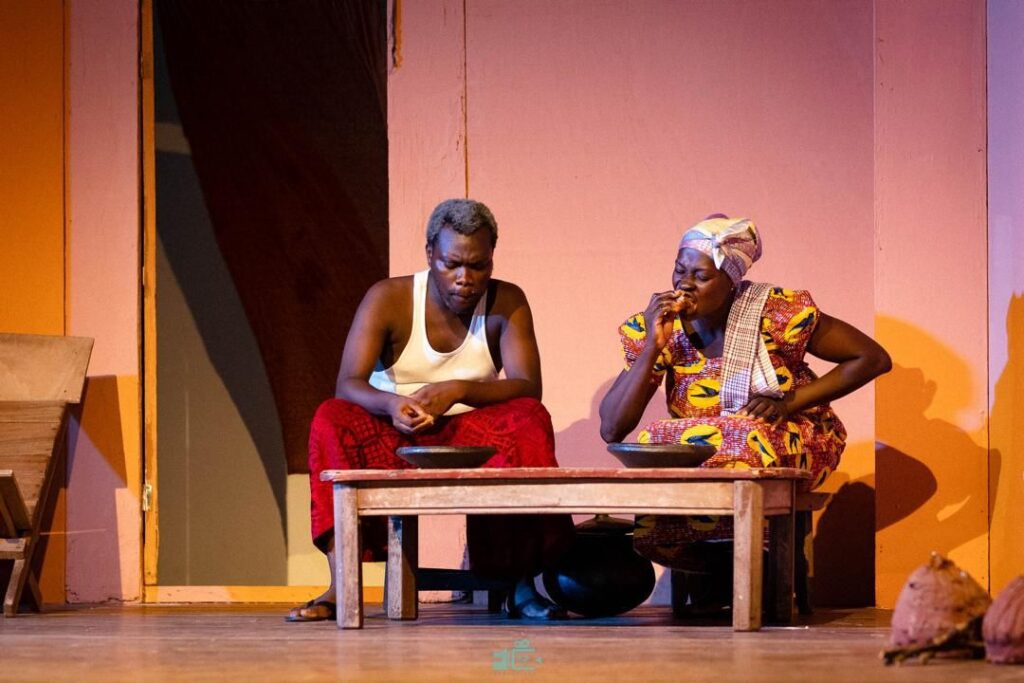
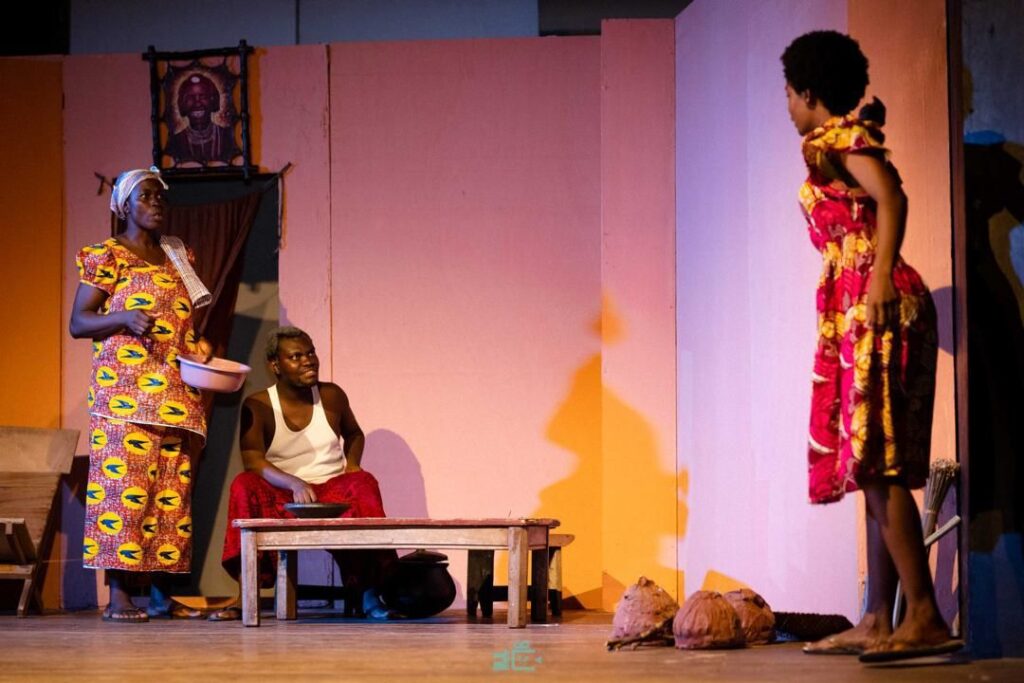
Mavis Abrokwah (Awo) and Jacqueline Ansah (Kakraba) portrayed their maternal roles with grace and relatability. They reflected the essence of Ghanaian motherhood and added a realistic domestic layer to the performance.
Finally, Ankrah Nii Arday Abass (CID/Old Man) impressed with his dual role, especially in how he shifted tone and mannerisms between characters. His revelation as a disguised officer added suspense and drew a strong reaction from the audience.
Overall, the cast worked well together, and their individual strengths contributed meaningfully to the story’s impact.
Set and Props
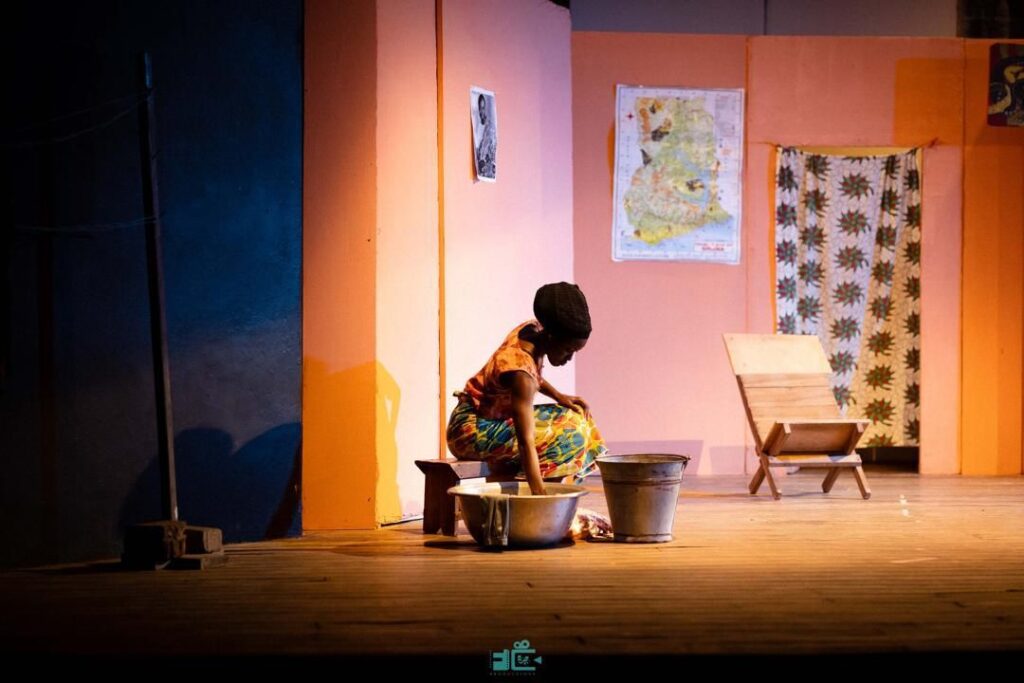
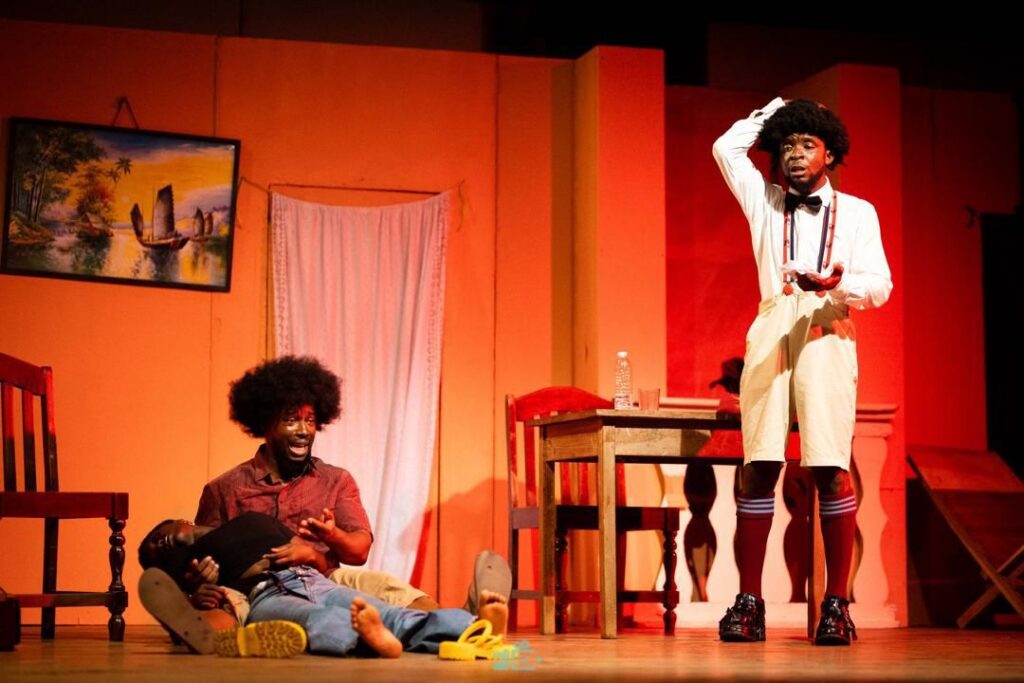
The set was simple but effective. With two main settings—Papa Asanyi’s house and Agya Ntow’s home—the production cleverly distinguished between the two using details such as different wall art, door styles, curtains, and props.
Notable props like a box iron, ironing board, basins, kitchen items, real food, and traditional tools gave the production a sense of authenticity. However, a barrel included in the set was not utilized, which felt like a missed opportunity. The burial scene stood out for its use of digging tools, which helped make that grim moment more believable.
Lighting and Sound
Kudos to Edmundson Sam and Christian Agbetsiafa for a technically sound production. The audio was crisp throughout, with no noticeable glitches. Sound effects—such as doors opening, digging, footsteps, and moments of danger—were well-timed and immersive. The lighting transitions, especially during key moments like Dora’s death and the climax, added emotional depth and suspense.
Costume and Makeup
Costumes accurately reflected each character’s lifestyle, social class, and context—whether doing chores, visiting neighbours, or preparing for a bath. However, makeup was a weak point. The use of grey powder on their heads lacked finesse and artistry.
Audience Reaction
The audience was thoroughly engaged throughout the performance. The Legon Drama Studio was filled to capacity, and reactions ranged from laughter and gasps to spontaneous applause. After the show, many left humming the chorus—an indication of the production’s emotional resonance and memorability.
Overall Rating
In conclusion, The Offending Coppse was a captivating and well-executed production. The cast, crew, and creative team delivered a performance that was both entertaining and thought-provoking. While there are areas for improvement, particularly in makeup and a few believability lapses, the production succeeded in engaging its audience and bringing the story to life.
Rating: 9/10
Bravo to Fiifi Coleman Productions for yet another impressive feat in elevating theatre!
Written by
Mabel Kwarteng
B.A English Education
University of Education, Winneba
From your detailed Reviewers (0272138148)