



A Performance Review of “Dilemma of A Ghost” Staging At The National Theatre, Ghana on the 6th to 8th June 2025.
Dilemma of A Ghost is an African play written by Ama Ata Aidoo, which is viewed in the light of cultural conflict or what is seen as the battle between tradition and modernity. The play was produced by Fiifi Coleman Productions and staged at the National Theatre The production saw the likes of great actors such as David Dontoh, Fred Amugi, Adjatey Annan, Fiifi Coleman, and many others.
Synopsis of the Play
The drama recounts the plight of a young Ghanaian graduate (Ato) whose arrival with his fiancée (Eulalie) in his hometown causes problems and puts him in a dilemma. Following Ato’s return from abroad, Family tensions arise during the family meeting to discuss matters related to his wife, Eulalie, and her inability to bear children. The family is surprised by Ato’s marriage to a woman from another land, particularly Nana, who is unhappy about Ato’s choice of life partner. During their discussions, the family members bring up various topics, including Monka’s (Ato’s sister) difficulties in finding a good husband and Ato’s refusal to marry a native. At the climax, Eulalie becomes increasingly frustrated with Ato’s refusal to discuss his wife’s fertility issues, leading her to become drunk and insult Ato’s people. In response, Ato slaps Eulalie, prompting her to leave the house and disappear. Ato searches for her everywhere, eventually seeking refuge at his mother’s doorstep. Ato unravels the truth to her mother about Eulalie’s situation: she’s not infertile and had planned to wait until the perfect moment to have a child. This revelation sparks confusion and hurt among those close to her, especially Ato, who’d mistakenly believed otherwise. Esi Kom takes a moment to reflect on how her understanding of Eulalie has changed. Meanwhile, in a twist of fate, Eulalie herself arrives right in the middle of their conversation. Moved by her distress, Esi hugs her and invites her inside, leaving Ato feeling bewildered and uncertain about what to do next.
This review will only capture the events of the first show, which was staged on Saturday, June 7th, 2025, at 4 pm. It will discuss the following theatrical elements: acting, set, props, light, sound, costume, makeup, audience reaction, and finally, score the production over 10.
Acting
The actors teamed up and pulled one another along as they told the story in the Fante setting.
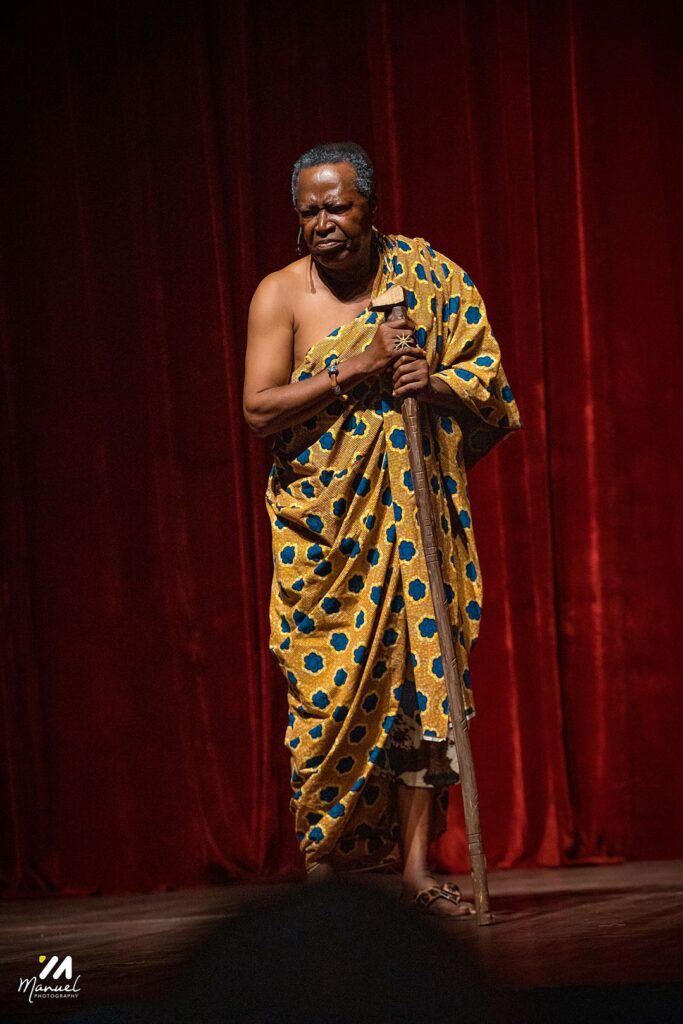
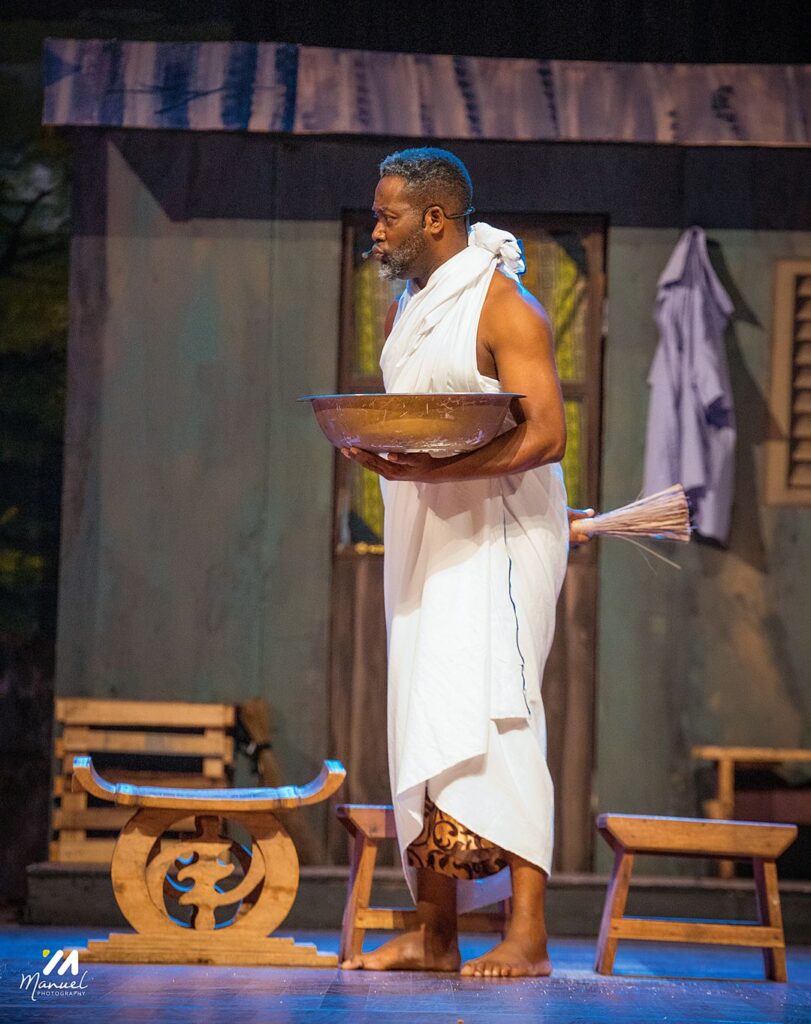
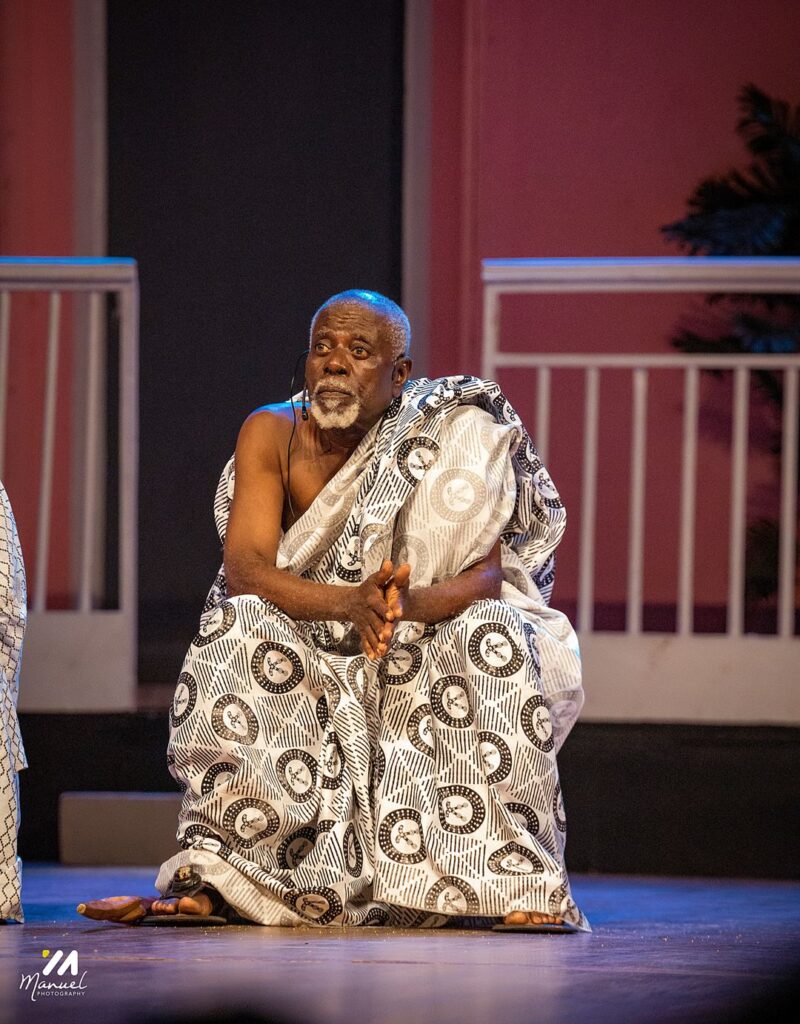
The Wayside Bird opened the play well and stole the attention of the audience. David Dontoh, who played that role, took his time to deliver the lines and made meaning to them. He made the prelude very engaging as he occasionally made eye contact with the audience when gossiping about Ato and Eulalie’s love story at the university. His intonation during the gossip was soothing to the ears. In furtherance, he occasionally leaned on his staff for support just to register his age as he told the story. He is an interesting storyteller who sets the mood rightly for the other performer to follow.
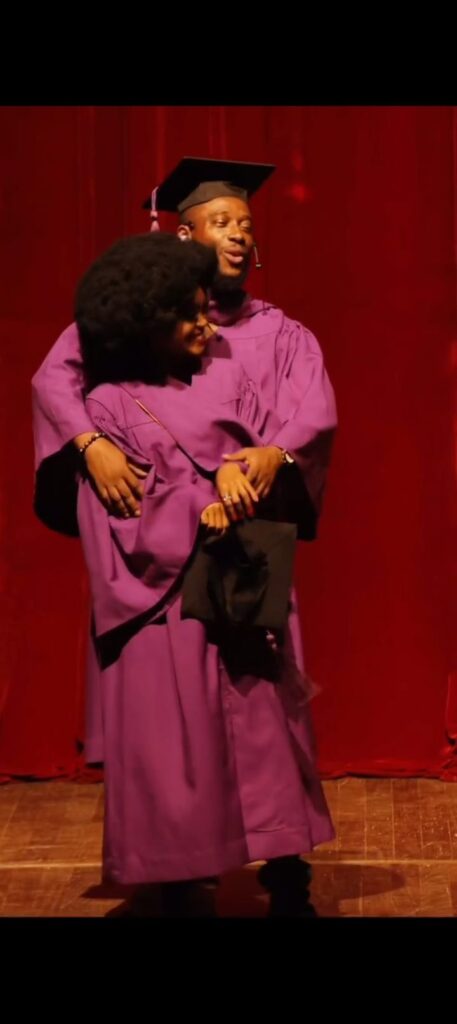
Also, Ato was interesting to watch. His physique and mannerism depicted his description as “One Scholar” in the family. Fiifif Coleman who played the role took charge of the graduation scene and his other scenes with his wife. He made the scenes very lively. His chemistry with Eulalie was just beautiful, and the excitement or the aura was equally felt by the audience. Again, His facial expressions and how he spoke at the family meeting just registered his frustration about his family`s inability to understand and accept the roots of his wife. His scene with his uncle Petu just after the dream was true to life. Not forgetting the dream itself, He made it very surreal immediately after the children had left. One must also admit that he couldn’t fully control his wife’s behaviour, which led him to slap her. A slap, which was also well orchestrated. Finally, during the falling action, his monologue about the wayside bird registered his dilemma and carried a lot of emotions.


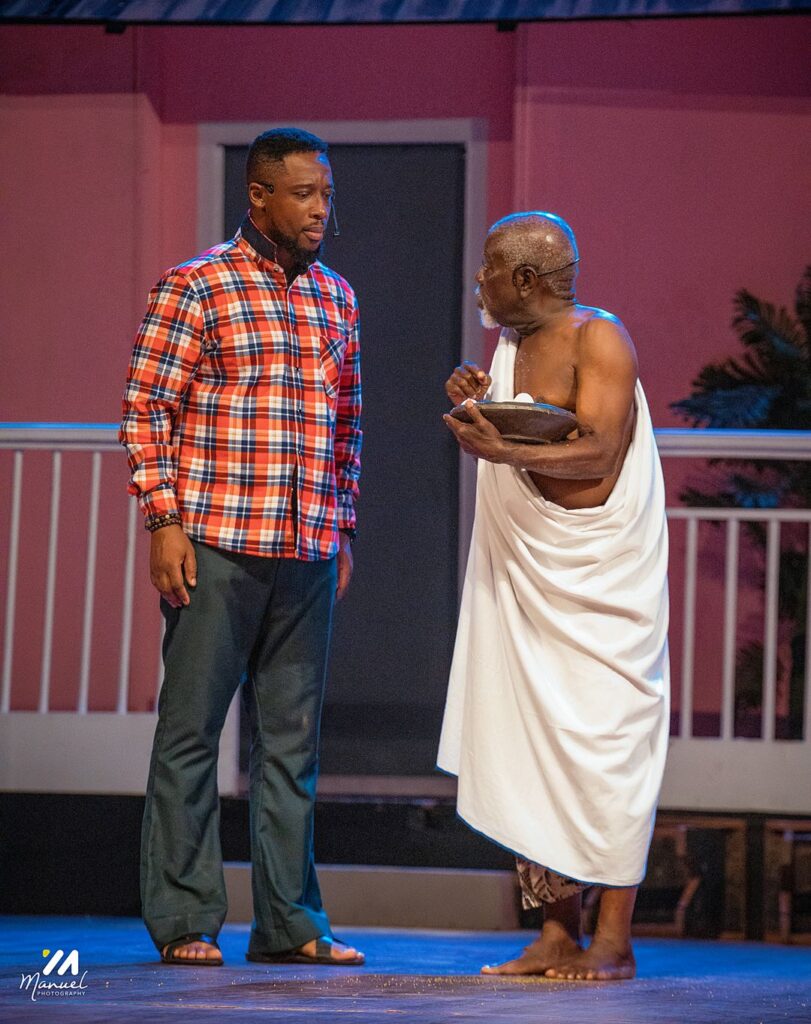
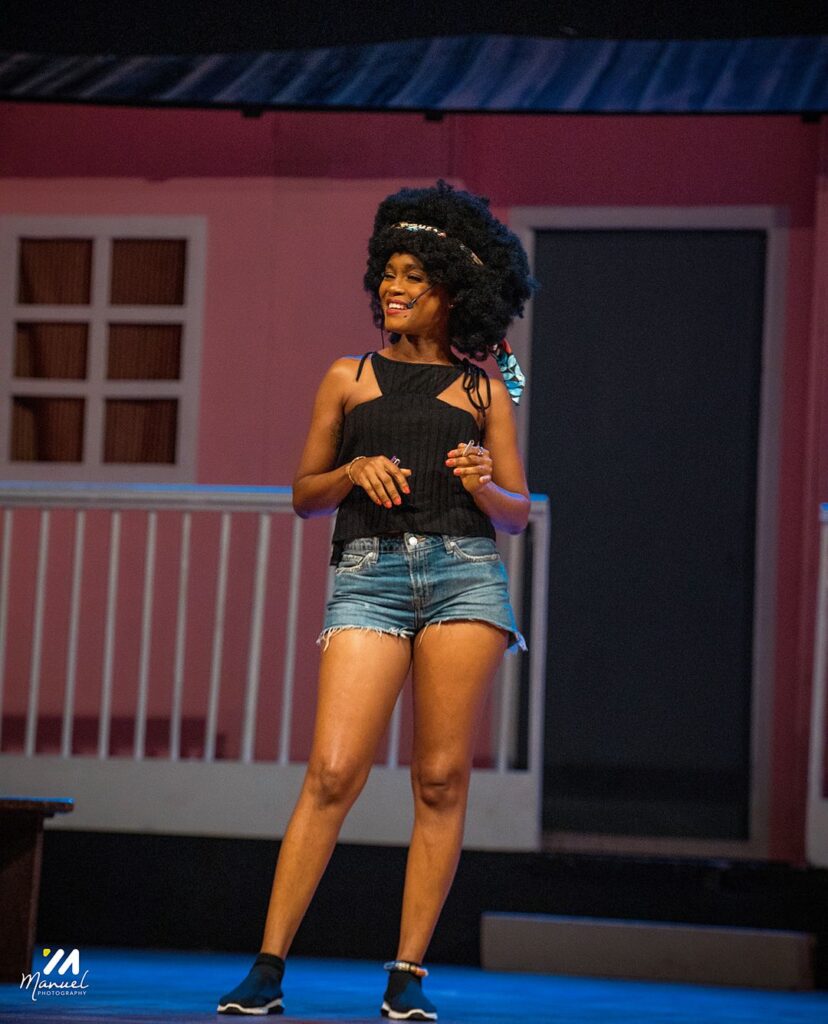
Eulalie was also delightful to watch. He nailed her role and carried a stage presence with a taste for colorful fashion. Her African American accent and mannerisms were just exceptional and made her look “Foreign” on the stage. Gadede Segbefia, who played Eulalie, made the graduation very lively. She exhibits her carefree life as she smokes cigarettes and drinks alcohol at the slightest chance. One must admit that she artistically took in the gin and smoked while delivering her dialogues. She also related well to the audience, especially during the scene that depicted her arrival in Africa. The way she switched characters to act like mother “Fiona”, her family, and her young self, back in America, deserves some applause. She did it effortlessly. Great acting there. My only issue is that she spoke somewhat faster during her character switch so I could not hear some of the words. Aside from this, her romantic scenes with Ato on the subject of “childbirth”, “witch-hunting”, as well as her depiction of her disgust for snails or what she calls “crawling things”, and the events leading to Ato Smashing her cheeks were played out beautifully. Not forgetting that melodious voice that she used to sing. “Fly me to the moon”.Her rendition of the song added to her character.


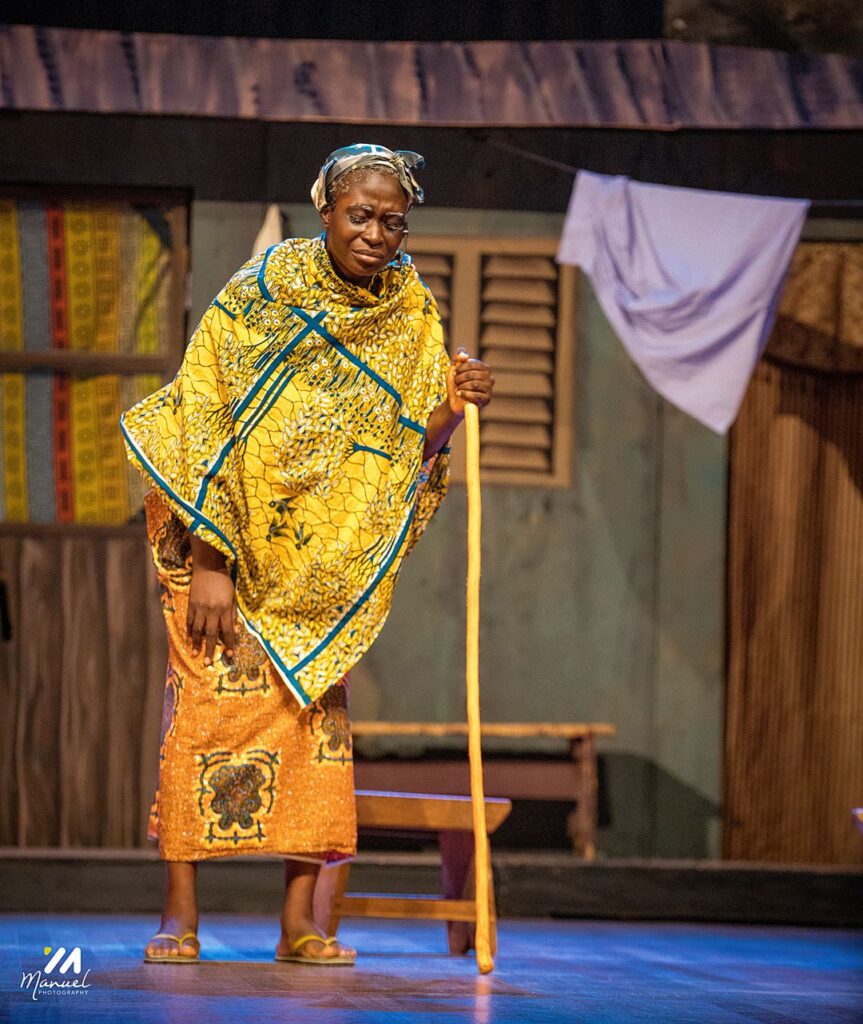
Nana was another interesting character to watch. Mavis Abrokwa, who played that character, exhibited the typical nature old woman, especially with her mild intonation and blocking confirmed that she wasn’t too strong. Again, she made meaning to her lines while she delivered them by adding gestures and nodding her head. The way she put out the question “… is your wife a slave?” while nodding added meaning to the lines. In other words, her stage presence was evident during the family meeting. In furtherance, Nana should also be commended for arousing pity in the audience when she sobbed about Ato`s choice in marriage. She made the scene very emotional and succeeded in bidding her last farewell in that monologue.
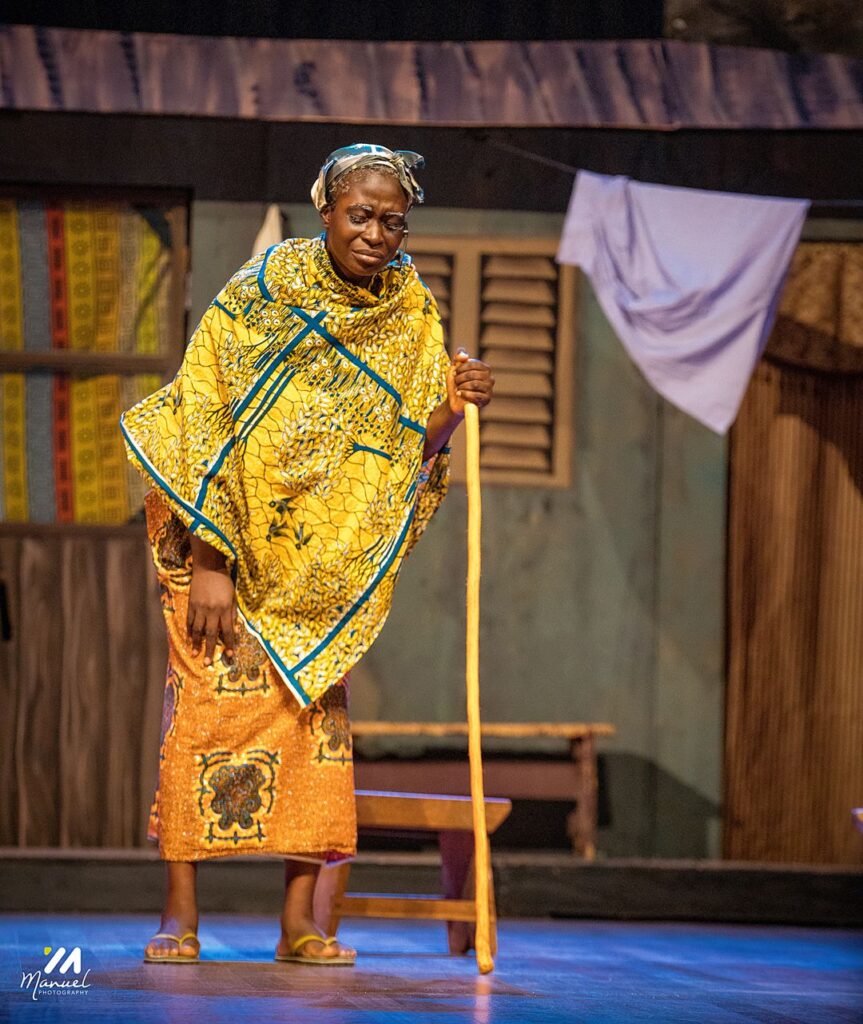
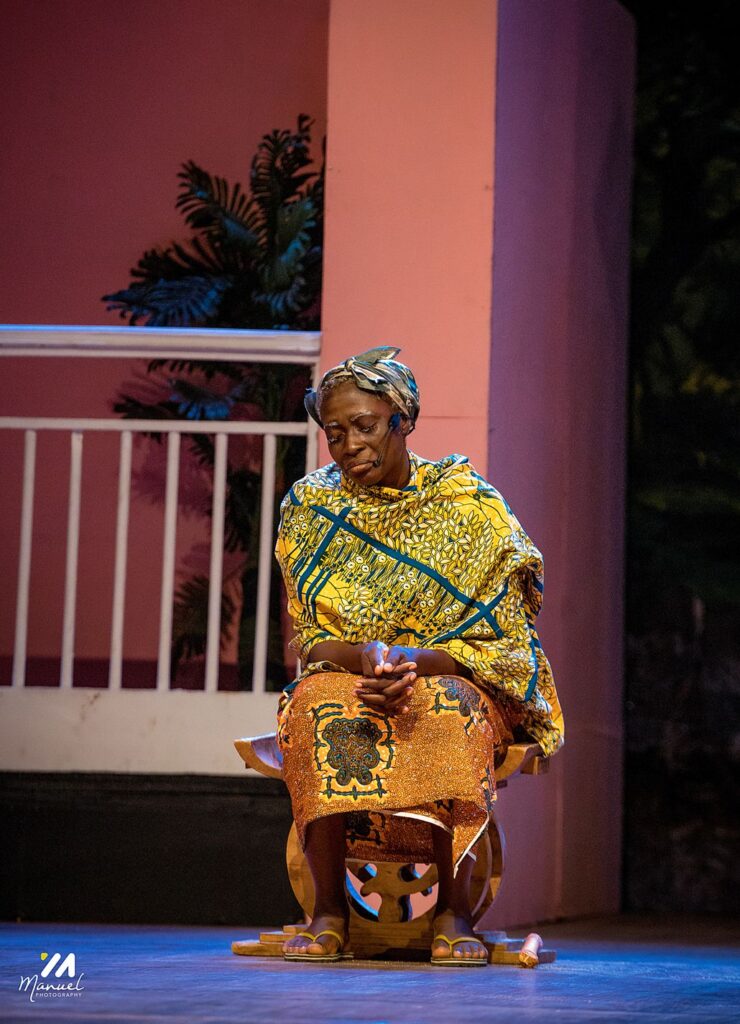
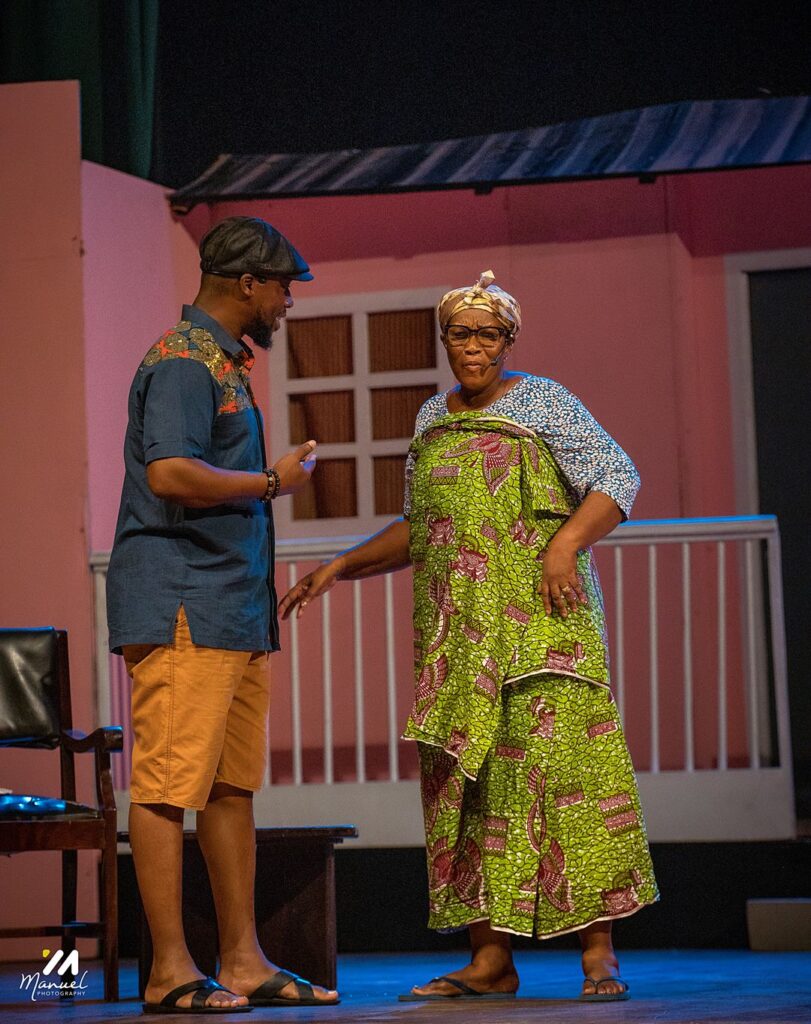
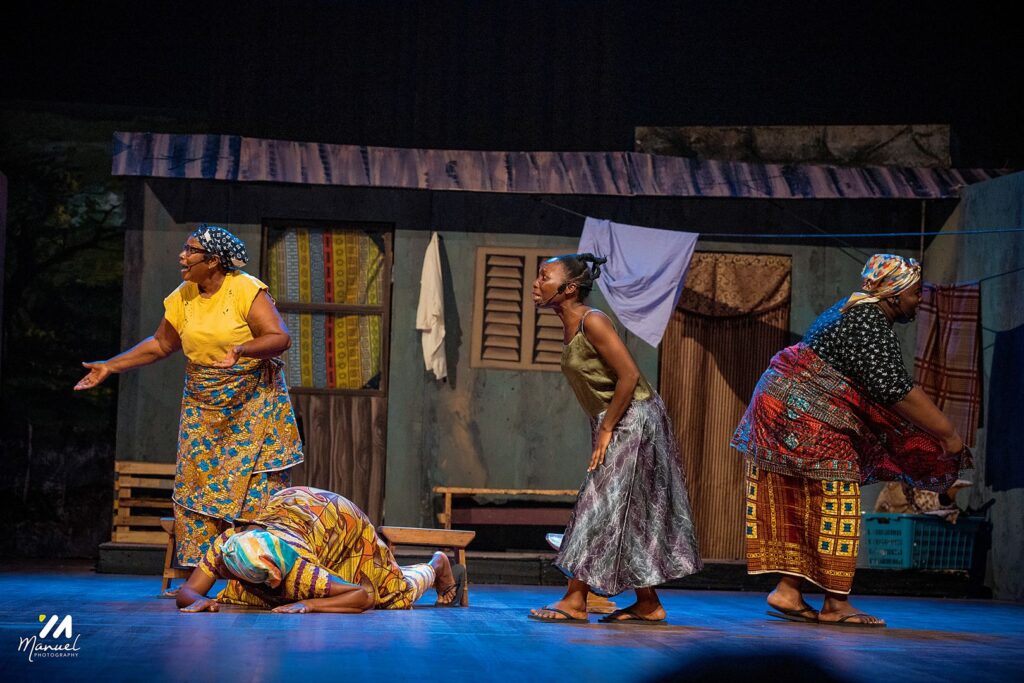
Moreover, Esi Kom (Magdalene Fynn), Mansa (Grace Adjetey), Akyere (Myna Otoo), Monka (Araba Dansowaa). These women carried the play on their shoulders and brought it to life. They welcomed their master, Ato, well. Also, through their gestures and insinuations, all displayed their ignorance about black Americans in myriad ways during the family meeting. In addition, they made the scene where the powder was sprinkled very realistic. In the case of the first family meeting, the women interspersed their dialogues with Fante dialects. For instance, Akyere used the Fante dialect to unravel the issue of “the goat,” which was reared in the name of Ato. Again, “Mewoo” (I am dead), which is used to express shock, was also used by Esi Kom to communicate her shock at Ato`s choice of wife. This dialect aided in tracing the setting of the play.

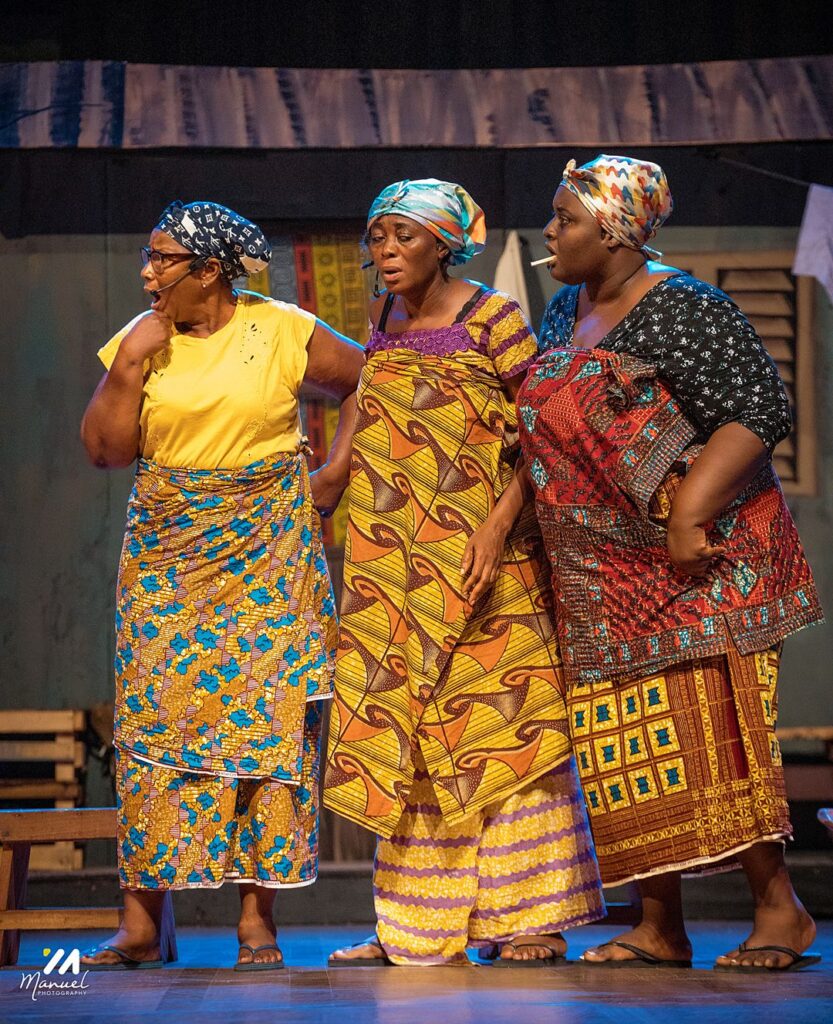
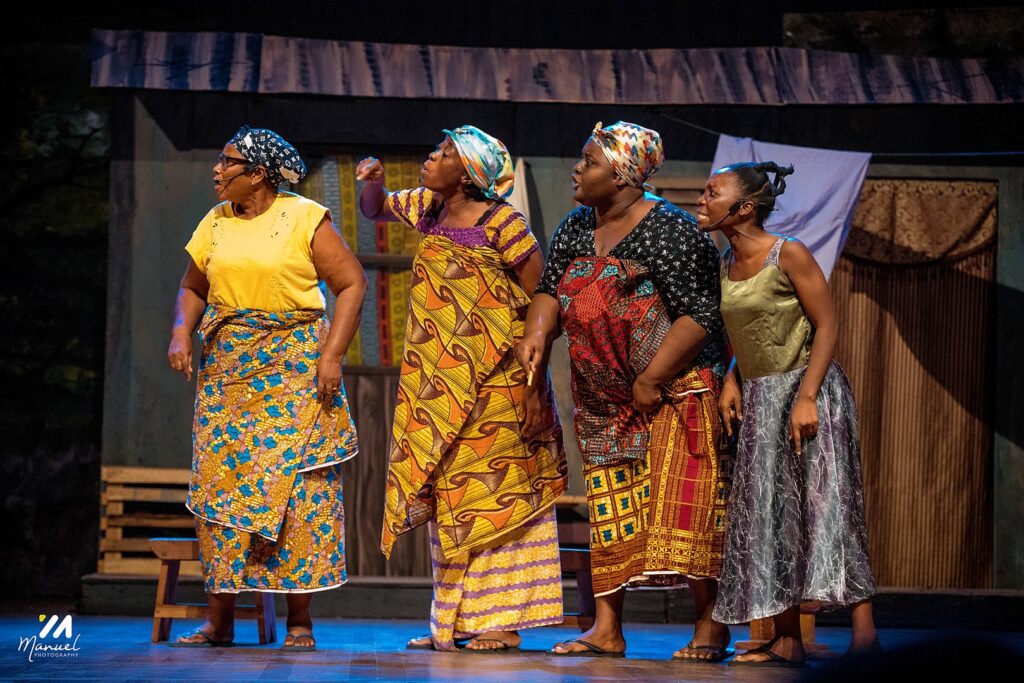
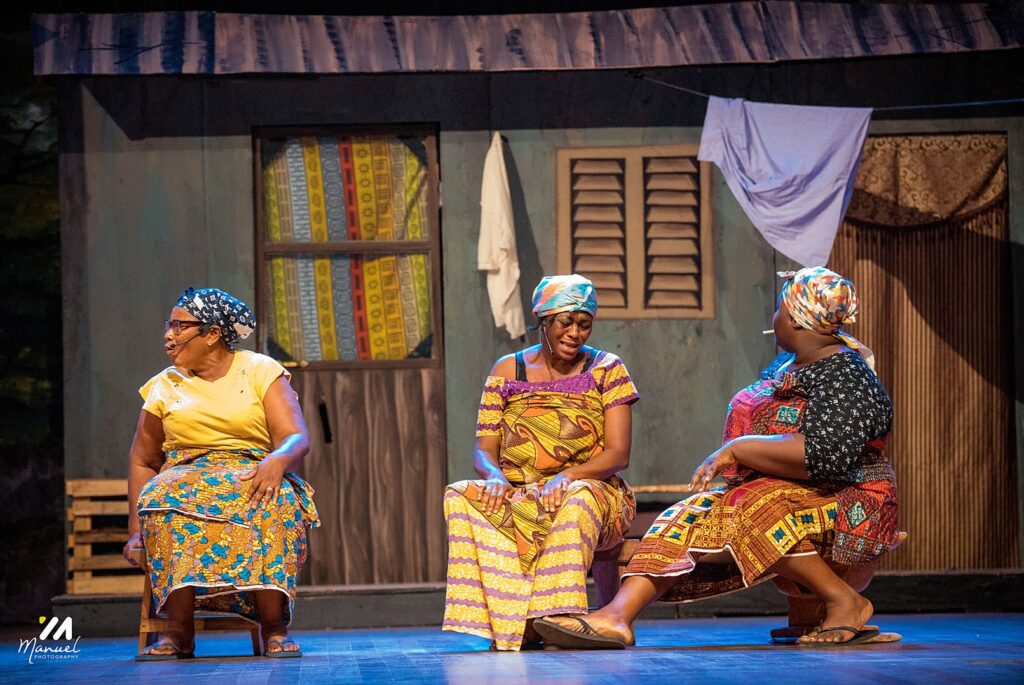
Furthermore, they (women_) reacted well and exclaimed when Ato told them that his wife has no tribe. The cacophony was very evident in their adlibing and the song that they sang to register their surprise. When they finally learnt that Ato`s wife is black, they exaggerated their reactions, which served as a comic relief amidst the tension. Also, during the scene where the ritual was done, Mansa and Akyere made the scene energetic. Mansa particularly limped on her leg as she exited furiously to address her discomfort, while Akyere`s gestures showed she doesn’t approve of Eulalie.
As for Monka, her relationship with Ato reflected a bother- sister relationship. The way she hugged Ato made the audience believe that she had missed him. Araba Dansowaa wore a great facial expression when she first heard the name of Ato`s wife. The way she struggled to “Urarie” and later exclaimed, “Some names are scary,” was very comic and got the audience laughing. Her relationship with Esi Kom was great, especially in the scene where she informed Esi Kom that Ato had thrown away the snails. My only challenge with her was that some of her gestures made her look like a child.
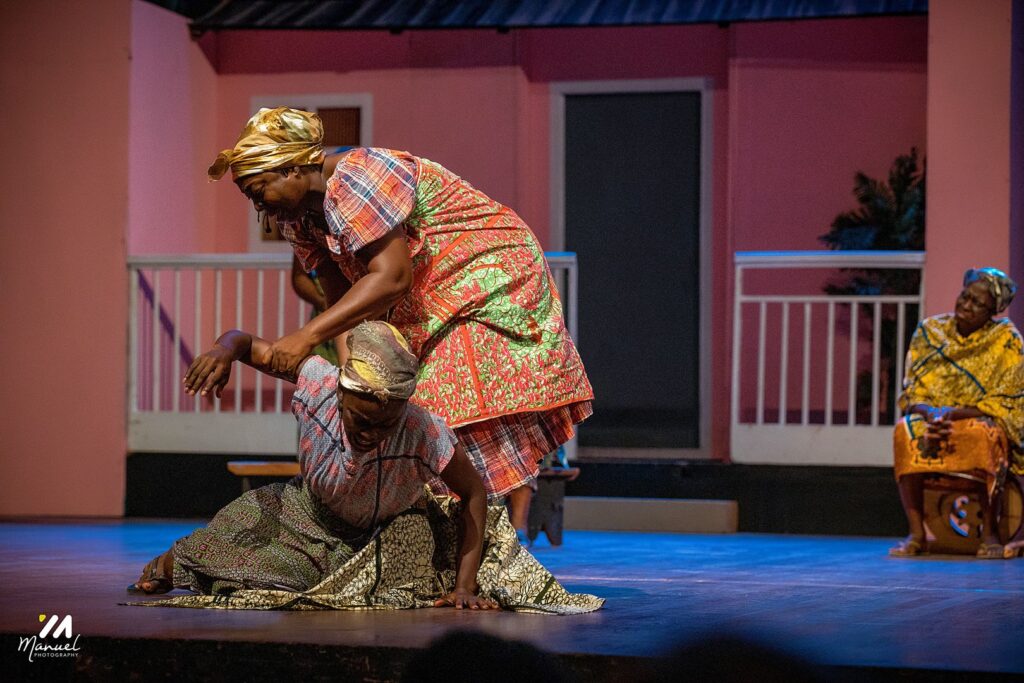
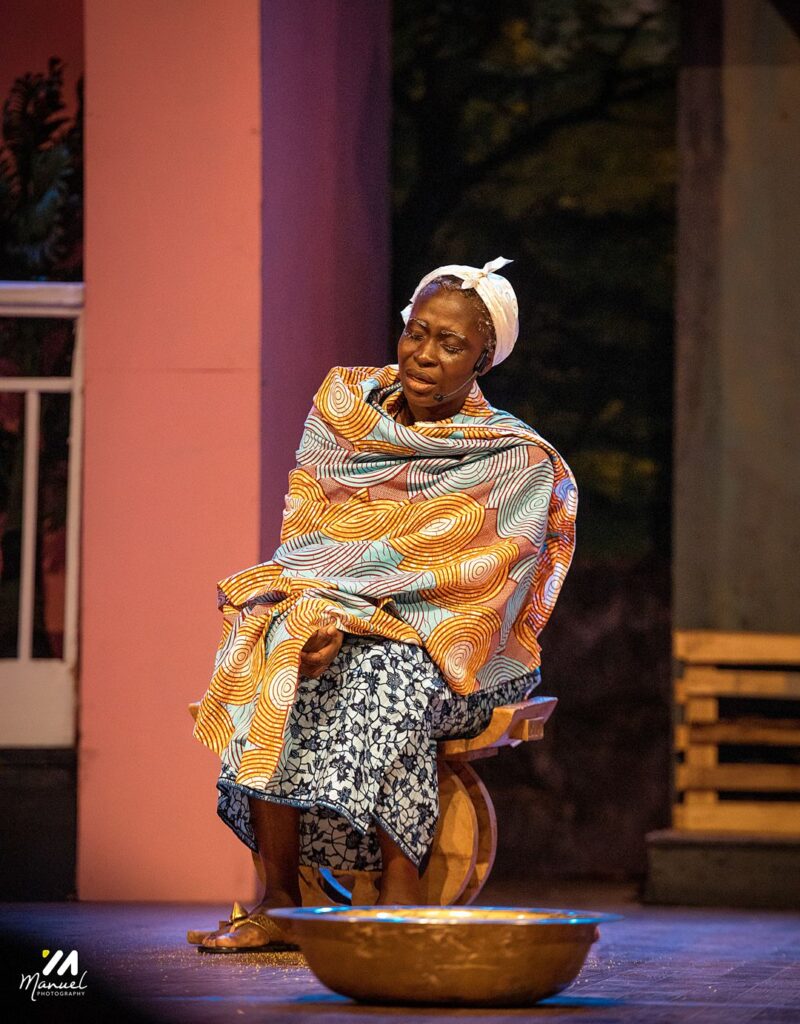
Now, to Esi Kom herself, she embodied a motherly figure, and her presence was equally felt. Though unhappy about her son`s choice, she registers her disappointment with the way that her son has taken to Eulalie and cites her in almost every conversation. Also, one must commend her for the way she retrieved the snails rejected by Ato and how she expressed her grievances towards her son`s behavior. That was very touching. Aside from this, when Ato takes refuge in her after slapping his wife, she acts well and consoles Eulalie just as any good mother-in-law would do. That spectacle was played out well. Kudos to Magdalene Fynn for interpreting the role with precision.
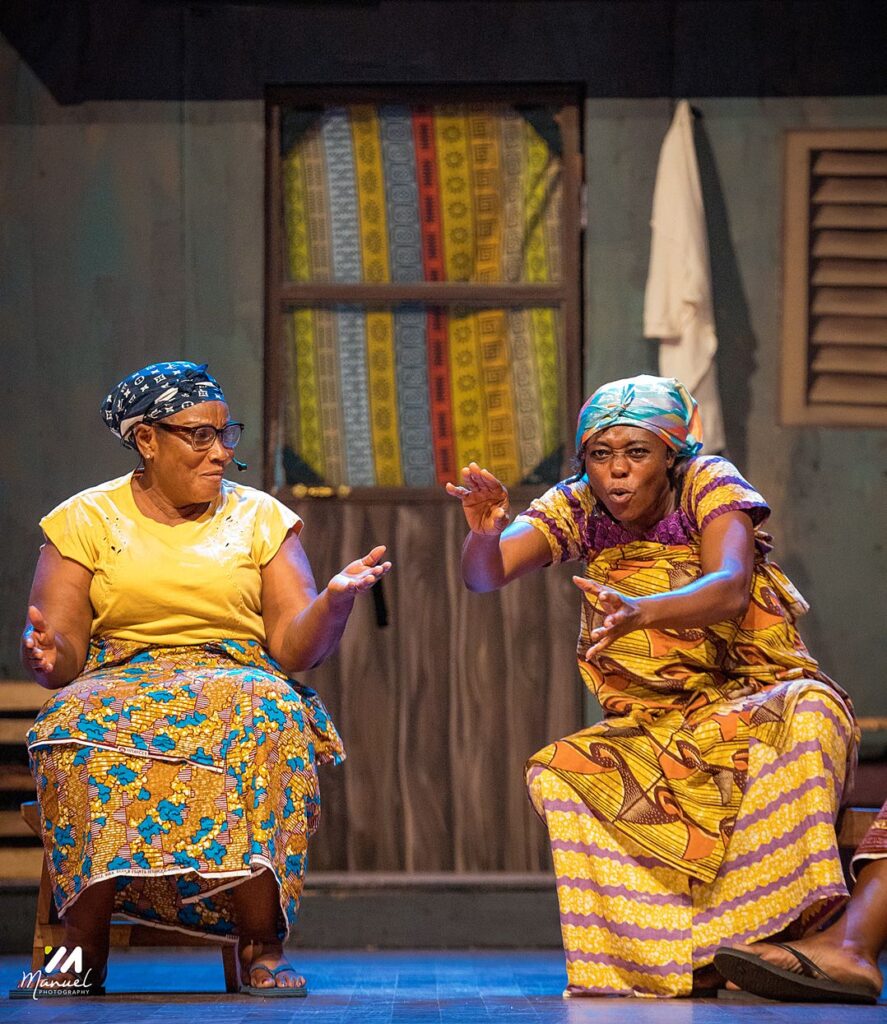
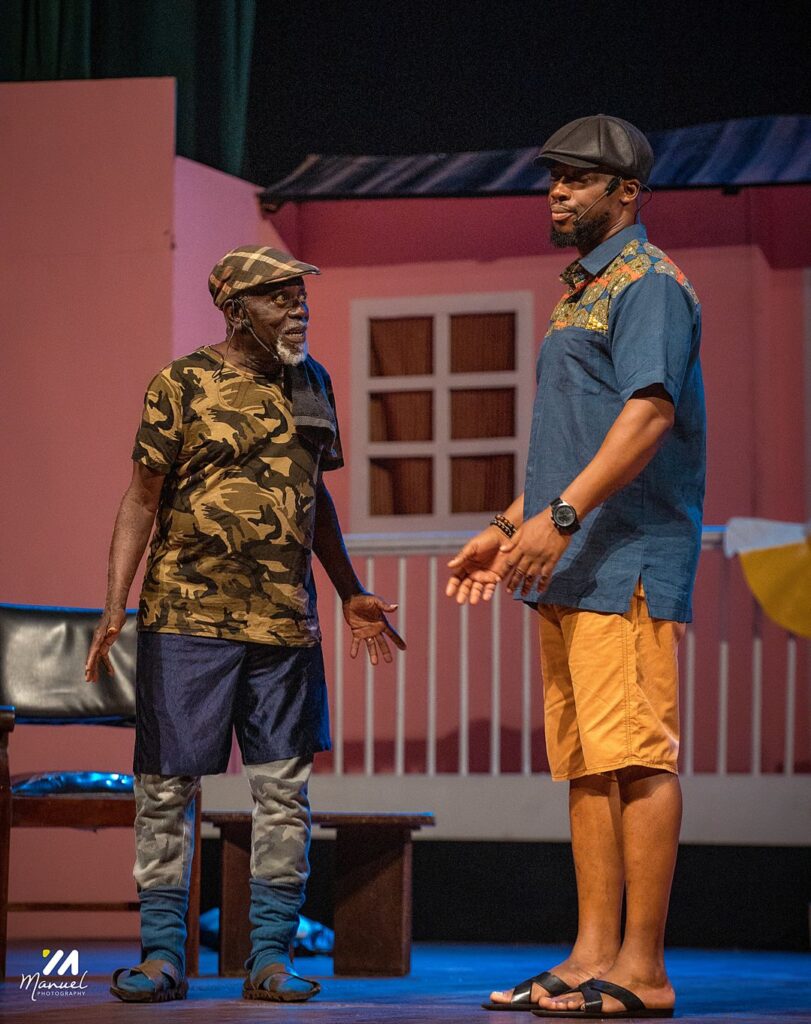
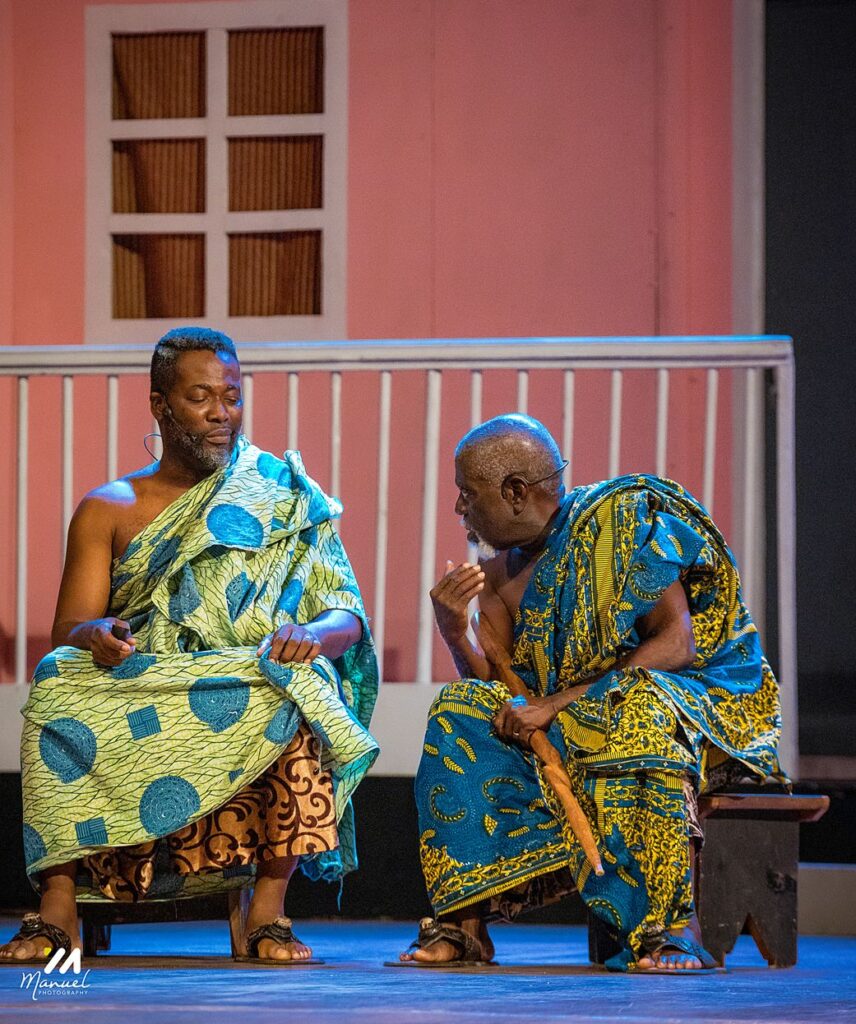
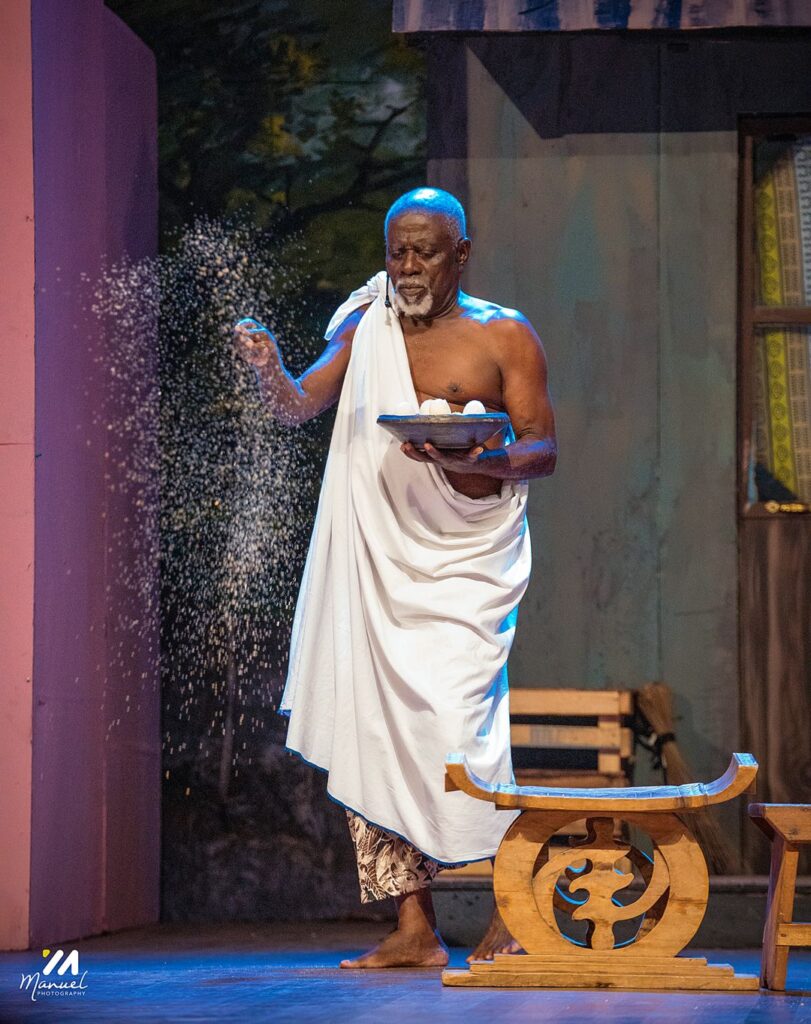
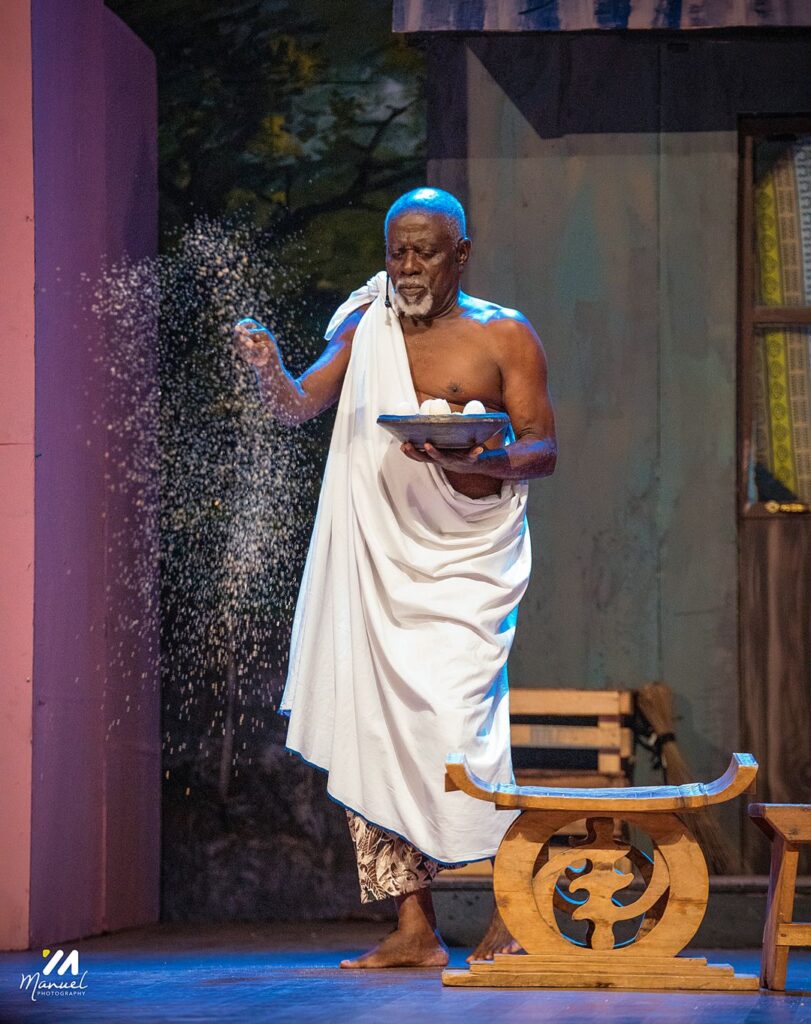
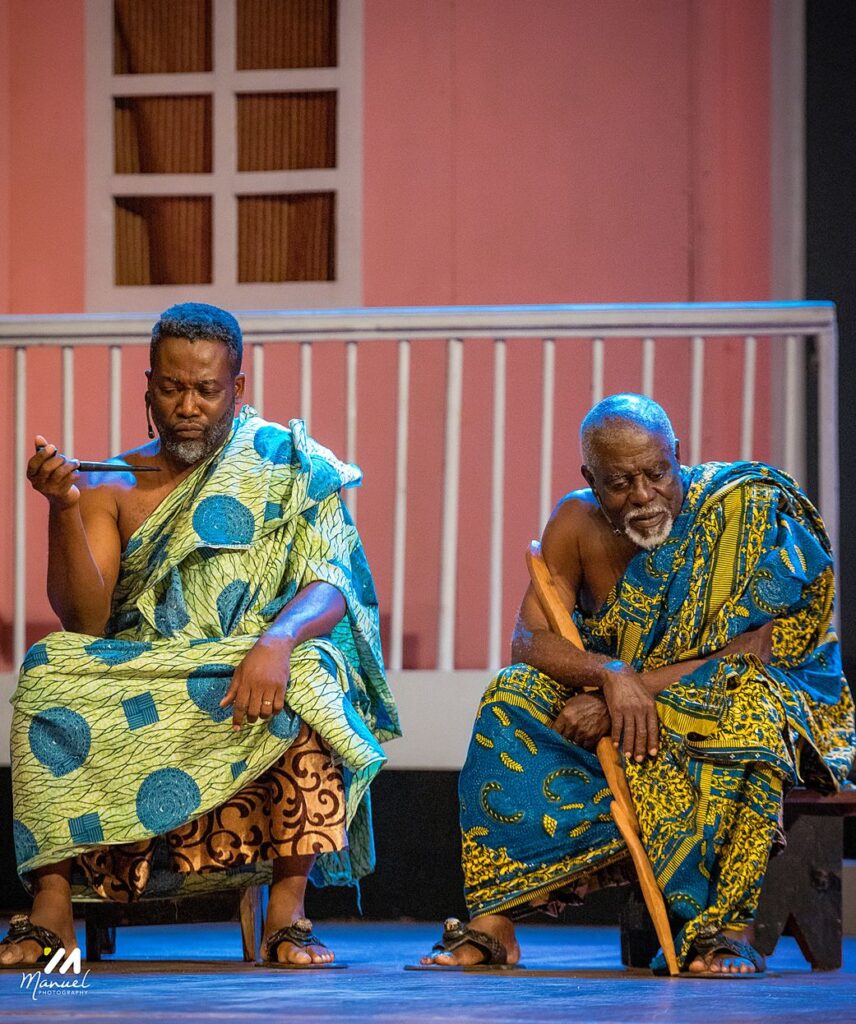
Petu (Fred Amugi) and Akroma (Adjetey Anang). The chemistry between these two uncles was exceptional. Their presence was felt during the family gathering as they took charge anytime they began to speak. I particularly enjoyed the way they sprinkled the set with the powder just to drive the evil spirit. It was done artistically. Again, Fred Amugi made his scenes with Ato very believable. He sounded very tired as he advised Ato not to worry about the dream. His tone registered that he was exhausted returning from the farm. On the other hand, Adjetey Anang was also exciting to watch and complemented his Petu. His unique way of walking depicted him as a quite aged man.
First woman (Jacqueline Ansah) and Second woman (Dzifa Sogbe). These two gossips never ceased to amaze the audience with their timeless commentary on the events in the play. They created a great spectacle by making the audience believe the long silence in the Odumna house is a product of Nana`s death. On the contrary, when they found out that the Old woman is not dead, they were shocked to the marrow and reacted as such. Again, their gossip about Eulalie`s expensive lifestyle and her supposed barrenness was acted out well. While Dzifa Sogbe gave the audience a vibe of a true gossip, she never ceased to brag about her fertility or her eleven (11) children. On the contrary, Jacqueline Ansah made the audience believe that she was childless and was in dire need of a child. She aroused pity in the eyes of the audience when she cried, repeating the words “barren, barren, barren” as she exited the stage. Great acting technique.
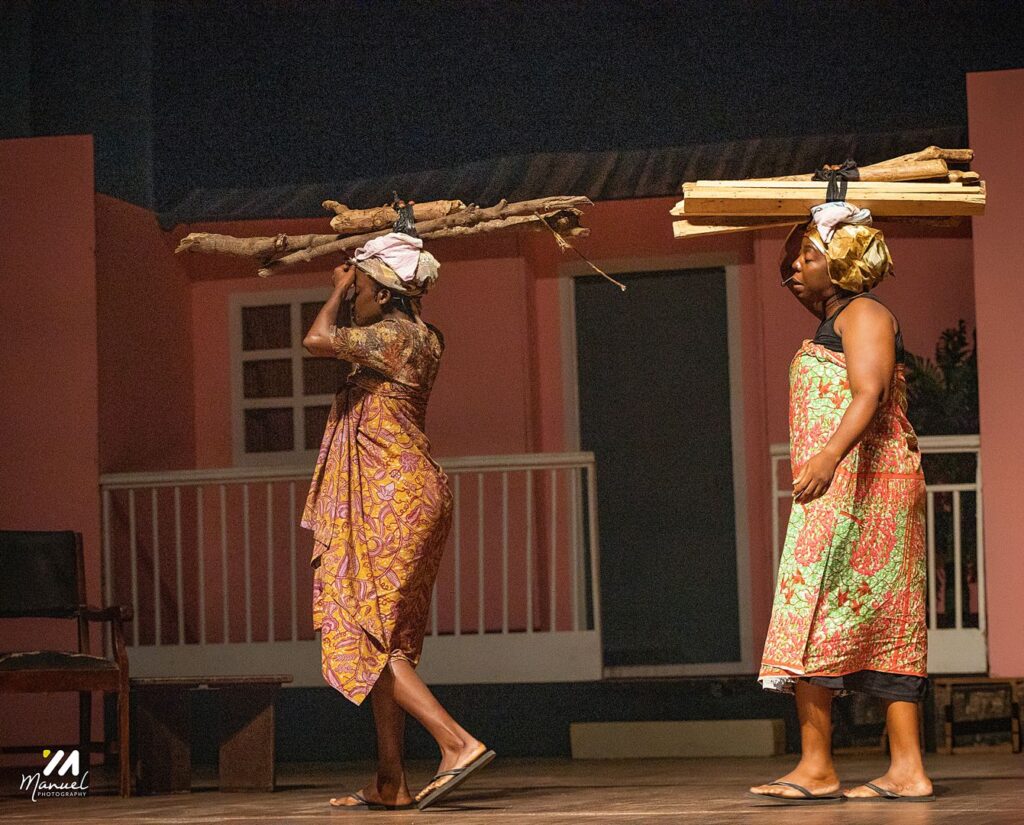
Finally, Boy and Girl also made the dream realistic. The Girl cried loudly and exaggerated her cries as the Boy hit or touched her harder. They make the scene very believable as it resonates with how children play in real life, which in effect created a surreal effect on the stage.
The technical aspects.
Set & Props
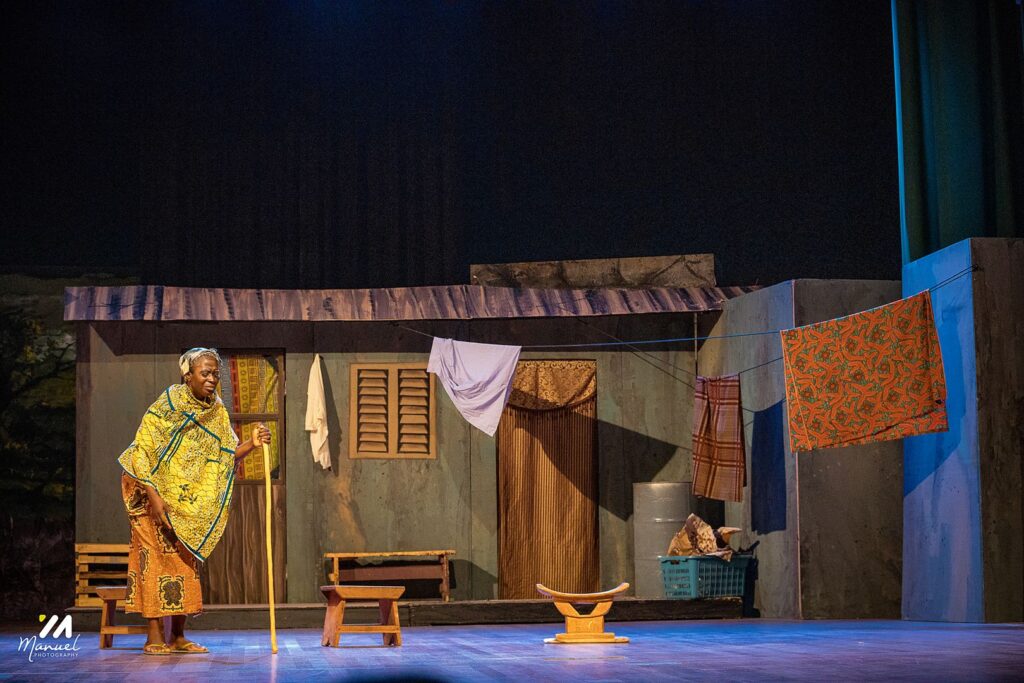
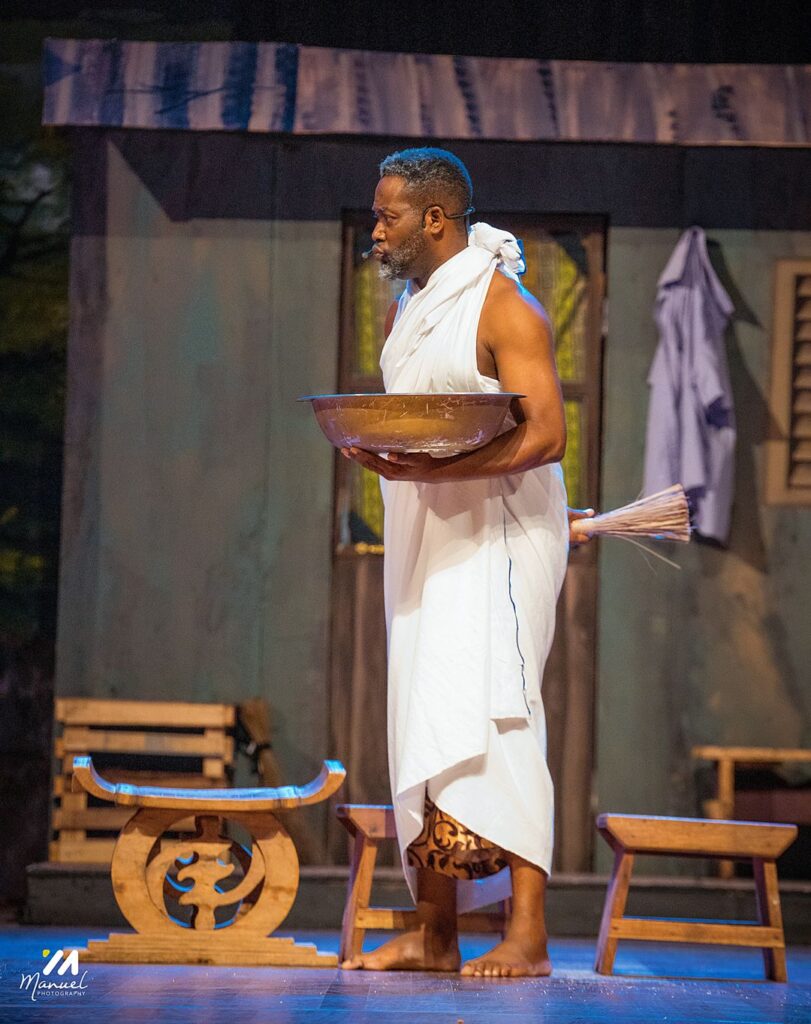
The set was very elaborate. It depicted the detailed description given by the playwright in the original script. Ato and Eulalie`s house was painted pink, which seems to suggest the flashy lifestyle of the wife. Esi Kom`s abode was well designed with a green colour, and the pathway leading to the market. The performers utilized the set well, especially, Eulalie, Esi Kom, Petu, Monka, and Akroma. Again, props such as Metal bucket, umbrella, Stools, a wooden Staff, chairs, broom, basin, cocoa sacks,basket, yam, Firewood, cigarette, wine glass, Steel pan, earthenware bowl, eggs, broom, Kerosene Lantern all enhanced the characterization of the various players who used them. Kudos to Prince Kojo Hilton, the set designer, and the Props Lead.
Sound
The Sound cues for this production were on point. The house music that was used to set the tone of the production was good. The suspenseful sound that initiated the wayside bird (David Dontoh into action added to the mood of the play. Again, the sound that was played as a signature of the three clans in the prelude was also brilliant. Not forgetting the sound of the drums that scared Eulalie. The theme song resonated with the play. Again, there was also clarity in the sound. In all, sound cues were on point and treated the play.
Light
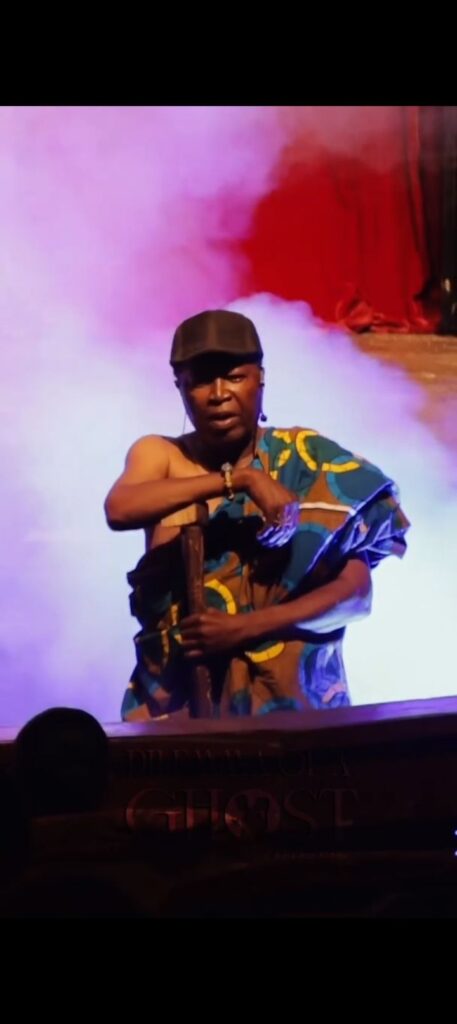
The light team did well, only that there few hitches. The smoke light and the blue light that were used to welcome the Wayside bird were excellent and gave a great visual impression. Again, light clearly distinguished between day and night. Also, the fade in and out was creatively done. My challenge with the light was that in the opening scenes, the faces of most of the actors, such as David Dontoh, Gadede Segbefia, and Fiifi Coleman, were covered with the shadows of the hats that they wore so one could hardly see their facial expressions. Aside from that, Light did a great job.
Costume and Makeup.
The players in this production were costumed well. The graduation gown worn by the new Ato and Eulalie projected them as new graduates. Also, the red, pink dress and the short jeans sued by Eulalie showed her lavish lifestyle, Ato`s outfits and hairstyle all gave them a great characterization as the “one scholar”. Again, the cloth adorned by the women and the smock worn by Akroma as well Petu`s farm attire all enhanced the characterization of the players. In the case of Makeup, Nana was made to look old, same as Petu. With Eulalie, her makeup was done to complement her lavish lifestyle.

Audience reaction.
The audience enjoyed the production and even clapped at the end of every scene. They laughed when necessary and pitied the players when necessary. In other words, they were emotionally soaked in the production. Some captivating scenes include the family’s first gathering, Ato and Eulalie`s love scenes, and the scene where Ato rejects the snails. All the performers put up their “A game”, great collaboration.
Kudos to Fiifi Coleman Productions for this masterpiece. I must admit that the play was given a great treatment for everyone to follow easily. I rate it 9.4 /10.
Written by Mensah Junior Raphael, BA Theatre Arts, UEW.
From your detailed Reviewers (0272138148)