

STRUCTURE OF THE POEM
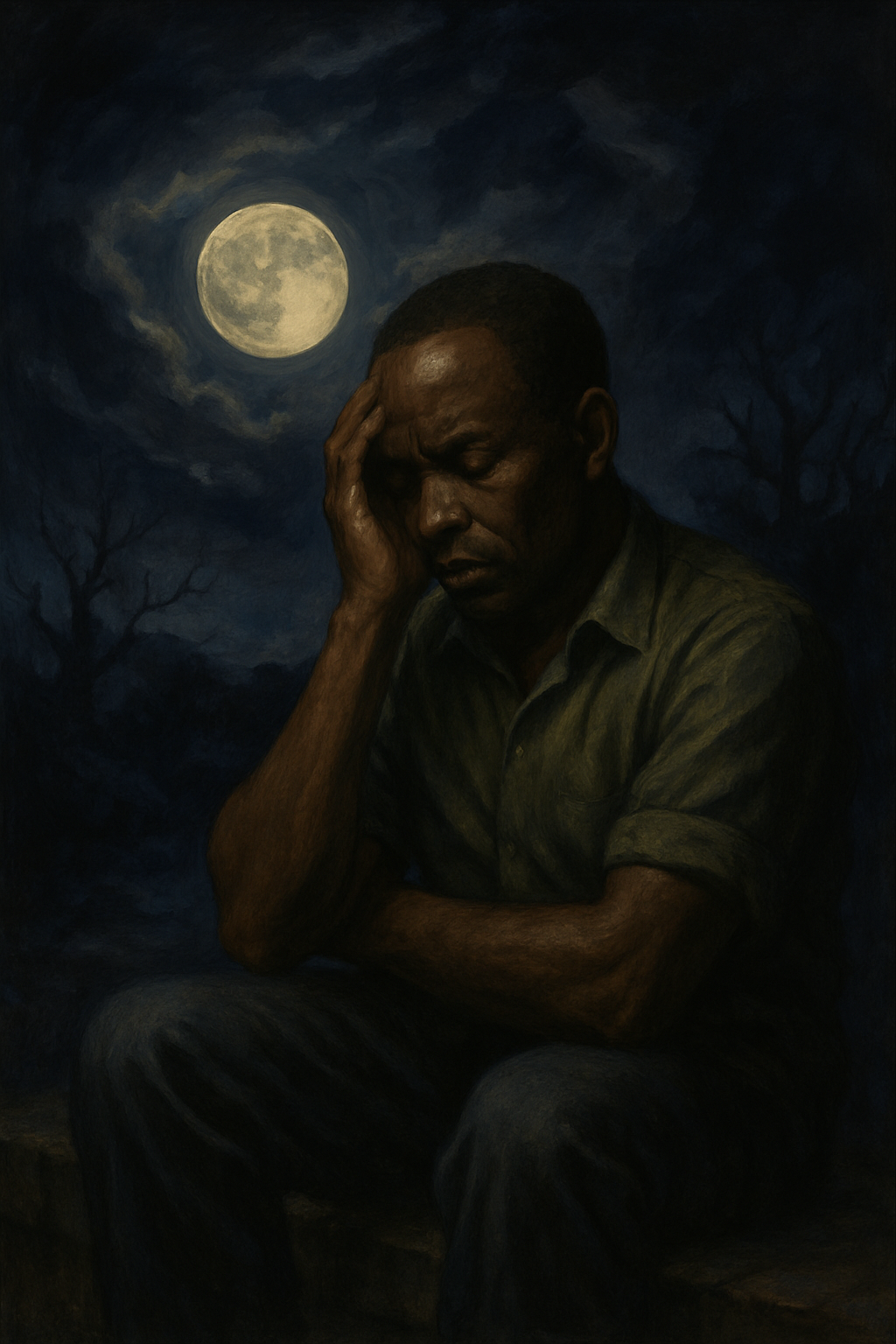
The poem can be read as an ode to Night, which is personified throughout the poem. Night is organized in five stanzas of three lines per stanza. Hence, the poem is written in tercets. The poem is written in free verse but one which unconventionally has the rhyme scheme ABA and makes use of enjambment, whereby not only do we have one line flowing into another, but also a stanza flowing into another stanza in some cases.
End rhyme is seen in lexical pairs like brow/plough, crescent/incessant, drained/rained, leaves/thieves and earth/birth, while internal rhyme is seen in the pairs – dance/fluorescence. Moreover, the poem is written in the first-person point of view to emphasize the intimate knowledge and experience the person has about/with “night”. The poet persona is in a monologue, pondering what kind of rest he is to expect. Night is a time of rest from the day’s laborious engagement. The preponderance of pauses (caesura) within the lines of the poem serves to punctuate the rhythm of the poem’s lyrics, letting readers stop and reflect on the poet’s musings. The caesura also imbues the poem with narrative texture, creating dramatic stops to make the reader pause and wonder at the poet’s words.
POETIC DEVICES IN THE POEM
Personification
“Your hand is heavy, “Night, upon my brow”, “Woman as a clam”, “Jealous eye” The lines personify the night, portraying it as a dominant force with agency and humanlike qualities. The personification adds to the poem’s sense of mystery and power.
Imagery
“I saw your jealous eye quench the sea’s/Fluorescence”, “Serrated shadows through dank leaves” These lines evoke a vivid mental picture and enhance the poem’s atmosphere. Soyinka uses vivid imagery throughout the poem to create strong visual and sensory impressions.
Symbolism
“the night” “the sea and waves” The poem uses symbols to represent abstract ideas. For example, “the night” can be seen as a symbol of darkness, mystery, and the unknown, while “the sea and waves” symbolize natural forces beyond human control.
Metaphor
“the sands, blood and brine / Coursing to the roots,” The poem includes metaphors to create comparisons between the night and other elements. The above lines of metaphor coveys a sense of submission and insignificance.
Alliteration
“Submitting like sands, blood and brine” The line uses alliteration to emphasize the speaker’s submission to the night. The use of alliteration also creates a musical effect and draw attention to certain words or phrases.
Assonance
“Fluorescence, dance on the pulse incessant” The line uses assonance to create a rhythmic flow and also highlights the musical quality of the poem.
Synecdoche
“Jealous eye” The “eye” exemplifies synecdoche, used to represent the whole being. MOOD/TONE The mode and tone of the poem is that of reflection and awe-inspiring. It also suggests fear and vulnerability.
LANGUAGE AND DICTION
The poem’s diction highlights visual and kinetic imagery, which elicit tropes such as simile, metaphor, personification, synecdoche, among others. Words such as “sea’s crescent” denotes waves and within the context of the poem, the persona deploys sea imagery to describe the effect of sleep on the individual, The word “Night” evokes opposite feelings. One of peace and sound rest. On the other hand of fear and vulnerability. Others such as “woman” and “clam” describe positions of otherness in relation to the Night and its agent, sleep. The word “Exacerbation” suggests making something worse and in the poem’s context implies that though the persona is naturally predisposed to sleep, the coming of night makes it inevitable and irresistible.
Credit to H.K OCRAN/ LiTTROVE