

By Obed Yaw Agyei
Creative Content Strategist | Storyteller | Branding Enthusiast
Introduction: Drama Rooted in the Soul of a Nation
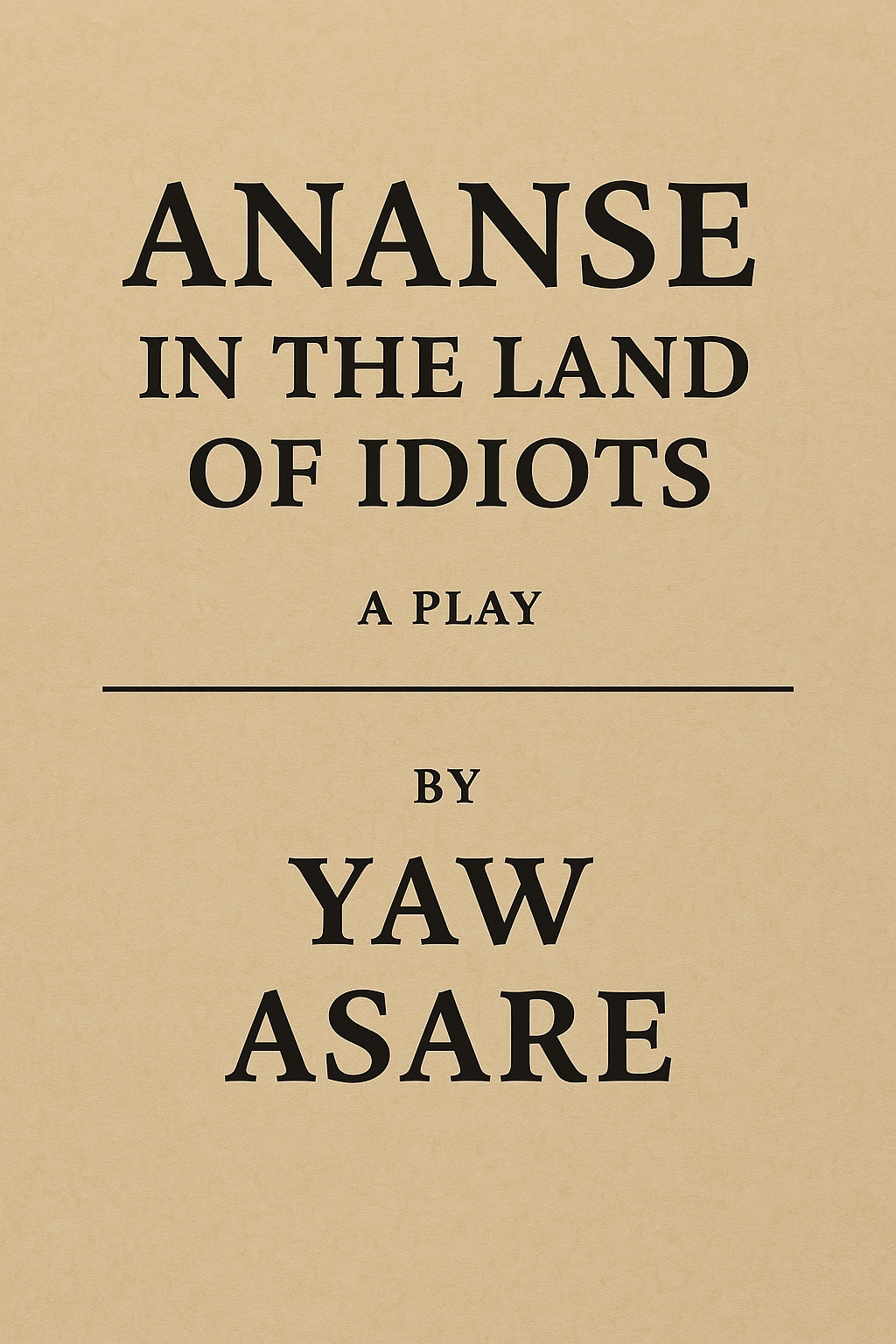
In Ananse in the Land of Idiots, playwright Yaw Asare crafts a play that is part satire, part spiritual reckoning, and wholly Ghanaian in its voice and rhythm. Using the archetypal trickster figure of Ananse, Asare explores the role of wisdom in a society overwhelmed by foolishness and moral decay. What sets this work apart is not just its theatricality, but its ability to weave cultural identity and traditional wisdom into every facet of the narrative.
This article takes a deeper look at how Asare channels oral tradition, indigenous linguistic duality, spiritual authority, and folklore-inspired symbols to critique leadership, elevate cultural aesthetics, and preserve Ghanaian values.
The Trickster as Cultural Icon: Ananse’s Identity and Purpose
No Ghanaian play is culturally complete without the shadow or the silk of Kweku Ananse. Long revered in Akan lore, Ananse represents wit, cunning, survival, and the delicate line between wisdom and deceit. His presence in Asare’s play is not just symbolic. It’s a cultural anchor. By reimagining Ananse within a modern socio-political landscape, Asare reclaims indigenous storytelling tools to reflect contemporary realities.
Ananse’s journey in this play mirrors a folkloric migration: from rejection to resilience. In his lament about relocating
“if at sundown, able-bodied customers shun your rotten mushrooms…”
we hear both satire and sorrow. This proverb expresses the social sting of being unwelcome, while urging reinvention and strategic repositioning a reflection of how wisdom adapts, even in idiotic surroundings.
Proverbs as Pillars of Traditional Wisdom
Proverbs are not filler dialogue in Asare’s play. They are pillars of moral thought, drawn from Akan epistemology and planted firmly in the drama’s soil. They act as navigational beacons, guiding character decisions, and infusing the narrative with ancestral gravitas.
“When the priestess throws down a sacrificial egg…”
evokes both reverence and surrender. It signals that divine verdicts are non-negotiable, challenging modern notions of justice with ancient belief systems.
These proverbs are artistically embedded, serving dual roles as storytelling devices and ethical commentaries. They heighten the dramatic stakes and infuse scenes with spiritual intensity.
By integrating such maxims, Asare elevates the play beyond simple satire, it becomes a repository of indigenous wisdom, subtly reminding audiences of the moral compass that oral tradition has always provided.
Language: A Mirror of Ghanaian Duality
One of Asare’s most deliberate techniques is his masterful use of language fusion. By interlacing Twi and English, the play reflects Ghana’s everyday code-switching reality. It honors the linguistic richness of the culture while reaching broader audiences.
The choice to keep Ananse’s chants in Twi is especially powerful:
“Ananse osee yiee!… Yiee, yiee!… onyansafo Ananse oo…”
These refrains don’t just amplify drama, they awaken a cultural ritual. Chants in Ghanaian tradition are used to boost morale, summon courage, or honor communal resilience. Through them, Asare ensures that the audience doesn’t just watch the play, they participate in it, co-creating its rhythm and emotional pulse.
This form of audience engagement transforms the theatrical space into a storytelling shrine, where the wisdom of the community converges with the art on stage.
The Priestess: Voice of the Gods, Guardian of Wisdom
While Ananse embodies cunning, the priestess represents spiritual depth. Her dialogues, bathed in metaphor and poetic rhythm, signal her elevated status as a divine mouthpiece. Consider this evocative line:
“…sweet dew-drops, dipping from the naval of an alien god…”
Her verses are not easily digestible, and that’s intentional, they invoke ritualistic awe, demanding contemplation. Her final pronouncement marked by the chilling repetition of “rape…rape…” is not just symbolic of physical violation, but of the cultural and moral rape committed by gullible leaders and misguided followers.
Her language sharply contrasts with the directness of Ananse’s speech, establishing a hierarchical spirituality. She stands as the ultimate boundary between reason and ruin, wisdom and idiocy. In portraying her this way, Asare highlights how traditional custodians of wisdom must often speak in layered poetry, reinforcing the distance between sacred truths and mundane concerns.
Stage as Sanctuary: Performing Identity and Reckoning
The play does not merely entertain, it reclaims space for cultural introspection. From the rhythm of speech to the symbolism in the plot, Asare constructs a theatrical world that:
- Honors Ghanaian aesthetics
- Challenges political incompetence
- Reflects spiritual truths through poetic satire
By staging wisdom in the form of proverbs, chants, and elevated speech, Asare turns the drama into a cultural ritual where foolishness is mocked and tradition is revered. The land of “idiots” is not a fictional dystopia—it’s a cautionary echo chamber that threatens to become real when society abandons its cultural compass.
Conclusion: Preserving Wisdom, Reviving Identity
Through Ananse in the Land of Idiots, Yaw Asare doesn’t just entertain, he awakens. He draws from the well of Ghanaian oral tradition to critique leadership, redefine wisdom, and elevate communal participation. His use of proverbs reminds us that traditional wisdom is not just ancient, it is timeless, relevant, and necessary.