

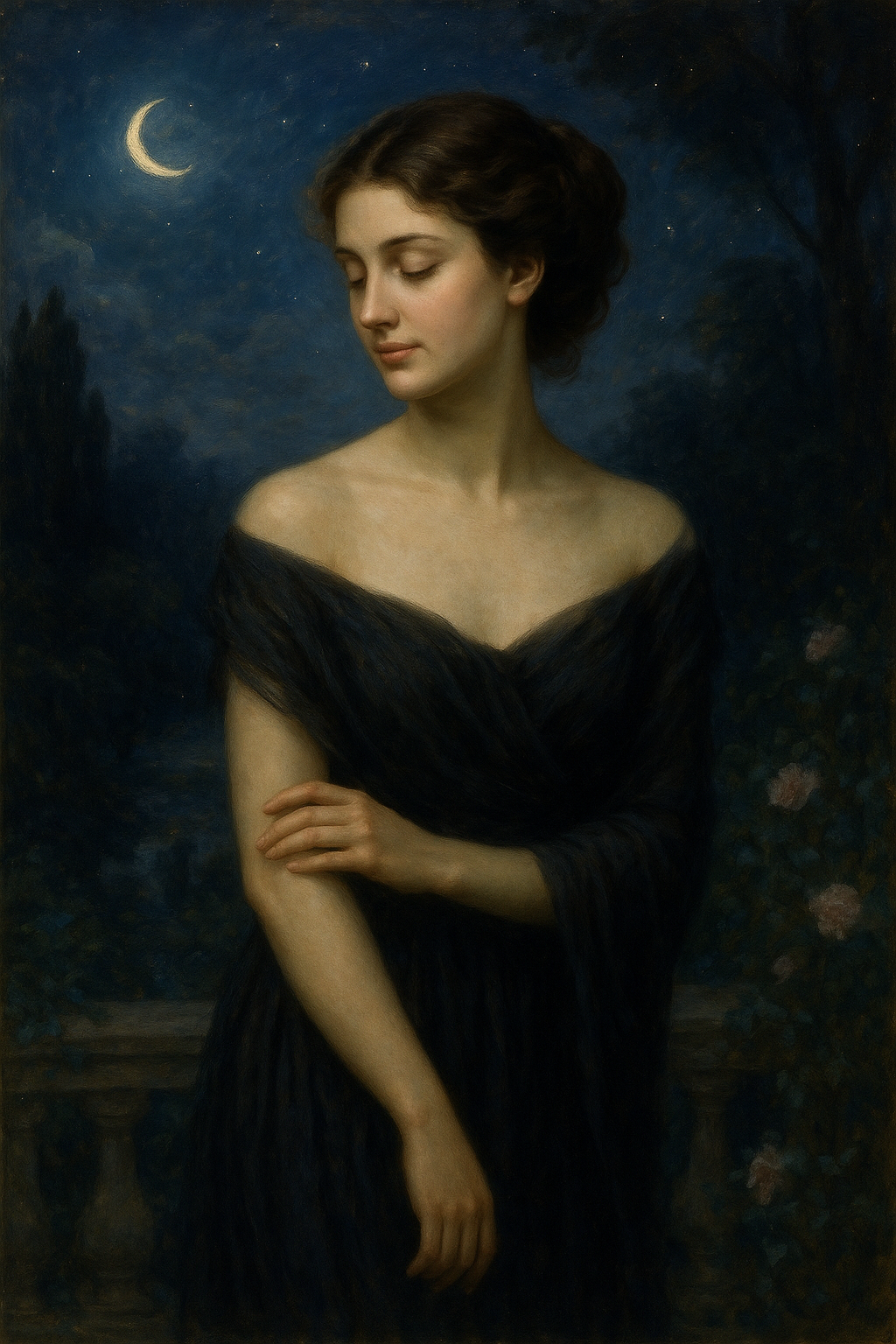
The Poem
She Walks in Beauty by Lord Byron
She walks in beauty, like the night
Of cloudless climes and starry skies;
And all that’s best of dark and bright
Meet in her aspect and her eyes;
Thus mellowed to that tender light
Which heaven to gaudy day denies.
One shade the more, one ray the less,
Had half impaired the nameless grace
Which waves in every raven tress,
Or softly lightens o’er her face;
Where thoughts serenely sweet express,
How pure, how dear their dwelling-place.
And on that cheek, and o’er that brow,
So soft, so calm, yet eloquent,
The smiles that win, the tints that glow,
But tell of days in goodness spent,
A mind at peace with all below,
A heart whose love is innocent!
Inspiration and Background
George Gordon Byron was born on January 22, 1788 by British parents. The poem, “She Walks in Beauty” is a marvelous poem published in 1815. Besides “She Walks in Beauty,” Byron is known for his works such as “Don Juan,” “Childe Harold’s Pilgrimage,” and “The Corsair.” Byron was a prominent figure in the Romantic movement and was known for his lyrical and passionate poetry. He had a significant influence on subsequent poets and writers. Byron had a tumultuous personal life, characterized by scandalous affairs and a turbulent marriage. He was also known for his active involvement in politics. The poem “She Walks in Beauty” by Lord Byron eloquently captures the essence of feminine beauty, celebrating its harmony, purity, and transcendent qualities. Through vivid imagery and skillful juxtapositions, Byron portrays the woman as a source of awe and admiration, her appearance reflecting both inner grace and outer allure.
SUBJECT MATTER
‘She Walks in Beauty’ is a flowing, musical lyric poem initially written as a song by Byron and underscores the features of Romanticism. It explores the idea of a female’s physical appearance being dependent on her inner psychical state. The poem offers a bewitchingly romantic description of a charming woman with whom the speaker seems familiar. It deals with her exceptional inner and outer beauty. The secret of the popularity of this poem lies in the way it has presented the beauty of “A mind at peace.” “She Walks in Beauty” deals with the Admiration of Inner and Outer Beauty of a woman, the persona has come to experience. The poem celebrates the enchanting beauty of the women, and the poet is captivated by it. Lord Byron gives a critical message to the readers that perfect beauty is the combination of outward looks as well as 31 inner beauty. According to him, the lady is blessed with attractive looks and also possesses a physical and spiritual harmony. Her innocent and pure thoughts further illuminate her beauty. It is through her graceful walk and pleasant face; Byron gives a clue of her innocent soul. The expression of beauty remains at the core of the poem.
STANZA ANALYSIS
Stanza 1
“She walks in beauty, like the night” This simile adds mystery to the woman as the ‘night’ symbolizes mystery and the unknown. The line expresses the beauty of the woman in a glorious way, yet much more to behold of her that we might not readily capture, as implied in the word, “night”. “Of cloudless climes and starry skies”; The alliteration of the imagery ‘cloudless climes’ and ‘starry skies’ adds a rhythmic beauty to the poem and with it a physical, almost divine, beauty to the woman. The comparison of the beauty of the woman with these celestial elements creates a divine implication of the beauty of the woman. “And all that’s best of dark and bright”. Byron’s description of her as the best of ‘dark’ and ‘bright’ is an oxymoron and gives her the qualities of beauty, pureness, and romance as well as the mystery and erotic elements signified by the darkness. “Meet in her aspect and her eyes”; Her eyes illustrate the ‘darkness’ and ‘brightness’ within her. The narrator is fascinated by how her physical existence hints at her personality. The word ‘aspect’ in Byron’s fourth line (‘And all that’s best of dark and bright / Meet in her aspect and her eyes’) may hint at more than just an external aspect and be a nod to her intellectual aspect, her personality and demeanor. Note that both dark and bright, and all that is best of both of these, meet in her. This can be read as a reference to the play of light and shadow or an allusion to a more abstract kind of lightness (and darkness), perhaps a moral ambiguity. “Thus mellowed to that tender light”. Byron depicts her beauty as a ‘tender light’. This is sensory imagery of touch and sight and the tenderness suggests a softness and radiance to the light which symbolizes her beauty. “Which heaven to gaudy day denies”. However, compared to the magnificence of the light which personifies her beauty the daylight does no longer seem beautiful but instead ‘gaudy’
Stanza 2
“One shade the more, one ray the less”, “Had half impaired the nameless grace” By adding more rays of sunshine or taking them away from her beauty it will ‘impair’ the perfect equilibrium she possesses and the ultimate beauty it brings. The ‘nameless grace’ is her beauty, as it’s ‘nameless’, he can’t quite put his finger on what it is that makes her beauty so strong and divine. “Which waves in every raven tress,”. Byron compares her beauty to the natural world and the ‘trees’. This illustrates the natural, untouched nature of her beauty. ‘Raven’ is old English for devouring something – Byron is describing his craving for her beauty. “Or softly lightens o’er her face”; The light brightens her face and the convergence of the natural beauty of sunlight and her face creates a godly, divine image. “Where thoughts serenely sweet express”,Byron shifts to describing the beauty of her mind and thoughts. The adjective ‘serene’ portrays her thoughts as composed and tranquil while their ‘sweetness’ alludes to a youthful innocence and pureness of her mind.
Stanza 3
“And on that cheek, and o’er that brow”, The Polysyndeton of ‘and’ is repeated in the 3rd stanza and emphasises her never-ending beauty as now he focuses on her also beautiful cheeks and forehead. “So soft, so calm, yet eloquent”, Again, this line could be portraying her physical beauty and the ‘soft’ and ‘calm’ complexion of her cheeks and forehead. However, it could relate to her personality and ‘eloquent’ would suggest this. “The smiles that win, the tints that glow,”. Her ‘smiles’ are a physical reflection of her beauty within and the fact that they ‘win’ repeats the competition of the first stanza between her beauty and the daylights – again here the physical beauty of her smile and her personality it is a metaphor for is unbeatable. “But tell of days in goodness spent”, “A mind at peace with all below”, Her beautiful mind is at one and totally matched with her physical ‘all below’ beauty. “A heart whose love is innocent!” The final line reiterates that Byron isn’t just attracted by her physical beauty but also her personality created by the ‘innocent’ love of her heart.
THEMES IN THE POEM.
1. The theme of Absolute Beauty
- The theme of Harmony
- The theme of the Celebration of Nature
- The theme of Mind and Body
- Purity and Innocence
- The Power of Appearance
CREDIT TO H.K OCRAN/ LiTTROVE