

SUMMARY OF THE STORY
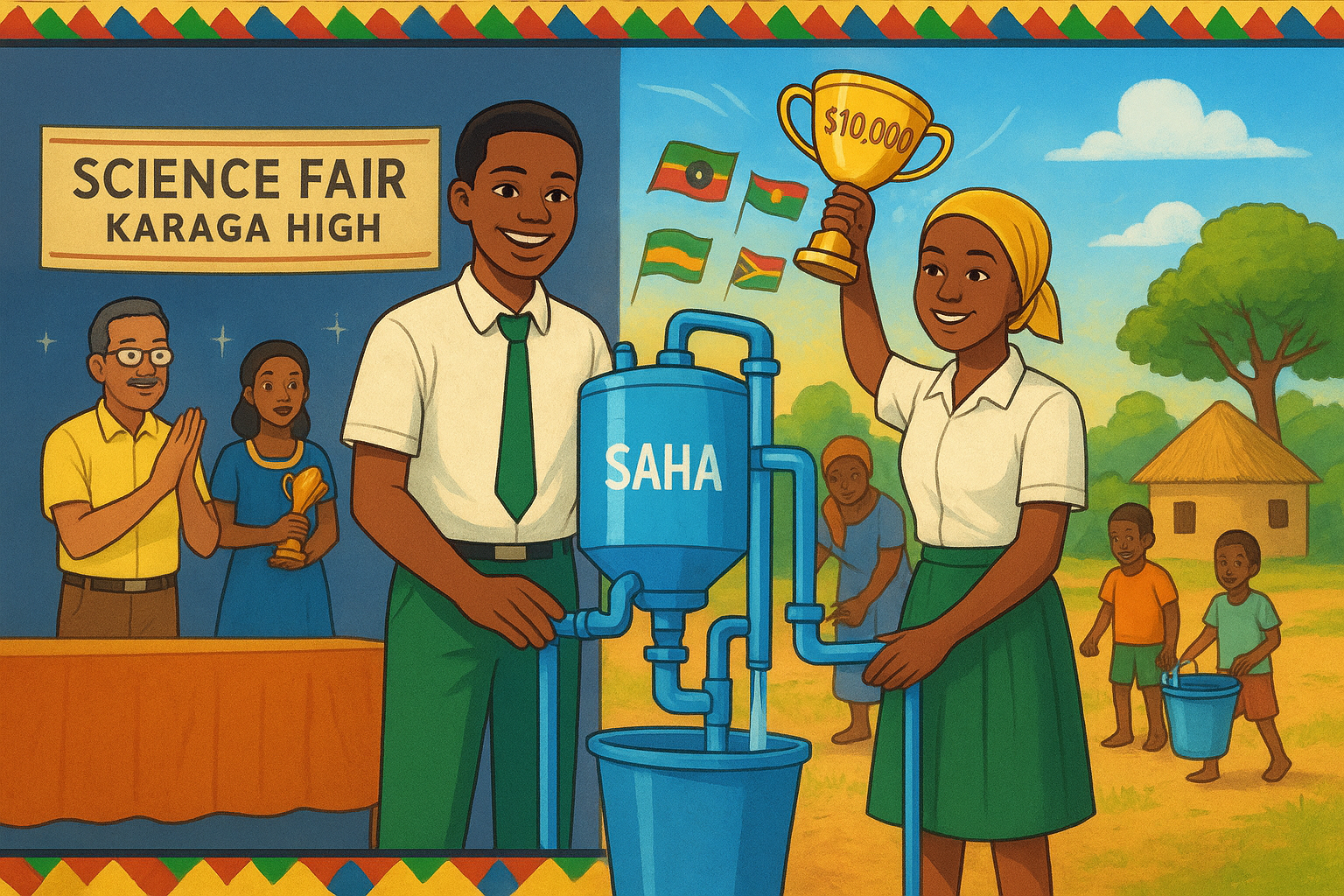
Abubakar and Abidatu, two Ghanaian high school students, design an innovative water purification system called Saha. Motivated by their community’s struggle with access to clean water, they create a low-cost, sustainable solution. With the guidance of Abubakar’s uncle, Dr. Iddrisu, and support from Ama and Ntim, they refine their project and present it at the school’s Science Fair, which they win.
Their victory earns them recognition, funding, and support from both the Ghanaian government and the Ministry of Science and Technology. They go on to participate in the Pan-African Science Festival in Accra, where they compete against top young innovators, win the prestigious trophy, and receive a grant of $10,000.
Abubakar and Abidatu return to their hometown, Karaga, and implement the Saha system, transforming the lives of their community by providing clean water and improving health outcomes.
SETTING ANALYSIS
The story is set in Ghana, West Africa, across several key locations that highlight both cultural and symbolic meanings:
- Karaga – The hometown where the story begins and ends, symbolizing community impact.
- Karaga Senior High School – Venue for the Science Fair, representing education and innovation.
- Tamale – Home of Dr. Iddrisu, where mentorship and support are provided.
- Accra – The capital city, representing opportunity and national pride.
The Ghanaian setting enriches the narrative with cultural values, geographical authenticity, and symbolic depth, emphasizing themes of community, mentorship, and innovation.
THEMES IN THE STORY
- Innovation and Ingenuity – Young minds solving real-world challenges.
- Community Empowerment – Innovation as a tool for collective growth.
- Social Responsibility – Knowledge and innovation for public good.
- Perseverance and Resilience – Determination despite difficulties.
Minor Themes:
- Friendship and Teamwork – The collaborative spirit of Abubakar and Abidatu.
- Self-Reliance and Resourcefulness – Finding creative solutions.
- Education and Mentorship – The guidance of Dr. Iddrisu.
- Global Citizenship – African innovation with worldwide impact.
CHARACTERIZATION ANALYSIS
Main Characters:
- Abubakar – Curious, determined, initially doubtful but grows into a confident leader.
- Abidatu – Supportive, resourceful, and passionate, developing assertiveness and independence.
- Dr. Iddrisu – Wise lecturer whose mentorship provides guidance and confidence.
Characterization Techniques:
- Direct Characterization – Traits of the characters are explicitly described.
- Dialogue – Reveals values, motivations, and relationships.
- Description – Provides vivid impressions of people and places.
- Action – Demonstrates resilience and determination.
Character Relationships:
- Abubakar & Abidatu – Friendship and teamwork.
- Abubakar & Dr. Iddrisu – Mentorship and guidance.
- Abidatu & Dr. Iddrisu – Respect and admiration.
Character Development:
- Abubakar – From doubt to leadership.
- Abidatu – From supportive friend to equal partner.
- Dr. Iddrisu – From mentor upto proud advocate.
The Impact of Characterization is that the
Character growth engages readers emotionally, advances the plot, and reinforces the central themes of innovation, perseverance, and empowerment.
CREDIT TO VICTORIA KUKUA STEVENS, Dr. JEMIMA LARTELEY MENSAH,AND VERY REV. EBO EPHRAIM