

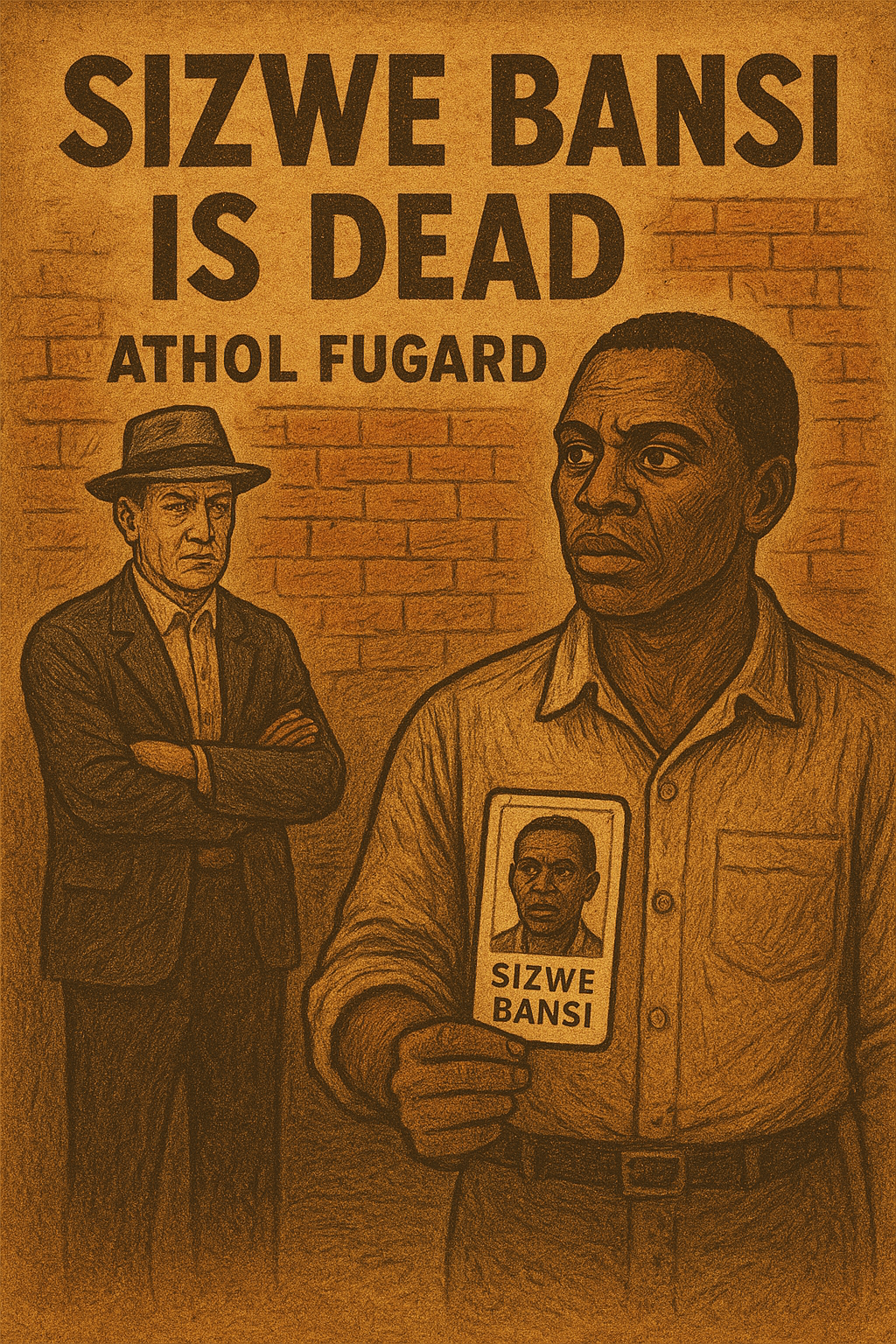
SIZWE BANSI
SIZWE BANSI: Sizwe Bansi is a black South African who experienced apartheid and racism in his own country – South Africa. He comes from a rural area called King Williams town. Sizwe is a dutiful man who desires to fulfil his responsibilities as a husband and a father but he did not find any work in his own town. He travels to the city of Port Elizabeth in order to find a job that will help him support his wife and children. Unfortunately for Sizwe, he does not possess a passbook that will guarantee his stay in Port Elizabeth. Sizwe Bansi is surprised about restrictions around the passbook. He is treated like a stranger in his own country because he does not have a valid passbook. He is given three days to report to the Bantu Affairs Commissioner in King William’s Town with a valid passbook. Sizwe states this in “Sizwe wants to stay in new Brighton and find a job; passbook says NO! Report back. Sizwe wants to see his wife and children; passbook says NO! endorse out”. Pg 180 – 181
Sizwe Bansi is not educated. He could not apply for the job of a garden boy because he cannot read. Sizwe could not read and understand the stamp in his original passbook till he meets Buntu who interprets it for him. Sizwe decides to burn his passbook and become a gardener or potato seller but Buntu points out that black men in South Africa are legally required to have a passbook and hawkers’ permit. No matter how hard-working black men are, the laws of apartheid highly restrict them from works of personal gain. This means the services of blacks together with the benefits of their occupation are reserved for whites only. The whites exploit the blacks. Sizwe is nervous but hopeful because of his attempts to avoid parental irresponsibility. Sizwe changes his name to a dead man called Robert Zwelinzima. This potential change of identity troubles Sizwe Bansi because he is not sure of what will happen to his children and wife. Sizwe entertains fears of getting into serious trouble with the authorities if his switch of passbook and change of name is discovered. Sizwe Bansi reluctantly becomes Robert Zwelinzima in order to enjoy human rights as a citizen.
Sizwe Bansi struggles to resist oppression and to liberate himself from oppressors’ rule. Sizwe wanders how a citizen of South Africa needs a passbook, residence permit and hawkers permit in order to stay and work in his own country. Sizwe liberates himself by changing his passbook with that of a dead man. Fugard wants readers to realize that this experience still goes on in some countries. In some African countries, lucrative jobs and managerial positions are given to whites while the citizens are denied. This means Whites have enough freedom to operate in Africa countries than Africans who travel to the western world. For example, an African who travels abroad is expected to have a Green Card or attend school again in that country before he/she can stay or work. Presently, Africans who stay abroad sometimes experience racism. The reception blacks give to whites in Africa is different from that of whites to blacks in abroad.
To conclude, Sizwe Bansi represents all blacks who stand against apartheid, racism, colonialism and all forms of injustice. Sizwe calls for independence or total liberation of Africans. Athol Fugard draws the attention of African leaders and citizens to be patriotic enough in order to protect the human rights and properties of all Africans. After all, any race that loots the valuables of Africa has no good intention for Africa’s development.
BUNTU
Buntu is a native of Port Elizabeth. He is well known for helping friends and acquaintances. Sizwe stays in Buntu’s house in order to look for a job and to hide from the white authorities. Buntu is educated. This is why he interprets the stamp for Sizwe. Buntu informs Sizwe that the stamp orders him to go home. Buntu explains to Sizwe that black men in South Africa are legally required to carry passbooks. He guides Sizwe to memorize the identification number and to learn the spelling of the name in the passbook of the dead man called Robert Zwelinzima. Buntu educates Sizwe on how to compose and introduce himself with his new identity before the white officials. Pg 183 – 187
Buntu is compassionate to the problems of Sizwe. Buntu advises Sizwe to work in the mines in King William’s Town but Sizwe rejects the idea because mining is too dangerous. Buntu takes Sizwe to Sky’s place, a local bar, after which they discover a solution to Sizwe’s passbook problem. The desperate and sad situation of Sizwe compels Buntu to suggest impersonation as a means of survival in an apartheid society. This leads to the exchange of Sizwe Banzi’s passbook of deportation with the passbook of a dead man who is certified to stay and work in Port Elizabeth. This plan between Buntu and Sizwe makes the title of the drama metaphorical because in reality Sizwe Bansi is not dead but on paper Sizwe Bansi is dead (pg. 185 – 188). Sizwe agreed he is dead and now a ghost who will use a new name – Robert Zwelinzima with an approved passbook to live and work in Port Elizabeth. Buntu’s ability to support Sizwe in times of need is indeed a true reflection of a friendship that is characterized with love, care and protection. Fugard uses Buntu’s attitude of ready – to – help to inform blacks to be generous to one another in all aspects of life. If whites discriminate against blacks, then it will be meaningless for a black to discriminate against a fellow black. The unity and development of Africa depends on our ability to lift each other from difficult situations.
STYLES
Styles is a photographer and a friend to Buntu. Styles worked in a Ford automobile factory under a racist white called Bradley. Styles recalls how blacks work at the factory without any premium. This indicates that the aim of whites is to make profits out of blacks. The safety of black workers in the factory is not a priority for the whites. Styles quit the factory’s racist environment because he realized it is destroying his self-esteem. He engaged himself in photography after quitting the factory. When Sizwe came to Styles to take a photograph, Styles present him as a successful businessman and as a happy husband travelling to reunite with his wife.
Styles tells the predicament of blacks in the lines of “You must understand one thing. We own nothing except ourselves. This world and its laws allow us nothing, except ourselves. There is nothing we can live behind when we die except the memory of ourselves”. Styles further states the hustling of blacks without gain in the lines of “I took a good look at my life. What did I see? A bloody circus Monkey! Selling most of his time on earth to another man”. Styles emphasizes the extent to which Whites take Blacks for granted in the sentences of “Gentlemen, he says that when the door opens and grandmother walks in, you must see to it that you are wearing a mask of smiles. Hide your true feelings, brothers you must sing the joyous song of the days of old before we had fools like this one next to me’ To Bradley, Yes Sir (pg. 153 – 155)!”. This means whites consider blacks as fools who are expected to act against their feelings and emotions. Blacks are expected to smile while suffering and sing songs of joy in the midst of hardships in order to please a white man. These quotes highlight the notion, if Africans suffer to please the whites during colonization and they still endure hardships to please the whites after colonization, then the independence of Africa is not complete.
CREDIT TO MADAM SITSOFE GANU
DEPARTMENT OF ENGLISH LANGUAGE
S. D. A. COLLEGE OF EDUCATION
ASOKORE – KOFORIDUA