

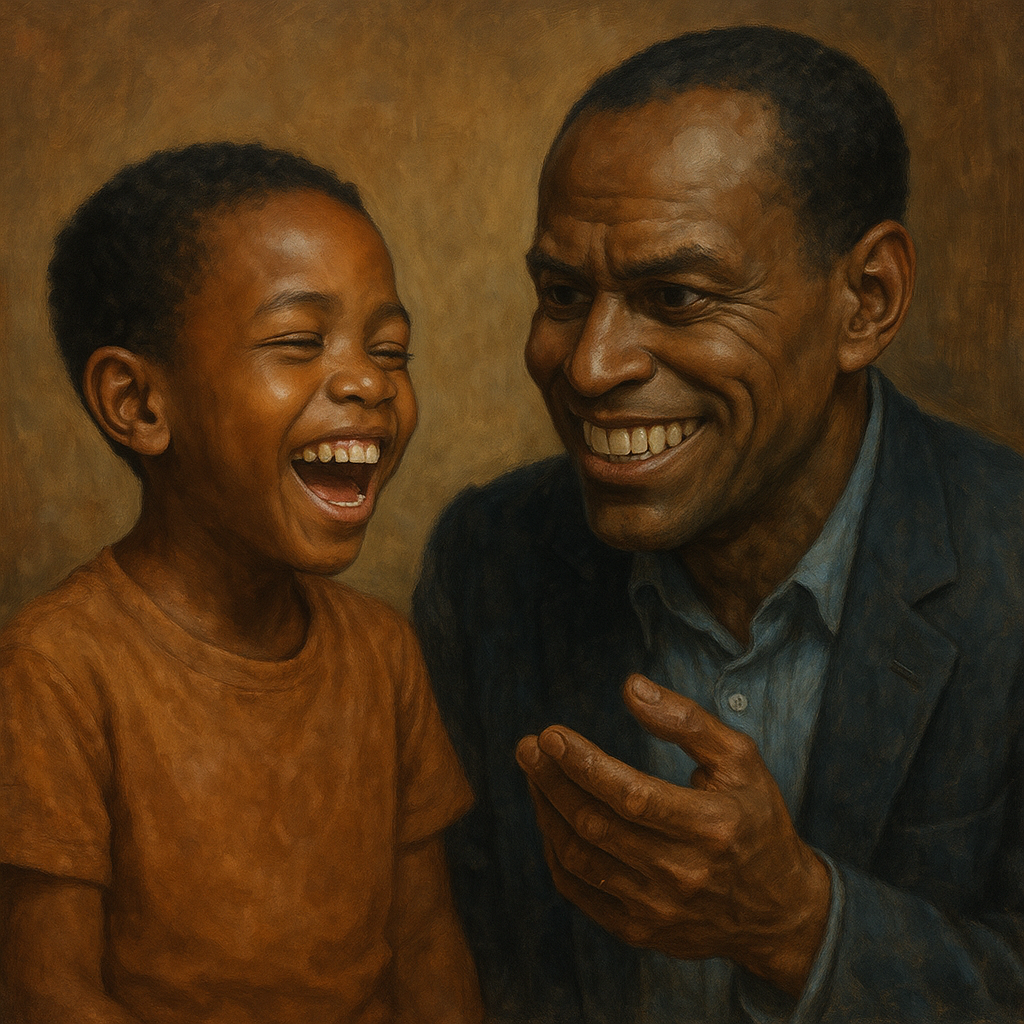
Analysis and Themes in Gabriel Okara’s “Once Upon a Time”
Once Upon a Time by Gabriel Okara
Once upon a time, son,
they used to laugh with their hearts
and laugh with their eyes:
but now they only laugh with their teeth,
while their ice-block-cold eyes
search behind my shadow.
There was a time indeed
they used to shake hands with their hearts:
but that’s gone, son.
Now they shake hands without hearts
while their left hands search
my empty pockets.
‘Feel at home!’ ‘Come again’:
they say, and when I come
again and feel
at home, once, twice,
there will be no thrice-
for then I find doors shut on me.
So I have learned many things, son.
I have learned to wear many faces
like dresses – homeface,
officeface, streetface, hostface,
cocktailface, with all their conforming smiles
like a fixed portrait smile.
And I have learned too
to laugh with only my teeth
and shake hands without my heart.
I have also learned to say,’Goodbye’,
when I mean ‘Good-riddance’:
to say ‘Glad to meet you’,
without being glad; and to say ‘It’s been
nice talking to you’, after being bored.
But believe me, son.
I want to be what I used to be
when I was like you. I want
to unlearn all these muting things.
Most of all, I want to relearn
how to laugh, for my laugh in the mirror
shows only my teeth like a snake’s bare fangs!
So show me, son,
how to laugh; show me how
I used to laugh and smile
once upon a time when I was like you.
SUBJECT MATTER
The poem, ‘Once Upon a Time’ is a satiric poem that reveals the breakdown of cherished social values as a result of modernization. Through a reflective and lamenting tone, the persona lays bare the sharp contrast between the time gone and the time present. The persona (a senior citizen who has witnessed different generations or regimes), in a dramatic monologue, seems to be speaking to his/her son about how people, as well as himself have changed from showing genuine emotions to being insincere and ingenuine. The persona is even more worried about his adaptation to this new insincere world by pretending to be what he is not and faking emotions just to deceive others or to gain favors – a behaviour that is alien to his/her true upbringing while growing up in the past. Thus, he/she dreads being consumed by this way of life and wishes to undo all those rots and to be renewed like his/her son. Unfortunately, it is obviously impossible to ‘turn back the hands of time’ and to time travel to the past, and so, the persona ‘continues in this mask, in order to fit in, and to survive. In a broader context, the poem is linked to the dire characteristics of postcolonialism and neocolonialism. The poet alludes to the effects of colonialism and the fading of our cherished African culture and values. The poet exposes how people, including himself have been influenced and controlled by modernization, despising all the rich, moral and valuable aspects of our life as a people.
STANZA ANALYSIS
Stanza 1
“Once upon a time, son,they used to laugh with their hearts and laugh with their eyes”
they used to laugh with their hearts and laugh with their eyes”
The first stanza opens with the titular phrase of ‘once upon a time,’ showing that there is a sort of story about to be told. The persona begins to speak about ‘they,’ the people who used to laugh genuinely, and show their true emotions – the people of old – those who lived by the rich moral values and culture of the land. These people live communally and with genuine emotions. “But now they only laugh with their teeth, while their ice-block-cold eyes search behind my shadow.” These lines show how these people no longer laugh genuinely, but rather do it for show while they inspect the persona closely- hoping to find secrets and flaws of some sort. He describes their eyes using a metaphor- “ice-block-cold eyes”- to show how callous and unfeeling they truly are.
Stanza 2
“There was a time indeed
they used to shake hands with their hearts: but that’s gone, son.”
Once again, the persona recalls (nostalgically) time when people would shake hands ‘with their hearts,’ or with love- but states disdainfully that that time has passed. “Now they shake hands without hearts while their left hands search my empty pockets.” The people shake hands callously, without any intention of showing trust and interpersonal warmth. Instead, they want to find out how much money he has, his financial status; as is exemplified in western capitalist values. This draws parallel with what was said at the end of the previous stanza: “…their ice-block-cold eyes search behind my shadow.” They only aim to find or gain something, therefore losing the sincerity of the gesture or action.
Stanza 3
“‘Feel at home!’ ‘Come again’
they say, and when I come
again and feel
at home, once, twice,
there will be no thrice-
for then I find doors shut on me.”
The above stanza connects to what was previously said about the people inspecting and evaluating the persona and putting genuineness and sincerity to the wayside in favour of a newer culture where financial and social status is paramount. In this stanza, the persona is invited to their houses and told gladly after each time to feel at home and come again. However, once they see that his social or financial status doesn’t quite measure up, he is excluded without a second thought. They get fed up with him as he becomes useless to them.
Stanza 4
“So I have learned many things, son.
I have learned to wear many faces
like dresses – homeface,
officeface, streetface, host face,
cocktailface, with all their conforming smiles
like a fixed portrait smile.
Here, the persona has learned from this new culture of cold, unfeeling people, and now cycles through faces for different occasions. Each one has a fixed smile whose aim is to please those around and conform to other people. He has learnt to pretend and fake his moods and emotions just to attain favor or to scheme his intentions.
Stanza 5
“And I have learned too
to laugh with only my teeth
and shake hands without my heart.
I have also learned to say, ’Goodbye’,
when I mean ‘Good-riddance’;
to say ‘Glad to meet you’,
without being glad; and to say ‘It’s been nice talking to you’, after being bored.
In the above, the persona again expresses what he has adapted to do over the years: to do things not because he means them or they come from his heart, but rather for show in hopes of gaining something. By saying, ‘Goodbye’, he actually wants to get rid of you for good – he never wants to see you again or to wish you well.
Stanza 6
“But believe me, son.
I want to be what I used to be
when I was like you. I want to unlearn all these muting things.
Most of all, I want to relearn
how to laugh, for my laugh in the mirror shows only my teeth like a snake’s bare fangs!”
The persona wants to be like his/her son again. Despite having learnt all of these tricks and hollow expressions to conform to the changes in society, he wants to be able to embrace the innocence and sincerity he once had as a child. These disingenuous things he has learnt have only served to mute him (‘these muting things’) and silence his true thoughts and emotions. He has adapted to this cold culture so much that when he sees his laugh in the mirror, his teeth are the only things laughing- so he seems deceitful and mendacious like a snake.
Stanza 7
“So show me, son,
how to laugh; show me how
I used to laugh and smile
once upon a time when I was like you.”
In the final stanza, the persona now pleads (pointlessly, one might argue) to his son to teach him how to laugh and smile genuinely again. He wants to be innocent and sincere like he was when he was younger, and lived in a society that encouraged honesty and a pure identity.
THEMES IN THE POEM
1. The theme of Cultural Crisis
2. The breakdown of Social Values
3. The theme of Loss of Innocence
4. The theme of Selfishness 5. The theme of Real Emotions versus Fake Emotions
6. The Effects of Modernization or Colonialism
7. Alienation and Identity Crisis 8. Hypocrisy
H.K OCRAN/ LiTTROVE