

Structure Of The Poem
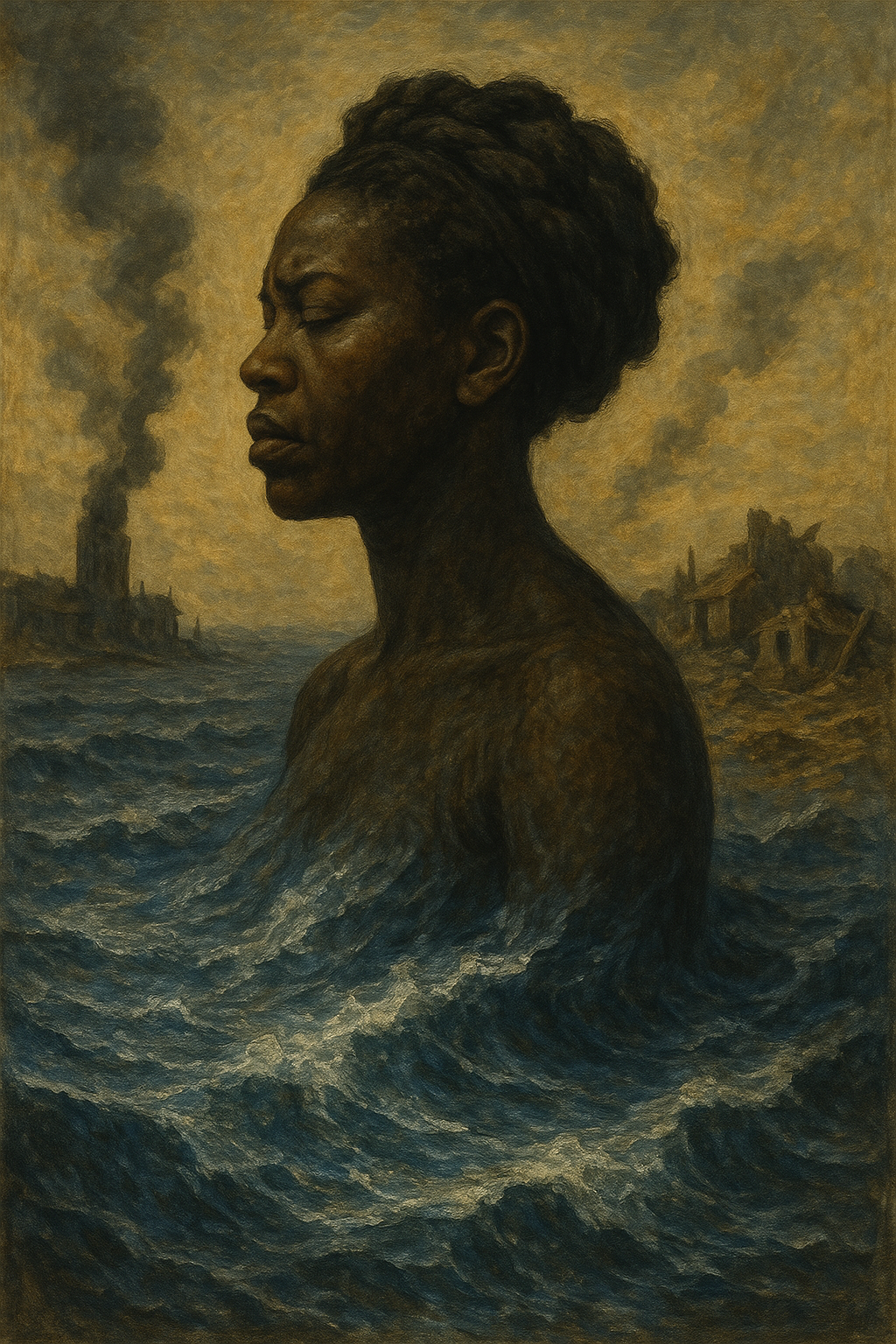
The poem is a description of the dire aftermath of war and pollution that is sinister to man. It is composed of 3 stanzas and 19 lines. The poem is in the third-person point of view. The lines of the poem are Free verse and run on as well.
Poetic Devices
1. Metaphor
“The breast”, “bloody century” and “filled with toxins” The sea is personified and given human qualities throughout the poem, starting with the title. The “breast” of the sea is a metaphor for the nurturing aspect of nature, which is burdened by the “bloody century” (line 1), symbolizing the devastation caused by human actions. The metaphor extends to describe the sea as having a belly (line 3) that is “filled with toxins”, representing the pollution and environmental degradation caused by human activity.
2. Allusion
“Noah’s monologue”, “Middle Passage’s Cargoes” Cheney- Coker alludes to significant historical events and figures to underscore the weight of human history on the sea. Reference to “Noah’s monologue” (line 6) and the “Middle Passage’s Cargoes” (line 7) evoke biblical and historical slave trade.
3. Imagery
The poem is rich in vivid and often disturbing imagery. The “fractured chela” (line 11) conjures a broken, fragile image, symbolizing the irreparable damage done to nature and history. The imagery of a “diver’s story” about the recaptured coelacanth (line 9) brings to mind the depths of the ocean and the mysteries it holds, now tainted by human interference.
4. Personification
The sea is personified throughout the poem, most notably in the description of its “groan under its weight” (line 2) and “throbbing, the sea’s breast” (line 12). The personification emphasizes the sea’s suffering, making it a character that bears the burden of human history and environmental destruction.
5. Symbolism
The “orphans of East Timor” (line 4) symbolizes the innocent victims of war and conflict, representing all those who suffer due to the actions of the powerful. Similarly, Sierra Leone is used as a symbol of a nation ravaged by war and exploitation, where “a raped woman’s cry” (line 14) signifies the deep and painful scars left by violence.
6. Irony
There is a bitter irony in the line “Sierra Leone won’t be worth a raped woman’s cry” (line 13), as it highlights the utter disregard for the suffering of individuals in the face of larger, impersonal forces like war and exploitation. The irony underscores the theme of human indifference to the devastation caused by their actions.
Mood/tone
The mood of the poem is one of deep sorrow and mourning, as it reflects on immense suffering caused by human actions throughout history. The tone is elegiac and reflective with a sense of resignation to irreparable damage done to both humanity and the natural world. Cheney-Coker’s attitude towards the subject matter is one of lamentation, as he mourns the loss of innocence and the destruction of nature.
Language And Diction
The language in “The Breast of the Sea” is both stark and evocative, reflecting the grim realities of the 20th century. Cheney-Coker’s choice of words like “bloody”, “toxins”, “groans” and “fractured” all contribute to a tone of despair and mourning. The diction is formal and somber, appropriate for the weighty themes of historical trauma and environmental degradation. The use of formal language lends a gravitas to the poem, reinforcing its themes of loss and devastation.
CREDIT TO H.K OCRAN/ LiTTROVE