

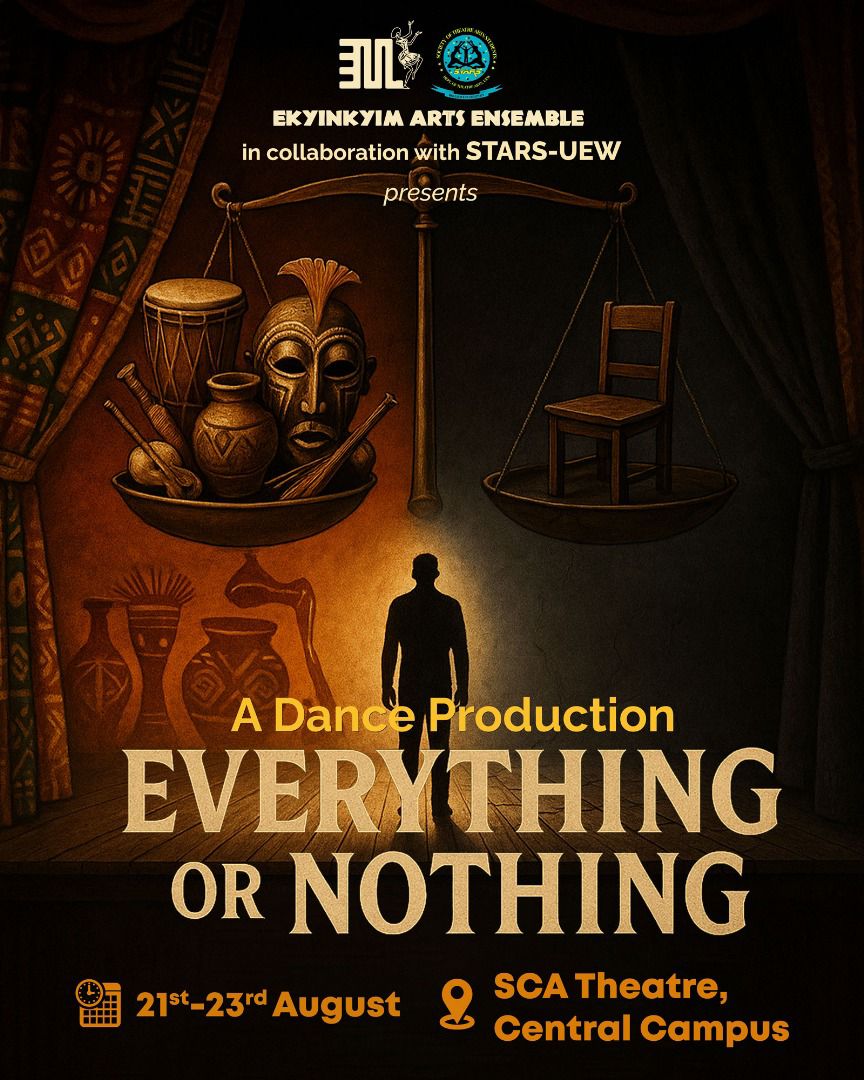
The dance Production was produced by Ekyimkyim Arts Ensemble in collaboration with the Society of Theatre Arts Students – UEW (STARS) and was facilitated by Miss Doreen Dede Quarcoo, Isaac Kwame Boako, Kirk Acquah, and Samuel Ntiamoah Ansong. All Alumni of the department of the Theatre Arts, UEW.
ABOUT THE DANCE PRODUCTION
ABOUT THE DANCE PRODUCTION
The production was choreographed to reflect all aspects of life, whether positive or negative, and their influence on individuals. It explored the struggles people face within society and examined the paradox of how one could appear to have everything yet still end up with nothing at the end of the day.
This review focuses specifically on the performance staged on Saturday, 23rd August 2025 (Third Night). It critiques the production in terms of dancers, lighting, costumes, sound, props, set design, make-up, and audience participation, before giving a final score out of ten. In our opinion, this production leaned more towards a Western style of dance theatre rather than a traditional African style.
DANCERS
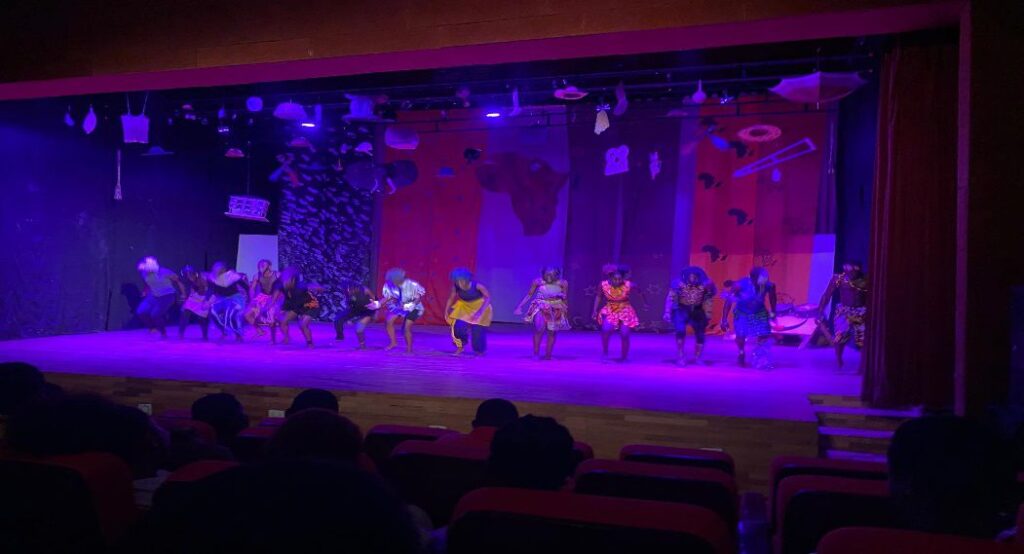
The dancers were excellent, their movements energizing the entire performance. At first, we assumed they were seasoned professionals, but it was later revealed that most were Level 100 and 200 students of the department. Their talent and potential were remarkable.
Their movements were precise, well-calculated, and perfectly synchronized with the drumming and songs. The inclusion of acrobatics elevated the performance, adding spectacle and excitement. A particularly impressive moment was when the music failed — the dancers continued seamlessly, so much so that the audience could hardly tell there had been a technical fault. Their synchronization and resilience were outstanding.
DRUMMERS AND SOUND
The drumming was exceptional, blending seamlessly with the dancers’ steps and creating an electric atmosphere from the very beginning. The acrobatic sequences were heightened by the rhythm of the drums, keeping the audience captivated.
The sound operator also did well in executing cues and managing transitions. Although there were some technical challenges, he recovered swiftly, ensuring the flow of the performance was not disrupted.
MAKE-UP AND PROPS
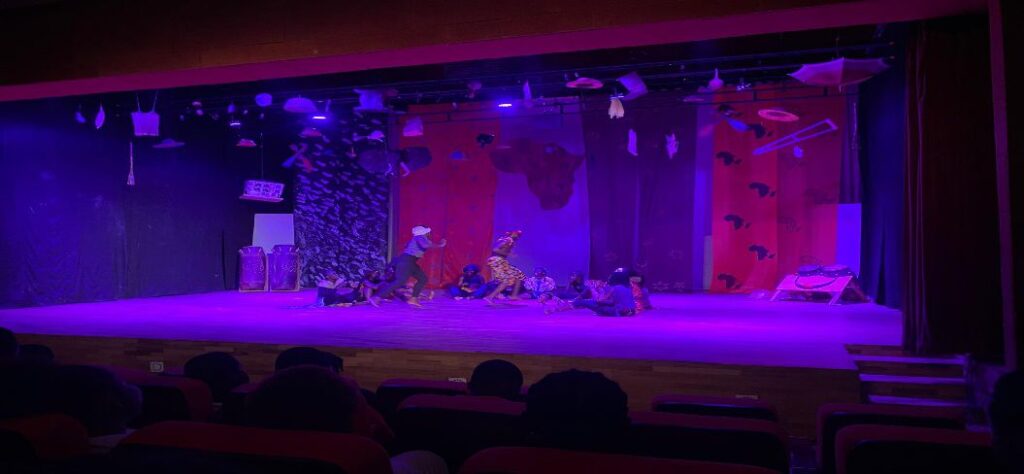
The make-up was intense and expressive, reflecting each dancer’s character. The props added significant depth to the performance. For example, dancers lifting heavy weights symbolized life’s burdens, while the items suspended on bars — hats, horns, masks, stools, baskets, brooms, bowls, shoes, guards, and more — beautifully symbolized broken fragments of life and the objects that surround us daily.
COSTUMES
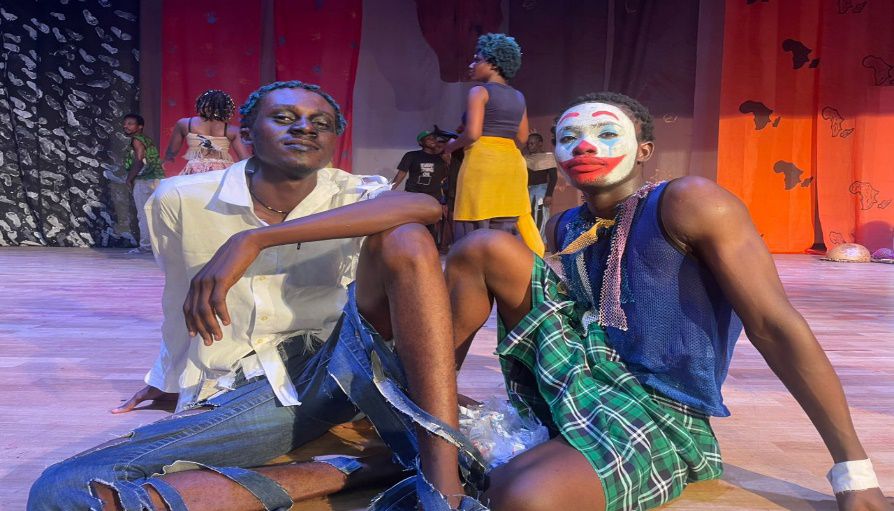
The costumes were simple yet effective, enhancing the beauty of the production. Each choice felt deliberate and fitting. The facilitators deserve credit for this aspect.
SET DESIGN
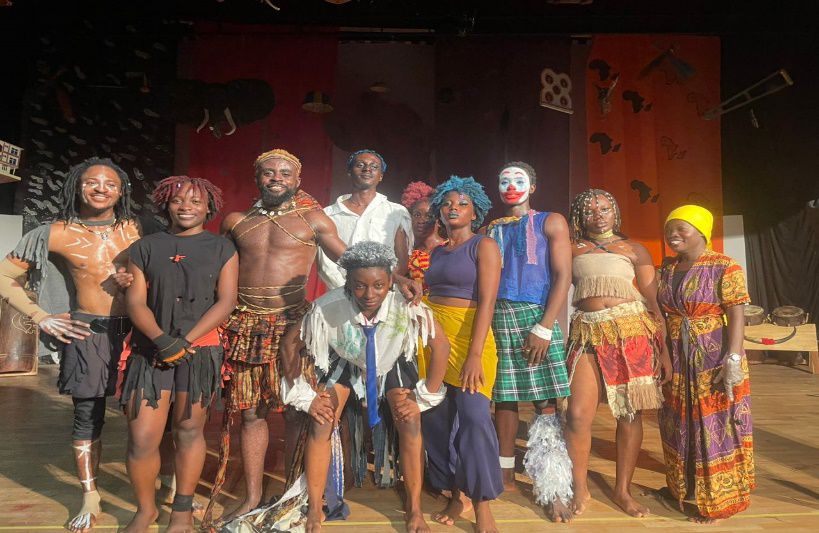
The set was simple but powerful. Fabrics painted with African maps, footprints, and palm prints created a strong cultural backdrop. At the center, a large wooden African map symbolized African identity and heritage. It was minimal but impactful.
LIGHTING
The choice of colors in certain scenes was commendable, adding vibrancy and atmosphere. However, some scenes were poorly lit, making it difficult to see the dancers’ facial expressions.
The spotlight was overused and sometimes misplaced — for instance, focusing on the singer when the stage was already fully lit. This either reflected mishandling by the operator or a general oversight by the facilitators. Nonetheless, lighting overall contributed positively to the show’s visual impact.
CHALLENGES
There were, however, a few shortcomings:
- Some dance sequences felt too prolonged, and transitions did not always flow smoothly.
- The voiceover narration sometimes clashed with scene changes, disrupting the storytelling.
- The fog effect extended into the audience, which could have been hazardous for people with asthma.
- Sound levels were excessively loud, particularly for those seated in the front rows.
- The inclusion of Indian and Western contemporary music at certain points felt disconnected from the African context, making it hard to see the relation. At times, it seemed these tracks were chosen just for rhythm rather than thematic fit.
That said, one song that strongly aligned with the production’s theme was Worlasi’s “Comot for My Head”, which resonated deeply with the audience.
HIGHLIGHTS
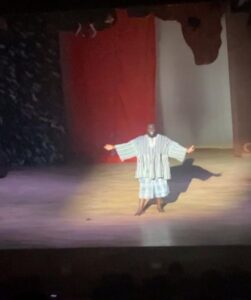
Despite the flaws, there were standout moments. The zombie-inspired choreography was mesmerizing. A guest performer delivered an original song titled “Everything or Nothing”, which became the highlight of the night. His presence and music energized the audience and added emotional weight to the production.
Also, a striking piece of symbolism was the dancer carrying a bag that looked full but was actually stuffed with rags which projected a powerful commentary on the emptiness of materialism.
CONCLUSION
While the production had flaws, it showcased the passion and dedication of the performers. With more attention to storytelling and smoother transitions, it has the potential to become exceptional.
The set design projected an African context effectively, while the dancers’ movements captured the struggles and emotions of life. Overall, Everything or Nothing was an inspiring performance, deserving of recognition.
Final Rating: 8/10
Review written by Francis Mawutor Apreku and Regina Afi Yayra Dorstu, BA Theatre Arts, UEW