

AN ABANDONED BUNDLE
By Oswald Mbuyiseni Mtshali
The morning mist
and chimney smoke
of White City Jabavu
flowed thick yellow
as pus oozing
from a gigantic sore.
It smothered our little houses
like fish caught in a net.
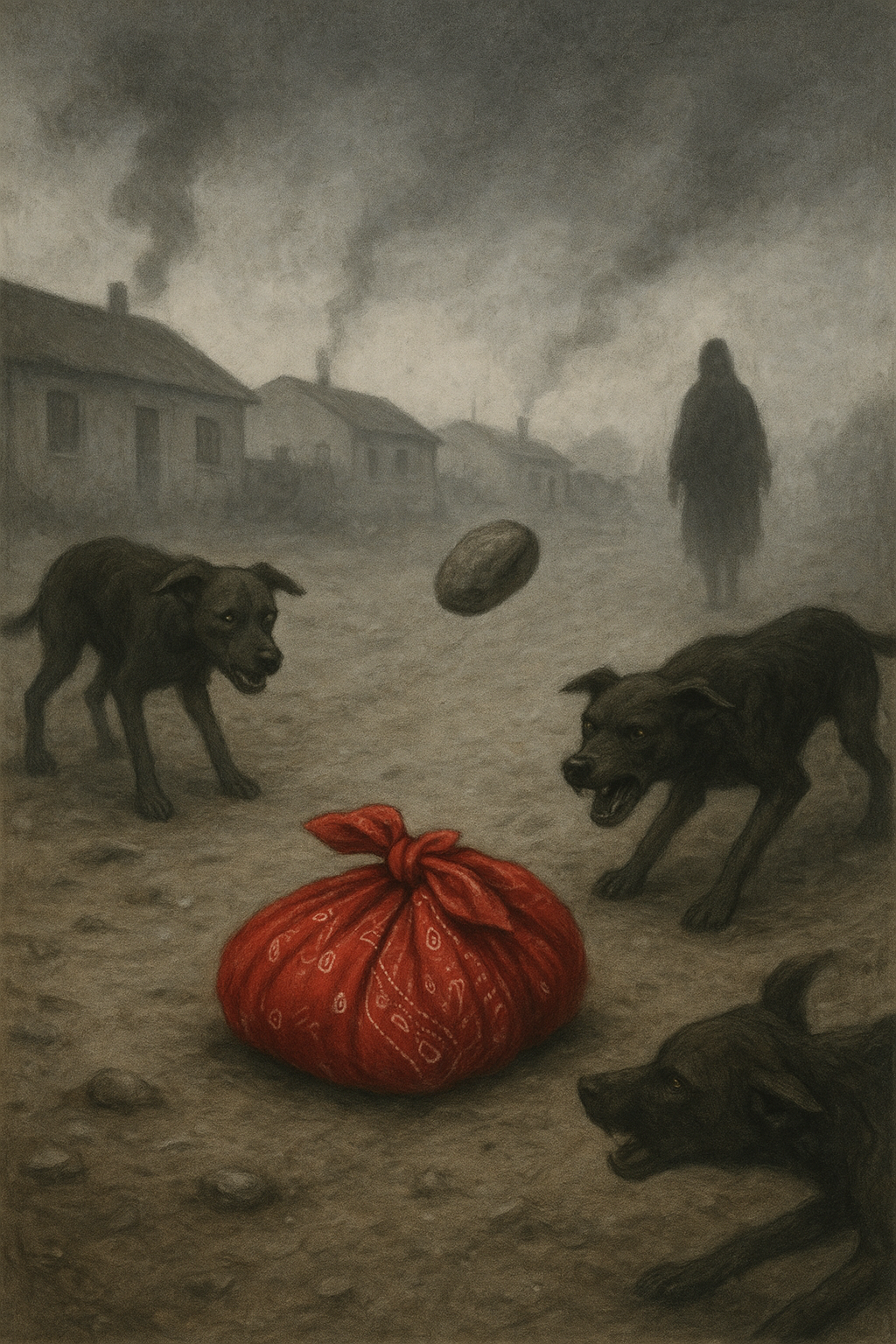
Scavenging dogs
draped in red bandanas of blood
fought fiercely
for a squirming bundle.
I threw a brick;
they bared fangs
flicked velvet tongues of scarlet
and scurried away,
leaving a mutilated corpseㅡ
an infant dumped on a rubbish heapㅡ
‘Oh! Baby in the Manger
sleep well
on human dung.’
Its mother
had melted into the rays of the rising sun,
her face glittering with innocence
her heart pure as untrampled dew.
Summary Of The Poem
This poem was written by Oswald M. Mtshali, a South African poet born in 1940. It criticizes a morally decayed society living in White City Jabavu which is a black suburb of Johannesburg. The poet presents a mother who gives birth, drapes the infant in red bandanas (neckerchiefs/scarves), and throws it onto a rubbish heap (an abandoned bundle). Taking advantage of the morning mist and smoke, the mother leaves the scene appearing innocent. Dogs begin eating the baby until the persona discovers them, and, feeling sorry for the child, throws a stone to scare the dogs away.
‘An Abandoned Bundle’ recounts the tragic story of a forgotten child in apartheid-era South Africa. The poem describes the discovery of an abandoned baby left on a roadside, symbolizing the neglect experienced by many black South Africans during that time. Through imagery and language, Mtshali captures desperation and hopelessness, highlighting the harsh realities faced by marginalized communities. The abandoned bundle becomes a powerful metaphor for societal injustice and systemic oppression, urging readers to confront the human cost of discrimination and inequality.
Thematic Analysis
Moral Decay: The poem depicts a society devoid of humanity. The mother discards her baby on a rubbish heap and yet appears innocent. The shocking contrast reflects a rotten society where such acts evoke no remorse.
Irresponsibility: Mtshali vividly explores abandonment and despair. The newborn discarded in trash symbolizes the poverty and neglect of apartheid South Africa. Today, women still act irresponsibly by aborting or abandoning children, making the theme relevant.
Sympathy / Motherhood:
The persona feels compassion, chasing away the dogs with a brick. He compares the baby to Jesus in a manger, stressing the injustice of a society that fails to protect the vulnerable.
Hypocrisy: The mother embodies hypocrisy. She commits infanticide but walks away “glittering with innocence.” Such people hide guilt behind false virtue.
Industrialization: Mtshali connects industrialization with urban decay and human suffering. The garbage dump symbolizes the destructive effects of apartheid-era industrial growth.
Guiding Questions
i. What is the poem about?
The poem exposes moral decay. A mother abandons her newborn wrapped in bandanas, leaving it on a rubbish heap to be eaten by dogs.
ii. Who is the persona?
The persona is a passer-by in White City Jabavu who witnesses the scene. This is shown in the line: ‘I threw a brick; they bared fangs.’
iii. What is the tone of the poem?
The tone is sympathetic toward the child but becomes ironic at the end, as the mother walks away feeling innocent.
iv. What type of poem is this?
It is a free-verse, modern lyric poem expressing strong feelings of sympathy and shock.
v. Comment on language use in the poem.
The language is simple yet powerful, enriched with imagery, irony, simile, symbolism, and biblical allusion to communicate the message.
vi. What message do we get from the poem?
- Women should take responsibility for motherhood.
- Abortion and child abandonment must be discouraged.
- Governments should enact strict measures against child neglect.
vii. Relevance to today’s society
The poem remains relevant, as cases of abortion and child abandonment persist in many communities.
Literary Devices
Allusion: The reference to the biblical manger contrasts Jesus’ salvation with the abandoned child’s tragedy, underscoring despair under apartheid.
Simile: Comparisons such as ‘chimney smoke… pus oozing from a gigantic sore’ and ‘houses… like fish caught in a net’ emphasize poverty and helplessness.
Imagery:(Visual imagery)
Vivid descriptions—’heap of rubbish,’ ‘mutilated corpse,’ and ‘bare fangs’ make suffering tangible and highlight injustice.
Credit to Ann- Marie S.Wilson