

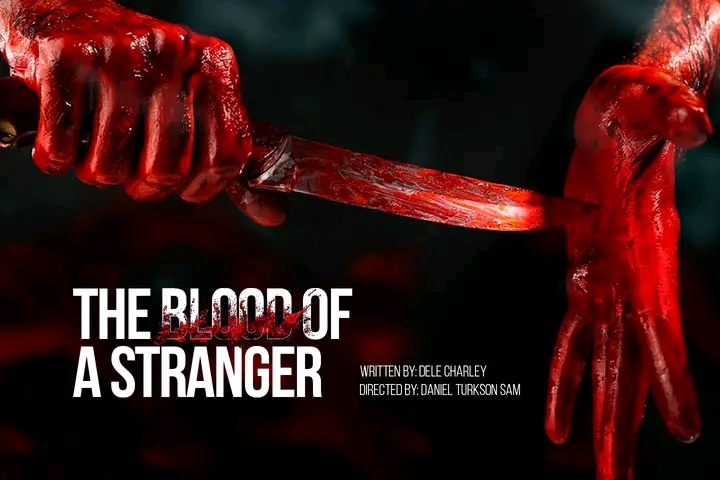
A REVIEW OF DELE CHARLEY’S PLAY “THE BLOOD OF A STRANGER” staged at the School of Creative Arts Theatre- University of Education, Winneba on the 27th -29th June 2024.
The play “The Blood of a Stranger” by Sierra Leone playwright Dele Charley explores the life and culture of the Mando village in Sierra Leone. The story depicts the attempt of a White man to exploit the local people’s natural resources through unethical and illegal means, taking advantage of their perceived “ignorance.”
However, the play ultimately shows that justice prevails over oppression. It highlights the resilience of the Prince of the Mando village as he singularly resists the exploitative attempts of the white intruder.
Through this work, Charley shines a light on the ongoing struggles many communities in the Global South face against the extractive ambitions of foreign interests. The play’s resolution underscores the power of an individual and the ability of the marginalized to ultimately triumph over unjust systems of exploitation.
The play was directed by Daniel Turkson Sam, a final-year directing student of the Department of Theatre Arts as his final-year project as a partial fulfillment of the requirement for the award of a Bachelor’s Degree in Theatre Arts.
This review captures only the performance on the 28th of June 2024, therefore, the performance of the previous day won’t be included. The actors’ acting, costumes, lighting, sound, makeup, sets, props, and audience participation will all be highlighted in this review in no particular order.
To set the ball rolling, Acting is the art and practice of portraying a character or role on stage, in film, television, or other performance media. It involves the interpretation and embodiment of a written script, play, or improvised scenario, where the actor brings the character to life through various techniques and methods believably and engagingly.
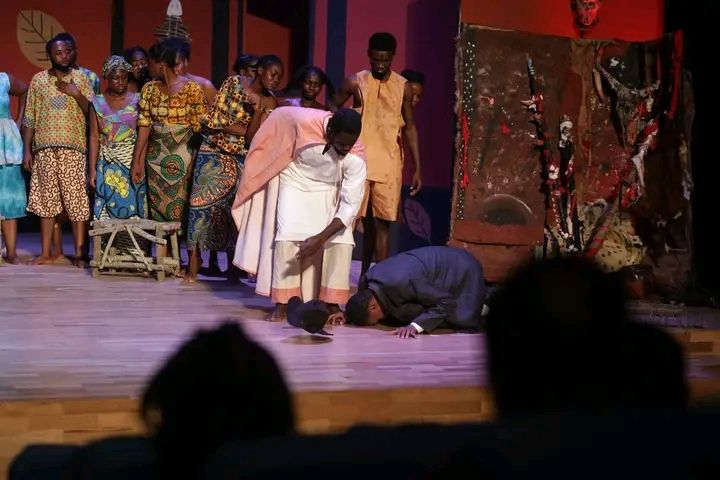
The play opens with a palpable sense of anticipation as Maligu , one of the Mando village elders, is seen approaching the entrance to the cave of Soko, the village’s priest. Stephen Donyong who played the character Maligu peers into the cavern calling and searching for Soko, the audience is immediately drawn into the charged atmosphere between the two men.
The entrance of Soko from behind Maligu was masterfully executed, creating a subtle yet powerful tension. The two actors, each inhabiting their roles with remarkable nuance, immediately establish a compelling on-stage chemistry that signals a deep, long-standing connection between their characters.

The energy between Maligu and Soko is one of intimate familiarity, suggesting a history of collaboration and conspiracy. Their exchanges are punctuated by furtive glances, hushed tones, and subtle shifts in body language that convey a shared understanding of what they do in secrets. Through their captivating performances, the two actors effortlessly draw the audience into the world of the Mando village hinting at the complex web of relationships and power dynamics that unfolded throughout the play. Stephen Donyong understood his character Maligu and killed the role.
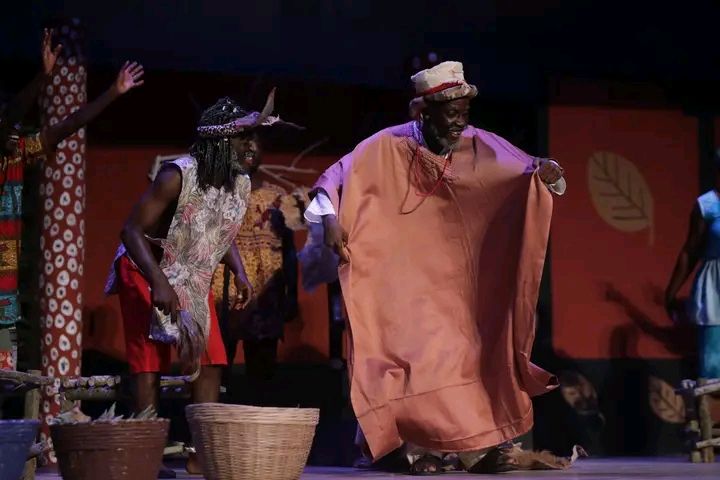

As Maligu and Soko retreat from the cave’s entrance, a new pair of characters take the stage, commanding the audience’s attention. Kindo, the formidable Prince and Chief Commander of the Mando warriors strides onto the stage, accompanied by his woman, Wara.
The chemistry between Ismael Osei who played Kindo and Jemima Jibrin who also played the role of Wara is great, as the actor portraying Kindo deftly conveys his persuasive nature, using a combination of charm and insistent cajoling to coax Wara towards the cave’s opening. Wara played with a captivating blend of resolve and trepidation, resisting Kindo’s overtures, her body language, words, and facial expressions reflecting a deep-seated knowledge of the village’s traditions and customs.
Wara’s unwillingness to blindly enter the cave, despite Kindo’s persistent efforts, creates a compelling sense of conflict and foreboding and signals a strength of character that sets her apart from the typical expectations of her gender and social status within Africa.
The entrance of Santigi Mando V, the revered 80-year-old chief of the Mando community, is a master in authentic acting. The actor tasked with portraying this crucial character brought an astounding level of commitment and attention to detail, seamlessly embodying the physicality and mannerisms of an elderly man.
From the moment Santigi Mando V takes the stage, the audience is captivated by the sheer verisimilitude of his performance. Francis Mawutor Apreku carried that role on his shoulders. The actor’s gait is deliberate and measured, each step conveying the weight of a lifetime’s worth of experiences. The slightest tremble in his hands and the occasional labored breath evoked a profound sense of frailty, yet the character’s bearing and presence commanded unwavering respect from those around him.
Also, the actor’s mastery of vocal delivery was equally impressive, as he modulates his tone and cadence to authentically reflect the weathered wisdom of a lifetime spent leading his community. The gravitas and authority that emanate from Santigi Mando V’s every word are a testament to the performer’s deep understanding of the character and the crucial role he played in the unfolding story.
When Whitehead stepped onto the stage, his fair complexion and imposing stature instantly marked him as an outsider, a stark contrast to the indigenous people of the Mando community. But it is the actor’s exceptional command of vocal delivery that truly brings the character to life. Gideon Bentil who played the role did justice to it.
Adopting the distinct accent of a British, added more flesh to the actor’s performance, just that, he swallowed some of his lines making it hard to hear him.
The performance of Parker, a role played by Samuel Yeboah as Whitehead’s secretary and interpreter, is a riveting study of contrasts and cultural duality. The actor did exceptionally well with his mannerisms and accent as a British colonial subject which immediately sets him apart from the indigenous Mando people despite sharing the same African heritage and skin color.
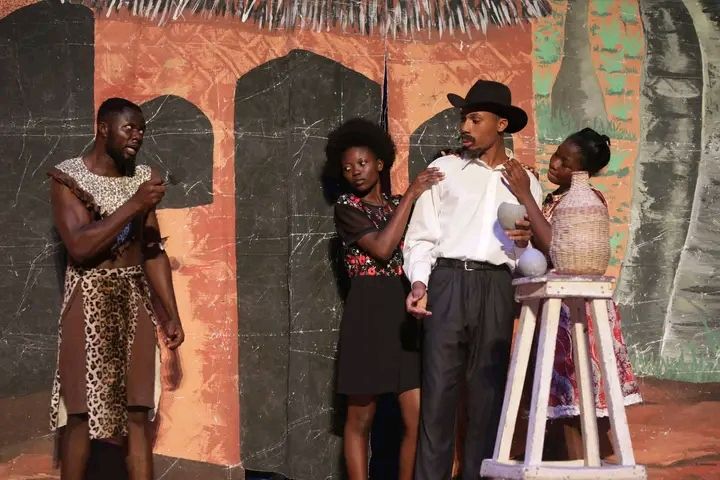

The performances of Sima and Boko, the formidable warriors in Kindo’s army, are the epitome of loyalty and steadfast commitment of seasoned soldiers. The role was played by Prince Arthur and Samuel Ntiamoah Ansong. From the moment the duet appeared on stage, Sima and Boko exuded an aura of disciplined power and unwavering resolve. The actors’ physical presence is immediately commanding, their every movement and gesture conveying the honed skills and battle-hardened experience of fighters and they were willing and ready to serve their leader.
The four attendants of the priest’s performance were mesmerizing in their portrayal of the spiritual rituals at the sacred shrine. Though they did not utter a word, the energy they exuded during their trance stage was beautiful especially the ladies. Alice Nortey, Jason Okai Mogyabeng, Isaac Sombure and Mary Mwangu really understand their role as attendants and enhanced the mood.
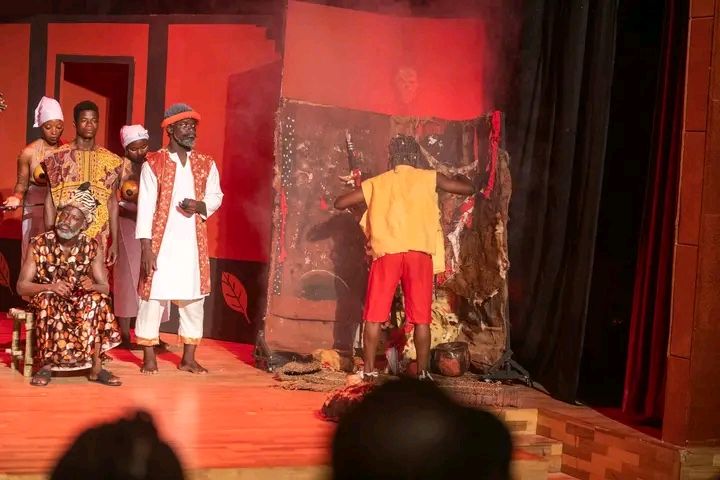
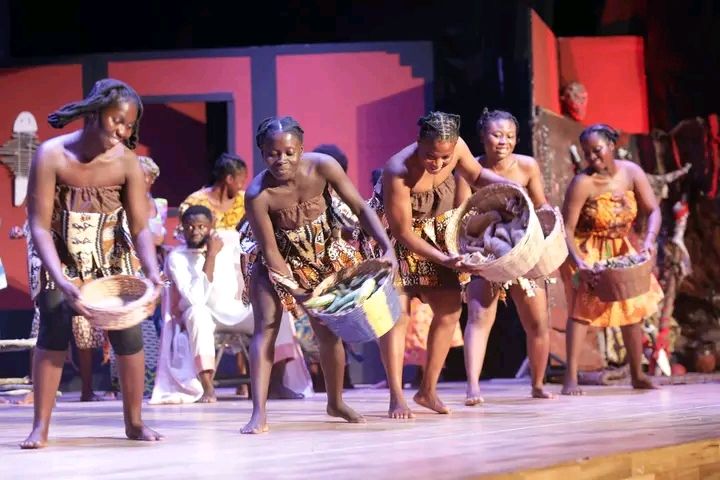
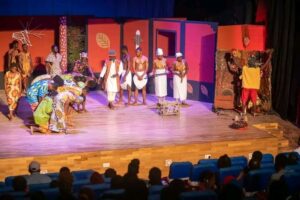
The director, used six maidens to exhibit the beautiful cultural dance of the people of Sierra Leone as the ladies gracefully swayed their waists to the rhythm of the drums during the gathering at the palace anticipating the arrival of Whitehead and Parker to pay their homage to the king and the dancers also brought a variety of foodstuff in baskets to signal the occupation of the people.
The Chorus or townsfolk did well by reacting when necessary. Though at a point when they were supposed to react to a comment made by Kindo, they were all silent on the stage.
The lighting crew did well, they were right on cues, giving different shades of light to signal the time of the day. In the last scene when Soko, Parker, and Whitehead are killed, they give a red light to signal the tragic mood in which the entire citizenry was in, and the audience were also solemn at this point as most people got emotional.
The sound crew also deserves a thumbs up as they played Sierra Leone songs to transport the audience to Mando land. They were also right on cues giving us a variety of songs that befits every scene.
The makeup crew led by Khatura Asopiah did a very good job transforming the hairs of all the ladies in the play into local African braids with threads and giving each actor a distinct design on their faces. Above all these, their works on Santigi Mando V, Soko, and Maligu were very commendable as it helped to enhance their characterizations.
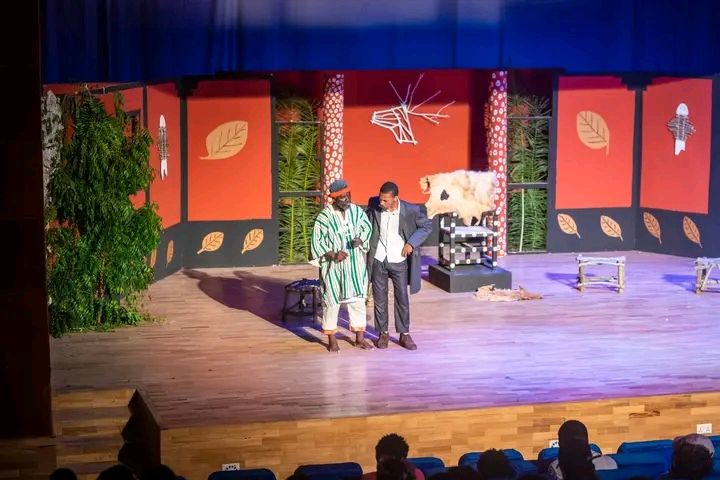
The set, designed and built by Daniel Aquaye a final year technical theatre student as his final year project was also breathtakingly beautiful. The meticulously crafted set design for this production is a visual feast. The attention to detail and the integration of the set elements create an immersive environment that heightens the audience’s sense of engagement with the play. From the moment light shone on the stage, the audience were captivated by the rich, and vibrant hues that permeate the set. The muted, earthy tones of the walls and furnishings evoked a sense of timelessness, evoking the grandeur and elegance of ages past. The actors also made good use of the set.
The costumes used in this production served as a remarkable complement to the actors’ performances, elevating the overall theatrical experience with their meticulous attention to historical authenticity. These costumes, provided a visual representation of the characters’ social standing, cultural traditions, lifestyle, personal aesthetics, and taste of the people of old.
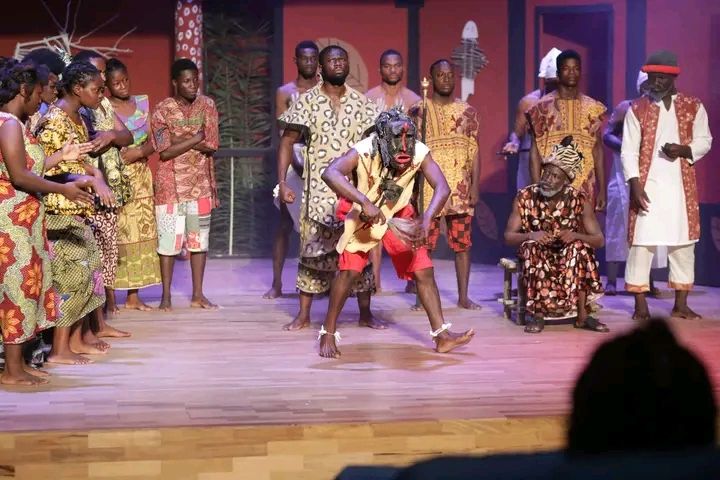
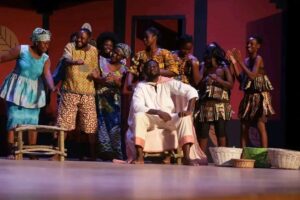
The strategic use of diverse props in this production serves to heighten the theatrical experience, creating a tangible connection between the audience and the world of the play. The lamp, with its warm, flickering glow, instantly sets the mood and atmosphere, while the live hen, with its gentle clucking and fluttering, adds a touch of organic vitality to the scene.
The whip, with its presence, conveys a sense of power and authority, while the smoking pipe, evokes a feeling of contemplation and leisure. The rustle of baskets further immerses the audience in the economic and social realities of the setting, while the gin bottles and drinking cups suggest the indulgences and vices that permeate the characters’ world.
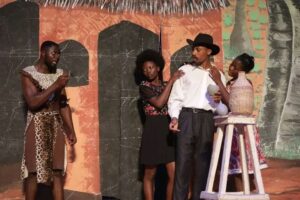
And then finally, the audience were lively as they cheered the actors on and reacted to some of the lines by laughing and clapping. The scene where Soko, Parker and, Whitehead’s bodies lay lifeless on the floor at the shrine as the King banished Kindo for killing Parker and going to kneel before the body of Soko was really felt by the audience as everywhere became quiet. As an audience myself, I can boldly say the director achieved the effect he wanted the production to have on the audience.

The production started at 7:12 pm instead of 7:00 pm and I rate it 8/10. A great piece by the director and his team.


Written by Abigail Nyamekye Clement (B A Theatre Arts,UEW)
From your detailed Reviewers (+233272138148)