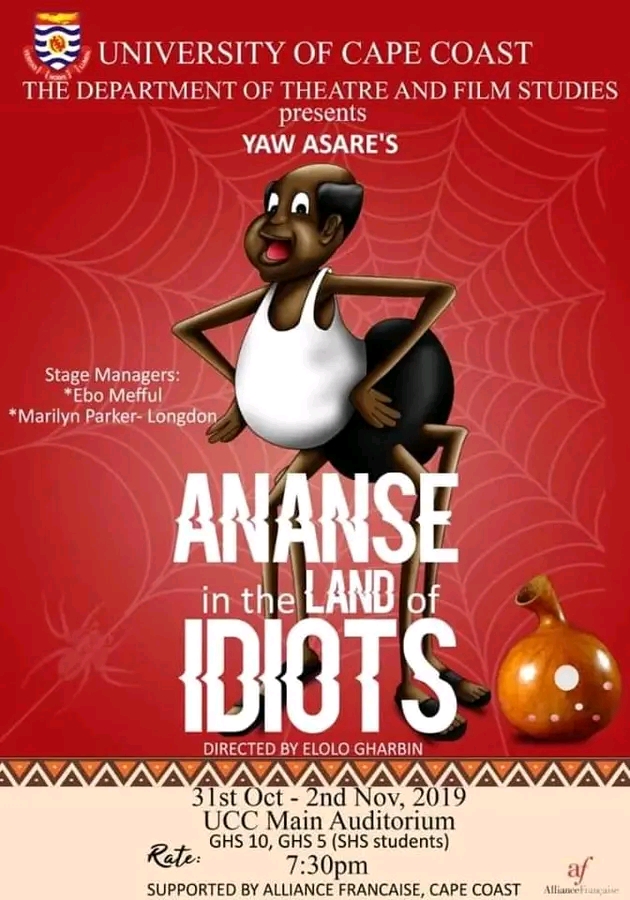
Yaw Asare’s play, “Ananse in the Land of Idiots,” serves as a compelling social commentary on post-colonial African society. Through the lens of the traditional Akan trickster figure, Ananse, Asare explores themes of deception, power, and the quest for autonomy. The play’s satirical narrative delves into the complexities of leadership and societal norms, making it a profound critique of both historical and contemporary issues.
The central theme of the play is deception, epitomized by Ananse’s cunning nature. As a character rooted deeply in Akan folklore, Ananse represents resilience and ingenuity. His manipulative strategies are not merely for personal gain but serve as a metaphor for navigating and challenging oppressive systems. The “Land of Idiots” symbolizes a society that is complacent, if not complicit, in its own subjugation. Through Ananse’s interactions, Asare underscores the necessity of wit and intelligence in confronting and subverting authority.
In terms of post-colonial critique, Asare’s play is a powerful exposition of the lingering effects of colonialism. The narrative critiques the imposition of Western values and the erosion of indigenous cultures. Ananse’s journey is emblematic of the African struggle to reclaim and assert its cultural identity amidst external influences. The play reflects on the paradoxes of post-colonial African societies, where traditional values often clash with imposed Western norms. This tension is vividly illustrated through the interactions and conflicts that Ananse navigates.
Character analysis in “Ananse in the Land of Idiots” reveals a complex portrayal of Ananse himself. He is not simply a trickster but a figure embodying the moral ambiguities of survival and resistance. Ananse’s actions, while deceptive, highlight the complexities of moral judgment in a world where the lines between right and wrong are often blurred. The other characters, often portrayed as naive or foolish, serve to amplify the themes of power dynamics and societal folly. Through their interactions with Ananse, the play delves into the human condition, exposing the absurdities and contradictions inherent in social hierarchies.
Literary techniques employed by Asare enrich the narrative, making it accessible yet thought-provoking. The use of humor and folklore not only engages the audience but also delivers a potent message about societal issues. The play’s structure, characterized by sharp dialogue and satirical elements, effectively critiques the socio-political landscape. Asare’s craftsmanship in blending traditional storytelling with contemporary themes enhances the play’s impact, making it a timeless piece of social commentary.
In summary, “Ananse in the Land of Idiots” is a profound exploration of post-colonial African society through the archetype of the trickster. Yaw Asare’s masterful use of Ananse as a vehicle for satire and critique underscores the enduring power of folklore in addressing modern societal challenges. The play’s themes of deception, power, and cultural identity resonate deeply, offering a rich tapestry of commentary on leadership, morality, and social justice. Through its clever narrative and complex characters, the play invites reflection and dialogue, making it a significant work in African literature.