

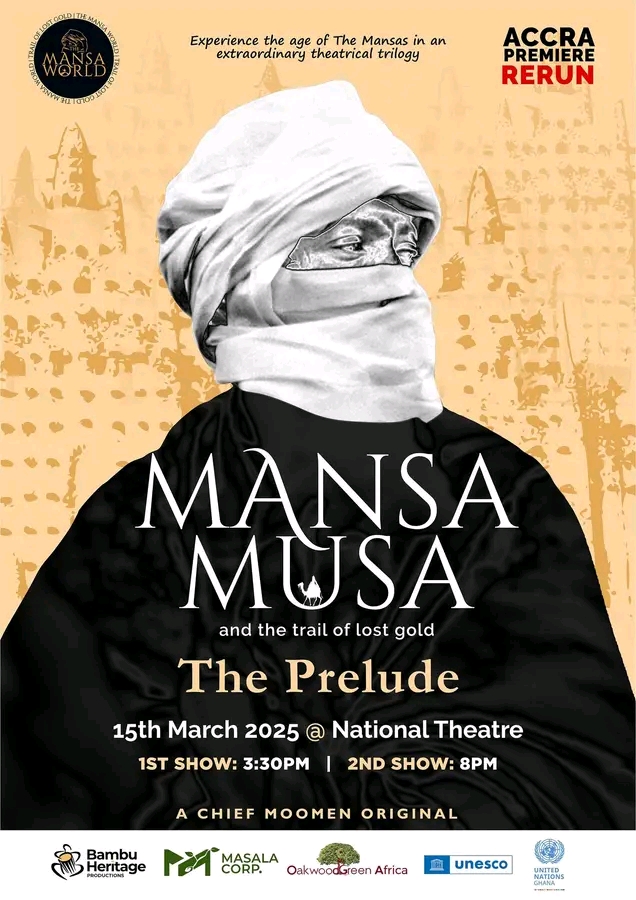
A Performance Review of Chief Moomen’s Mansa Musa and the Trail of Lost Gold: The Prelude( The Re-run) Staged at The National Theatre, Ghana on 15th March 2025.
About the Production
Mansa Musa and the Trail of Lost Gold: The Prelude is a genius epic play written by Chief Moomen and directed by a duo: Chief Moomen (The Playwright ) and Dr. Solomon Dartey. This masterpiece play was staged on 24th January 2025,at the National Theatre Ghana. This rerun was due to its massive reception during the previous staging. Click here to read our review on the first staging in case you missed it.
This review evaluates the performance and analyzes the theatrical elements such as plot, Characters, Set, Costumes, Props, Light and sound, audience reaction or reception, and finally rates the production over 10. This review however captures only the event that took place during the first show at 3:30pm .
Plot of the play
The play Mansa Musa and the Trail of Lost Gold: The Prelude tells the story of Bamba Kouyate, a young storyteller who isn’t sure about the path he’s chosen. He finds himself on a mission to save his nation from trouble and is sent back in time, hundreds of years, to search for clues about a lost treasure. His best friend Bello goes with him, and they’re later joined by Sibo. Together, they arrive at the court of Susu Sumanguru Kante, who becomes furious when he hears that Sundiata Keita is planning to return and fight him. However, Sumanguru was calmed when Balla Fasséké offers entertainment with Nene, Sundiata’s sister.
Nene secretly helps Sundiata by giving him Sumanguru’s magic, breaking Sumanguru’s power. Bamba, Bello, and Sibo then make their way to Sundiata’s court, where he begins preparing for battle by forming alliances with nearby towns. Nene brings Sundiata the good news that Sumanguru’s magical link has been broken, giving him confidence that he will win. The two kings meet at the Battle of Kirina, where Sundiata defeats Sumanguru. This victory marks the beginning of the Mali Empire, with Sundiata Keita becoming its first Mansa, remembered as the Lion King and the Son of the Buffalo.
Acting
The opening scene introduced the griots as the keepers of history, serving as a bridge between the past, present, and future. That scene was action packed as Balla Fasséké, Diallo Kouyate, and Maryam Kouyate owned the story and carried the audience along with them all the time. Their poetic expedition brought a great aura onto the stage. Araba Dansowaa who Balla Fasséké stood out among them with her pregnant pauses and brilliant inflections.
Bamba and Bello who bridge the gap between the present and the past, were also intriguing to watch. The chemistry between the two was exceptional. The way they carried themselves on the stage confirmed that they were true “bosom friends”. The manner Bello teased Bamba about his dwindling career and again forced him to perform at the market scene was believable. They stole the show. Bamba’s relationship with his Mother and father demonstrated a parent-child affair. Again, their transition into the ancient world was well executed especially how they played with xylophone and laser light was a great spectacle. Also, they positioned themselves well on the story building as they peeped into the action that unfolded at the palace. Finally, their use of modern slang, such as "GOAT," and their performances of current songs like "Soldier" by Black Sheriff and Michael Jackson‘s Moonwalk Dance added humor and relatability for the audience.
Again, the night also saw the likes of Daniel Delong. He played the character Sumanguru Kante. He commanded the stage and was highly believable. His stage entrance projected him as a godlike figure, wicked, intimidating, and a fearsome character. His reaction to Sundiata’s return was great. His fury was registered with his facial expressions and subtle panting to register that he was extremely crossed. Sumanguru’s scenes were equally impressive, showcasing a large and imposing palace that exuded authority and power.
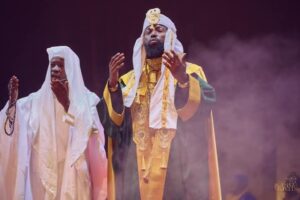
Again, Sundiata Keita was humble as expected, and captured the attention of the audience. Similarly, Mansa Musa was also delightful to watch. His grand entrance and appearance reflected his wealth and power as the richest man of gold. He rode on gracefully and left a lasting impression on the audience. He demonstrated his hospitality by receiving the visitors i.e. Bamba, Bello, and Sibo in a great manner. His scenes with Sumanguru Kante were a spectacle. A battle with the display of "African electronics" blended with warfare weapons. It was a charged scene. Tira Makhang, Sundiata's general, had a captivating entry. His bold presence, commanding voice, and fearless demeanor truly stood out. His actions and delivery made him one of the most memorable characters of the performance.
Furthermore, Mother and Father were also intriguing. While mother demonstrated the character of an African nagging woman. Father was the foil who supported Bamba in pursuing his storytelling dream. The chemistry between them reflected a husband and wife relationship. Father particularly convinced the audience that he was truly aged but strong as he spoke in calm composure amidst all the accusations from the wife.
Sibo is also one character who also took charge of the stage. The foreign language which she spoke during her chants was soothing to the ears. It portrayed her as someone with an exceptional gift that links the past and future time. Her scene with Bella Fasseke, Bello, Mansa Musa and Bamba was executed well.
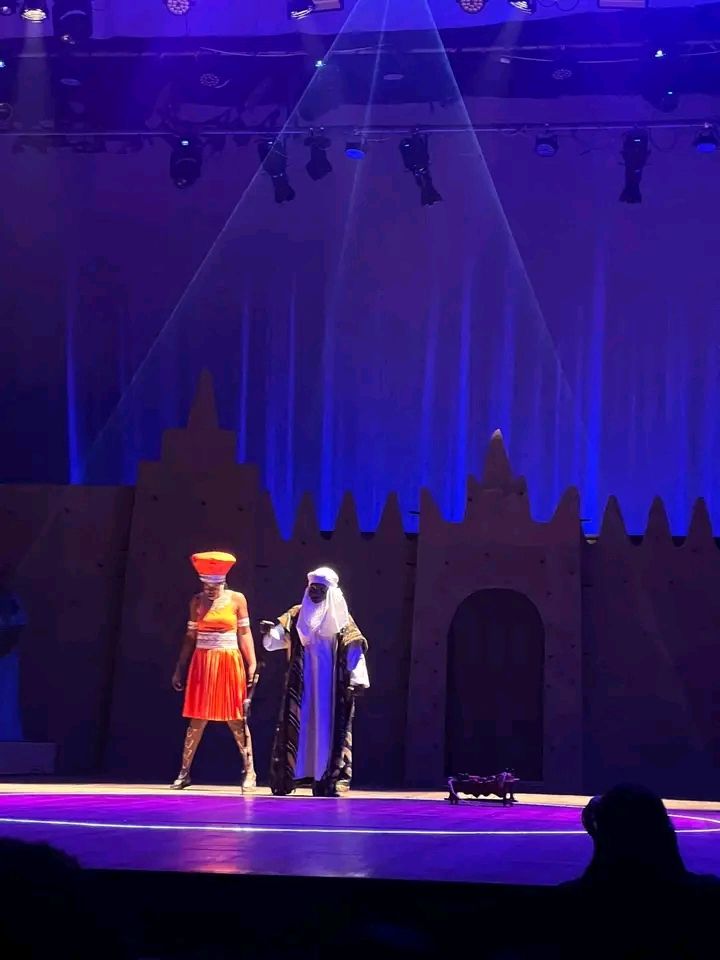
Nene (Sundiatas Sister) also acted well. She supported her brother to claim back the throne. Her relationship with her brother was believable. Again, she perfectly plotted with the three women who stole Sumanguru’s magical wrist charm.
Moreover, the priest (aged priest) killed his role. His intonation was brilliant and it also showed his reverence for King Mansa Musa. The way he mimed miming Mansa Musa was just artistic. Also, the manner in which he rejected the gold presents from the servants was also aesthetically pleasing. Finally, his blocking confirmed that he was an old man whose “bones were weak”.
Also, the modern-day market scene was well-blocked. Given that so many actors were present on stage, there was a tendency that masking would occur. But nothing of that sort happened. All the actors were strategically positioned. The market seen reflected a busy market day at “Bamako or Makola.” My only challenge was that the stage business was too many so I couldn’t focus on one action at a time. Nevertheless, that scene was very energetic and intriguing with the likes of the Bamba, Bello, the Pastor, Nurse, vegetable seller, etc. . . . In furtherance, the Protesters or demonstrators also stormed the market in Rambo style. Their grievances such as “As black lives matter”, “End Patriarchy “, ” Save The Planet Now”, “Fix the corruption”, and “Fix the unemployment” all heightened the tension on the stage. One actor who eased the tension was the Rasta man. His social concern of legalizing “Kush or Weed” brought about a bathos which threw the audience into endless laughter.
Music And Dance
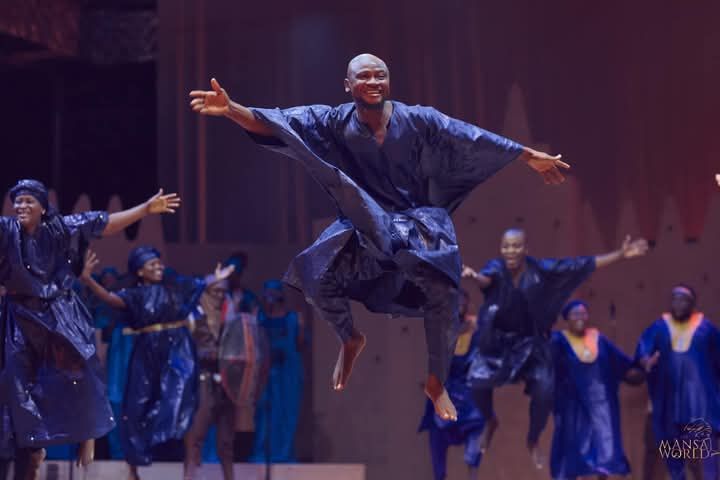
As a total theatre, it was interspersed with music, dance, and drama. The epic was treated well. The energetic choir who acted as the chorus was always on cue. All the songs sung influenced the mood and had connotations. Songs like” Mansa Musa” (the theme Song for the production) “No More Trouble in the World “and “So much Trouble” (sung during the demonstration scene), Black Sheriffs " Soldier "(sung by Bamba to the King to caution that a battle was approaching and that the king should arm himself) "Calm down" song by Rema song ( to reinforce Sumanguru‘s sexual encounter with the women), “Fly me to the moon” ( to solidify Bamba’s Lover‘s wish to go to the moon). All these songs added life to the drama.
Dance
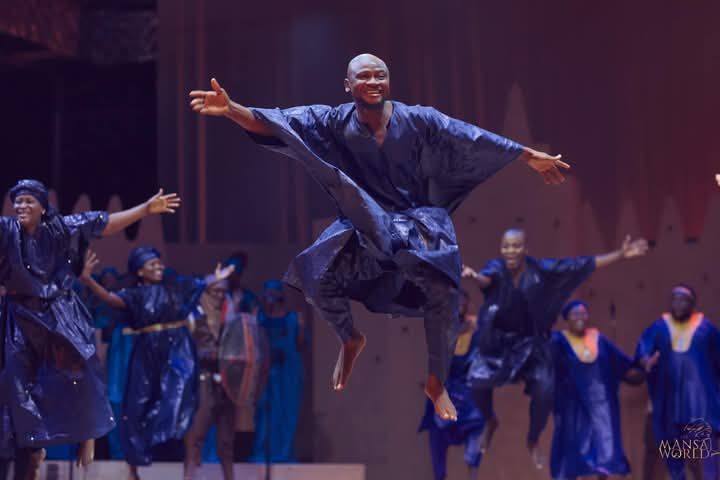
Dance was also an integral part of this production. The dancers were very energetic and enjoyed their performances. The dance used to welcome Mansa Musa was just perfect. The dancers used space and energy. It was interesting to watch the last dancer chased off stage by one the guards. Great choreography. Also, the locomotive and non-locomotive movements that transported Bamba and Bello into the ancient was excellent. Again, the Love dance between Bamba and his new lover demonstrates how time became a barrier to their love. Not forgetting the War dance that showcased the intensity of the battle. Finally, The moonwalk dance also added life to the events in the ancient world.
Kudos to John Edmund Sam and Dr. Ben Amakye-Boateng for their brilliant contribution as music directors for this project. Not forgetting the Choreographers namely: Alex Amertornyo, and Marcus Kafui Tay for that masterpiece aesthetically woven.
Set
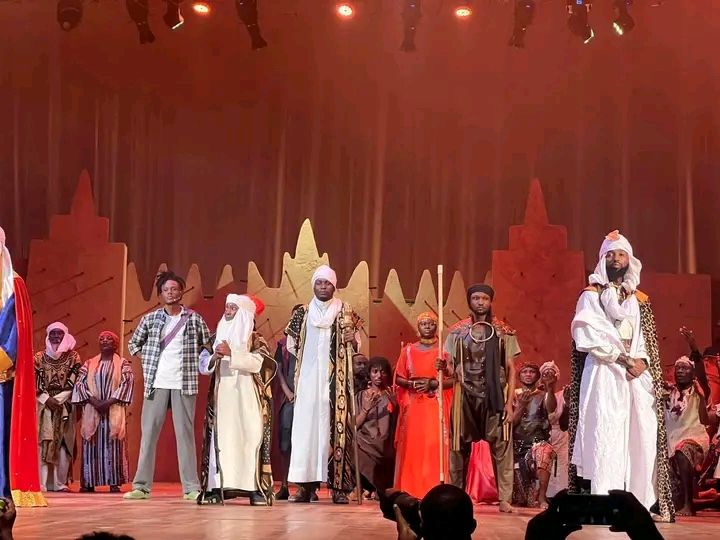
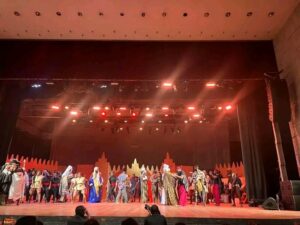
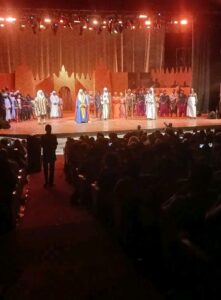
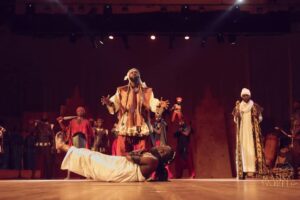
The set was a multipurpose one. It featured the passing caravan which set the tone for the production and unveiled the stage for the first time. The grand and well-structured set was a story building that featured a beautifully designed space for the choir and drummers, alongside the magnificent palace of Mansa Musa. . It also had space for Bello, Sibo, and Bamba to hide.
Again the market and Bamba’s house were thoughtfully designed, complementing their respective scenes and blending naturalism and realism of the production. One spectacle was how Apron was lowered down and up during the war scene and Sundiata’s fierce battle with Sumanguru Kante. It was very captivating . A great and elaborate set designed by Cromwell N. K Yeboah.
Props
The use of props was particularly effective, especially by the minor characters, who helped enhance the performances. The warriors used axes, shields, and spears, which made the battle scenes feel authentic and intense. The market scene was brought to life through the items displayed by the sellers, making it tangible and relatable as various people and their professions were represented. Additionally, when the announcement of Mansa Musa’s pilgrimage was made, the people’s use of baskets and sacks to collect gold for the journey symbolized their preparation for the upcoming expedition. Sundiata’s scenes also stood out, with the use of mats, gold bars, scepter, and cushions effectively. Bamba’s house and market scene also featured props like the Radio, Newspaper, Chairs, placards, ice chest, bible, etc.
It is also worthy to note that the play was set in the present but takes us back thousands of years, effectively showing two different customs and looks, reflecting both periods—the present and the past. The Props lead (Selorm Kudiabor) did a great job.
Costumes And Make Up
Bamba and Bello dressed casually, projecting how contemporary youth dress. At the market, the characters’ costumes depicted their professions, with sellers, a nurse, and a pastor all represented through their attire. Bamba’s parents’ clothing also showcased the modern Muslim dress culture. Bamba`s father had grey hair to depict his age.
Sumanguru’s costume played a significant role in enhancing his character as a warrior. The soldiers were also costumed well and had white and black clay on their cheeks to enhance their fierce faces. Likewise, Mansa Musa’s elaborate attire and accessories truly distinguished him from the other characters, highlighting his immense wealth. The warriors, the priest, the midget, Sibo, etc were also costumed well. The drummers and the choir wore attire that could be associated with both past and present, making them seamlessly fit into both periods. Lastly, the griots’ distinctive costumes stood out and helped establish their important role in the storytelling. The first storyteller had a white beard to portray her age and wisdom. The costumes were well-pulled. Great work from the Maud Korsah (Costume Lead)
Light And Sound
The lighting and sound were essential in bringing the production to life. It was pleasing to the eyes, excellent job. The lighting directed the audience’s focus throughout the play. The special lighting effects, which particularly helped the characters transition between the present and the past times, were truly impressive. Richard Dartey who was in charge of Light executed his role well. The ritual scene was well enhanced with the red on stage and the fog light. The LED used to create a pyramid light that transported Bamba and Bello in the Ancient world was perfectly done. Other effects included the “Sun”, the flicking of the light during thunder, and most importantly creating a clear distinction between periods of the day whether morning, afternoon, and evening. One wow effect was when light magically caused Sundiata`s staff to come from the sky. Again, the Lighting was flawless as was and never missed their cues.
The sound of the drums, xylophone choir, actors, and the organ was always clear and well-balanced, never once failing to support the atmosphere. The spoken word “Memory and vision” was a perfect choice, the thunder sound effect was brilliant. Not forgetting the beautiful house music that was played to fill in the scenes. The sound was administered by Richard Oti Oppong and Samuel Annan. Frank Kwakye who was in charge of sound engineering also did well.
Not forgetting the technical director, Margaret Lamptey for coordinating all the technical elements and designing the light for this captivating production.
Audience Reaction
The audience were completely captivated by the performance and responded with energy and enthusiasm. The audience enjoyed moments of laughter, through Bello’s comic character. They enjoyed the performance of Bello, Mother ,Father and Sumanguru Kant’s . Again, Sumanguru’s guards who danced with their butts also got the audience laughing.One notable event was that the audience cheered and clapped at the end of every scene. The curtain call was excellent and the audience loved it. The curtain call created the impression that the show hadn’t ended and that there was another unfinished battle. It ended aesthetically with the sound “Welcome to the Mansa world” as the actors froze.
Overall, Mansa Musa and the Trail of Lost Gold: The Prelude is an exceptional epic both educative and entertaining. The prelude, which concluded with the first trilogy, highlights Sundiata as the founder of the Mali Empire, setting the stage for the continuation of the story with Mansa Abubakar and Mansa Musa, and an epilogue. The audience were eager for more, expressing excitement. The treatment of the play was brilliant. This was a pure masterpiece.
Overall, I rate this production a perfect score 10/10. An Excellent epic production which perfectly qualified as a total theatre.
Written by Mensah Junior Raphael
(B.A Theatre arts, UEW)
From the Detailed Reviewers (+233272138148)