

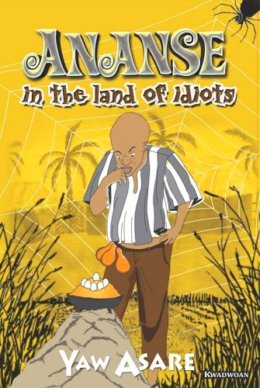
In the traditional play Ananse in the Land of Idiots, the titular character, Ananse, ventures into a foreign land and uses his cunning to manipulate his way into power and wealth. While some may interpret his actions as cleverness or survival tactics, a deeper analysis of his behavior reveals a much darker truth. Ananse’s actions throughout the play are not only deceitful and immoral but also destructive. Far from being a hero, Ananse embodies the characteristics of a true villain; selfish, manipulative, and entirely unconcerned with the consequences of his actions on others.
To begin with, Ananse shows blatant disregard for the sacred traditions of the people of Dim-Nyim-Lira. Upon arriving in the land, he eats food that was prepared as an offering to the gods during an important ritual ceremony. This is not only disrespectful but considered a taboo. Ananse does this not out of ignorance but out of selfish desire, placing his own hunger above the spiritual beliefs of an entire community. This marks the beginning of a series of violations that define his villainous path.
Rather than accepting the consequences of his offense, Ananse chooses to manipulate the justice system by bribing the king and elders with kente bands and false promises of unmatched clothing. Through this act, Ananse corrupts the very institution meant to uphold law and order. This behavior highlights his willingness to deceive and compromise others for his own gain. A true hero would have accepted responsibility or sought redemption; Ananse chooses corruption and lies.
Moreover, Ananse’s manipulation does not end with the royal court. He deceives the royal guard, Akpala, with the lure of honey and promises of shared wealth. He convinces Akpala to murder the prince; an act that Ananse orchestrates without ever dirtying his own hands. This form of indirect violence makes Ananse even more dangerous; he turns others into tools for his own sinister goals. The prince’s death is not only a personal loss to the royal family but a tragedy for the entire land, and Ananse is the hidden hand behind it.
What further cements Ananse’s villainy is his betrayal of Akpala. After using him to eliminate the prince, Ananse rewards Akpala with death instead of the promised wealth. This ruthless act reveals that Ananse has no loyalty or compassion. Everyone in his path is disposable once they serve their purpose. Even Odudu, the town’s so-called idiot who witnesses the murder, is used indirectly; his silence allows Ananse to get away with the crime, and Ananse never shows remorse or gratitude.
Finally, Ananse escapes the land with his stolen bride, wealth, and title, leaving behind chaos, a grieving king, and a broken system. He faces no justice, shows no regret, and benefits entirely from a series of lies and murders. This is not the legacy of a hero. A hero uplifts others, fights for justice, or at the very least grows morally. Ananse does none of these. His success is built on deceit, betrayal, and manipulation, making him a villain in every sense.
In conclusion, while Ananse may be clever and strategic, these traits are not enough to define him as a hero. His disregard for sacred customs, manipulation of authority, orchestration of murder, betrayal of allies, and eventual escape from accountability all point to a character driven purely by self-interest and moral corruption. Ananse in this story is not a champion of the weak or a critic of corrupt systems; he is a cunning villain who thrives on exploiting the foolishness of others for personal gain.
Written by
Obed Yaw Agyei