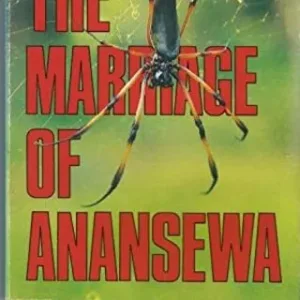
Synopsis of The Marriage of Anansewa
Author: Efua Sutherland
Genre: Romantic Comedy
Setting: Postcolonial Ghana
Structure: Four Acts
In The Marriage of Anansewa, Efua Sutherland presents a satirical and humorous story centered around George Kweku Ananse, a poor but clever widower, who is determined to improve his financial and social status. His plan involves finding a wealthy husband for his only daughter, Anansewa, who is about to finish her secretarial studies.
Without her knowledge, Ananse secretly sends her photograph to four different rich chiefs. Chief of Sapaase, Chief of Akate (Togbe Klu IV), Chief of the Mines, and Chief-Who-Is-Chief initiating what he calls a “photograph engagement.” Each chief believes he is the sole suitor. Ananse uses this confusion to collect gifts and money from all four of them, enriching himself and upgrading his lifestyle.
When Anansewa eventually finds out, she is initially upset, but with persuasion and support from Ananse and his romantic interest Christie, she agrees to go along with his plan. However, complications arise when all four chiefs send telegrams announcing their intentions to come and perform the head-drink ceremony, the final step in the traditional marriage process.
To resolve the crisis and determine which suitor truly loves Anansewa, Ananse fabricates her death and sends word to the chiefs. Their responses vary, but Chief-Who-Is-Chief stands out by expressing deep sorrow and taking full responsibility for funeral expenses, believing himself already spiritually married to her.
Moved by his sincerity, Ananse announces Anansewa’s “miraculous return to life” and agrees to proceed with a grand wedding between her and Chief-Who-Is-Chief. In the end, Ananse achieves both his goals: securing a wealthy, affectionate husband for his daughter and significantly improving his own social standing.
The play uses humor and traditional storytelling to explore themes of marriage, greed, cunning, love, and modern societal values, all while highlighting the tension between tradition and modernity in African societies.
Introduction
Efua Sutherland’s The Marriage of Anansewa is a witty and satirical romantic comedy that uses humor, drama, and folklore to explore serious social issues in postcolonial Ghana. Through the cunning actions of Ananse, a poor but ambitious widower, the play exposes how marriage, a traditionally sacred institution, can be twisted into a tool for personal gain and social advancement. With themes of greed, manipulation, and modern versus traditional values, Sutherland delivers a compelling critique of how love and family can be corrupted by economic ambition.
Marriage as a Commercial Transaction
At the heart of the play lies the commodification of marriage. Ananse embarks on a mission to find a wealthy suitor for his daughter Anansewa, not for her happiness alone, but as a means to climb the social and economic ladder. He sends her photograph to four different chiefs without their knowledge or her consent, effectively turning her into a product in a marriage marketplace. This “photograph engagement” mocks the traditional courtship process and reflects how economic desperation leads to the objectification of women in marriage arrangements.
Ananse: Trickster or Caring Father?
Ananse’s actions can be seen as both loving and manipulative. On one hand, he claims to be seeking a life of comfort and happiness for his daughter. On the other, he deceives multiple people. He deceives his daughter, the chiefs, and even his own relatives in order to profit from the situation. His plan to fake Anansewa’s death in order to gauge the chiefs’ sincerity is a masterstroke of deception. Yet, it is through this act that the suitor who truly values Anansewa, Chief-Who-Is-Chief, is revealed. Ananse embodies the classic trickster figure found in African folklore. Clever, morally ambiguous, and always one step ahead.
Greed and Modern Vices
The play offers a sharp critique of postcolonial African society, particularly the growing obsession with wealth, status, and materialism. Each of the chiefs views Anansewa as a means to fulfill his personal desires: status, secretarial help, companionship, or simply another wife. Similarly, Ananse’s transformation from a poor man to a church-attending figure in a brand-new suit represents the social mobility that money from marriage can buy. This pursuit of wealth and comfort ultimately overshadows the emotional and human elements of marriage and love.
Women, Agency, and Resistance
Though Anansewa is initially unaware of her father’s schemes, she eventually becomes a participant in the plot. Her initial resistance shows that she is not merely a passive character, and her later cooperation hints at a form of strategic submission. Christie, Ananse’s romantic interest, also plays a pivotal role in executing the plan, proving that women in the play are not entirely voiceless. However, the overarching narrative still reflects a society where women are used as pawns in male-driven economic strategies.
Folklore and Satire as Tools of Critique
Sutherland’s use of the Ananse character connects the play to traditional Akan folklore, where Ananse the spider is known for outsmarting others. By blending this folklore with modern issues, Sutherland uses satire to entertain while challenging her audience to reflect. The exaggerated situations and clever dialogue create a humorous surface, but beneath it lies a serious commentary on the moral compromises people make for material gain.
Conclusion
Efua Sutherland’s The Marriage of Anansewa is a powerful dramatization of how marriage, love, and family relationships can be manipulated by economic forces and personal ambition. Through Ananse’s elaborate and risky plan, the play reveals the tension between traditional values and modern vices in postcolonial African society. While the story ends on a celebratory note, it leaves the audience questioning the moral cost of wealth, the sincerity of love, and the true meaning of marriage. In a society where money can dictate matters of the heart, Sutherland urges us to consider what we are willing to sacrifice and who gets sacrificed for success.
Written by
Obed Yaw Agyei