SUMMARY OF FOREST GOLD
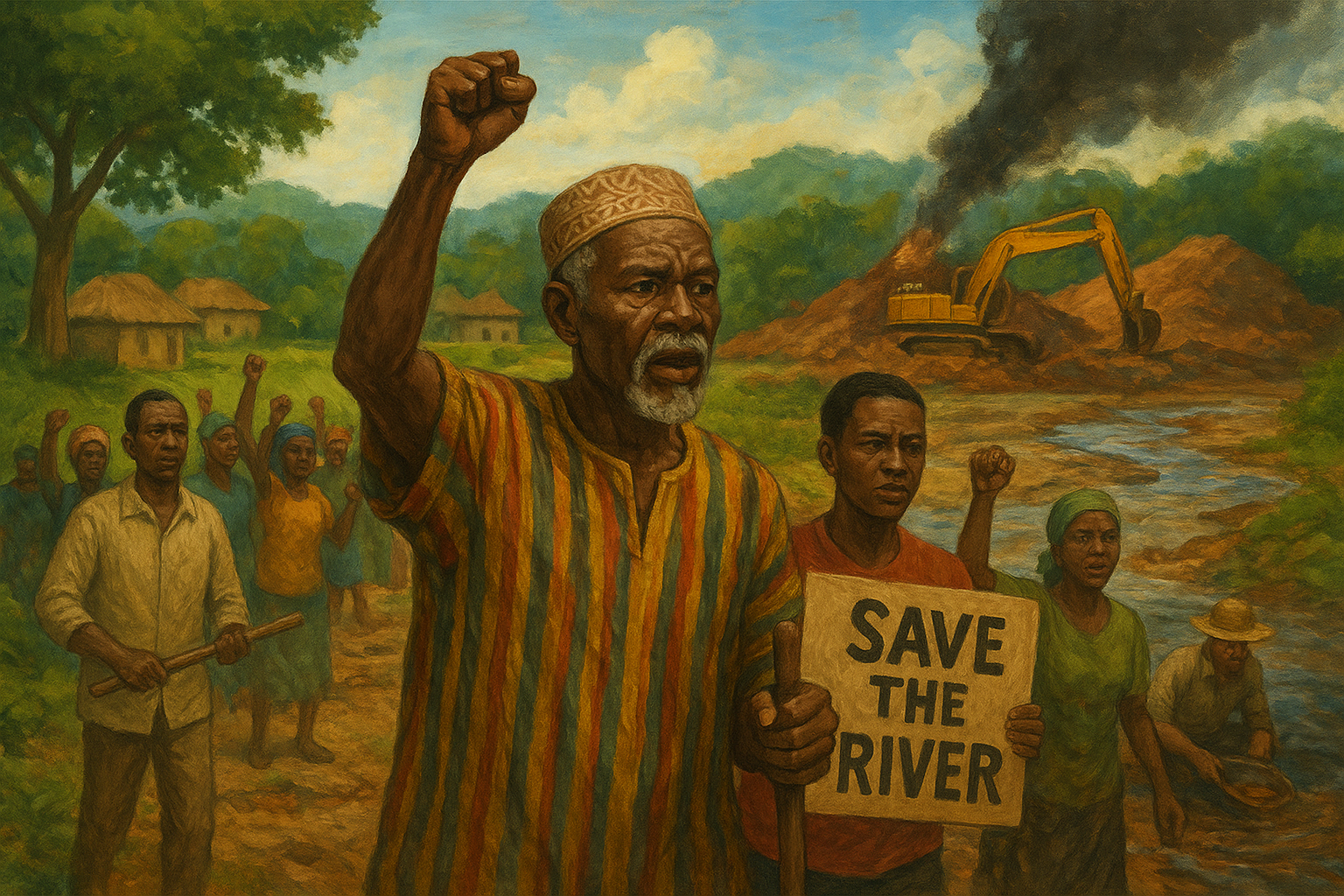
In the village of Daakye Asem, Ghana, a gold rush sparks environmental devastation and social upheaval. Osmond, a prospector, discovers gold, attracting outsiders and transforming the village into a mining hub.
Chief Dakye Asem, initially enthusiastic about the economic benefits, soon regrets his decision as the environment deteriorates and his people suffer. The once-pristine Daakye River becomes polluted, causing waterborne illnesses and economic hardship.
The villagers, led by Elder Onyimdze and Zakari, a young farmer, unite to seek justice and restore their river. They take bold action, shutting down the mining site, and engage in a long struggle for environmental justice.
Despite their efforts, the river remains forever scarred. However, the villagers’ resistance inspires other communities to fight against environmental exploitation, leaving a lasting legacy of resilience and hope.
PLOT STRUCTURE
Exposition: Introduction to the village and environmental concerns.
Rising action: Escalating environmental degradation and community resistance.
Climax: Youth-led action against the mining site.
Falling action: Aftermath of the action and ongoing struggles.
Resolution: Reflections on the community’s resilience and ongoing challenges.
PHYSICAL SETTING
Daakye Asem Village: A rural village in Ghana, surrounded by lush forests and the Daakye River.The Village: Embodies community resilience and cultural heritage.
The Forest: A symbol of natural beauty, resources, and cultural heritage. The Forest: Represents the natural world, threatened by human greed.
The Daakye River: A life-giving force, now polluted and devastated.The River: Symbolizes life, now poisoned and dying.
CULTURAL SETTING
Traditional Ghanaian village: Community-oriented, with a strong sense of cultural identity.
Colonialism and Neocolonialism: Historical exploitation and ongoing external influences.
Economic struggles: Poverty, limited opportunities, and dependence on resources.
SETTING’S IMPACT ON CHARACTERS
Osmond: Driven by economic interests, oblivious to environmental consequences.
Chief Dakye Asem: Torn between economic benefits and cultural preservation.
Elder Onyimdze: Embodies wisdom, resilience, and cultural knowledge.
Zakari: Inspired by community activism and environmental justice.
MAJOR THEMES
Environmental degradation: The devastating consequences of unchecked resource extraction and pollution.
Greed and exploitation: The destructive power of unchecked ambition and resource exploitation.
Hope and defiance: The human spirit’s capacity for resistance and resilience.
Regret and accountability: Chief Dakye Asem’s remorse for his decisions.
Other themes
Cultural heritage: The importance of preserving traditional ways of life.
Intergenerational conflict: Tensions between youth and elders on environmental issues.
Leadership and responsibility: The role of leaders in promoting sustainability.
Personal transformation: Zakari’s growth from frustration to activism.
Colonialism and Neocolonialism: Historical exploitation and ongoing external influences.
Activism and resistance: Collective efforts towards environmental justice.
Environmental degradation fuels social injustice.
Community resilience inspires hope and defiance.
Greed and exploitation undermine cultural heritage.
Leadership and responsibility shape environmental outcomes.
Personal transformation drives collective action.
MAIN CHARACTERS
Zakari: Young farmer who gets worried and frustrated with the destruction of the river and becomes determined and passionate to end the destruction.
Elder Onyimdze: Wise, resilient, and culturally knowledgeable who reminds the community of harm caused to with the destruction and pushes them to stop. He represents resistance.
Chief Dakye Asem: A chief who aids the Galemsey but later recognizes the consequences of his decisions and is regretful, and accountable.
Osmond: Ambitious, greedy, and exploitative who fuels the destruction of the forest and water bodies. He represents greedy, corrupt and unpatriotic leaders.

CREDIT TO VICTORIA KUKUA STEVENS, Dr. JEMIMA LARTELEY MENSAH,AND VERY REV. EBO EPHRAIM