

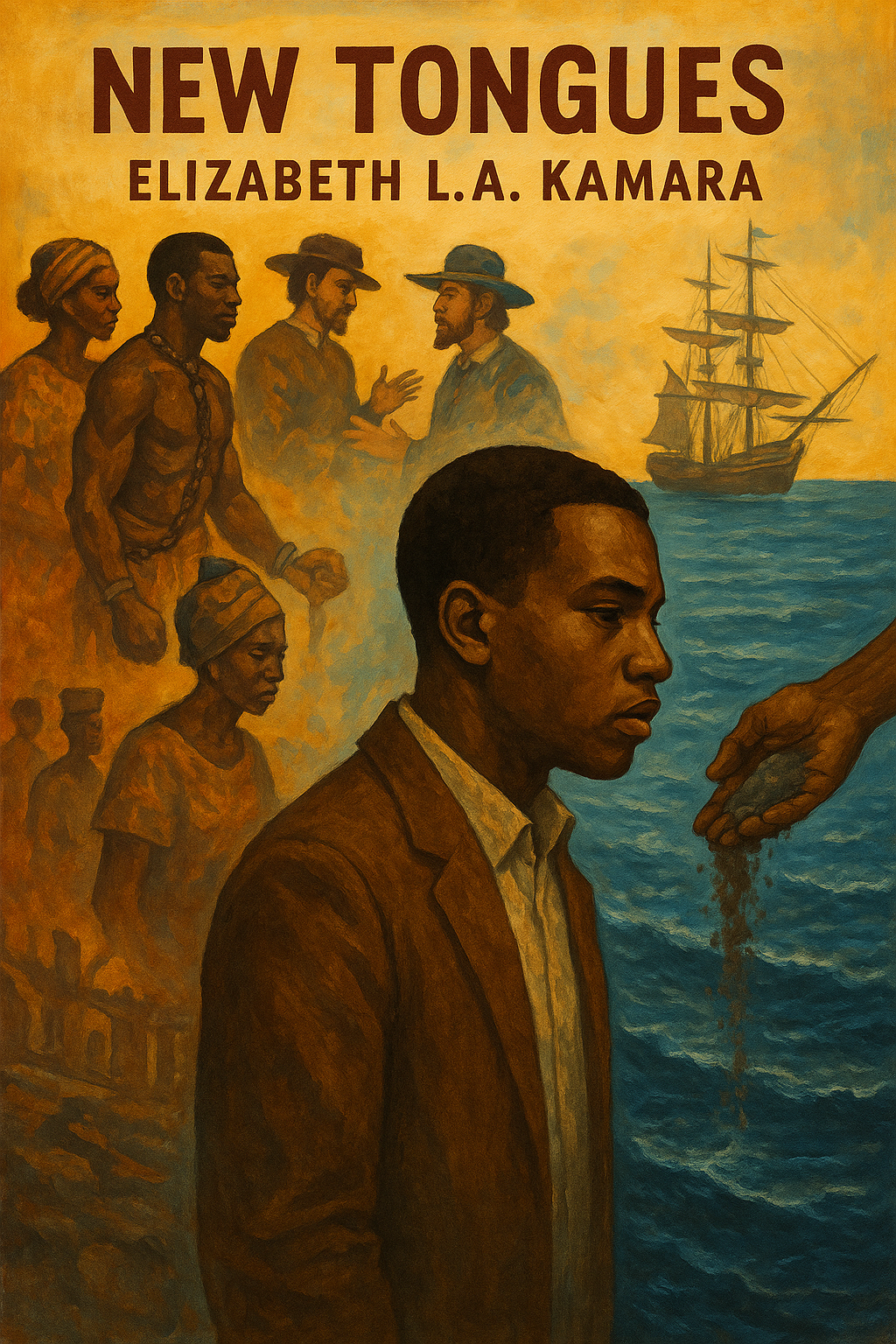
NEW TONGUE – ELIZABETH L.A KAMARA
Inspiration and Background Elizabeth Lucy Alberta Kamara is a Sierra Leonean educator, writer, and poet. She was raised in the East End of Freetown. She received her early education at Kamara Holy Trinity Primary School and Annie Walsh Memorial School before pursuing her academic journey at Fourah Bay College. As a writer, Elizabeth Kamara has three poetry collections to her credit. They are “Distilled,” “To Cross for a Daughter,” and “Stolen Laughter.” Her third poetry collection, “Stolen Laughter,” navigates through the realms of injustice, from the harrowing experiences of abused children to the streets of Minneapolis, where the plight of individuals like George Floyd is starkly depicted. Some of her works have been translated into Spanish and Greek. “New Tongue” is one of the numerous poems in her “To Cross for a Daughter and other Poems.” The poem was likely inspired by her experiences as a Sierra Leonean woman and her observations on the complexities of language, culture, and identity in postcolonial Africa. Her work is part of the African literary tradition, which emphasizes the importance of storytelling, oral traditions, and cultural heritage. It also reflects feminist and post-colonial perspectives, highlighting the experiences and concerns of African women in the face of colonialism and patriarchy.
THE POEM – New Tongues – Elizabeth L.A Kamara
They speak in a new tongue
And dance new dances
Minds battered into new modes and shapes
Their eyes revel in the wonder of the new
Embraced and bound to hearts with impregnable chains
The old songs as disregarded dreams
Remnants of a past.
Ties of family and friendship
Loosened, broken, burnt
The ashes strewn into the bottomless sea
As fishes swim by
Careless of the loss
Mindful of where they dare
A new generation
Careless of bonds
Of family
Of tradition
Of heritage
They care not
Nor revere the old
Their minds turn inwards
Only inwards
Like the insides of clothes
That marry the bodies of mankind
No room for elders
No,
Not even on the edge of their minds
Their ears blocked to the old tongue
And ways of doing things
Glorying in their new newness of a borrowed tongue and culture
Every man
For himself
By himself
Of himself
A strange coldness descending like snow covered mountain
Or like bathing at the back of the house
On a rainy July day
The gusts of wind falling trees
Carting roofs away
Tugging skirts
And swirling debris in the air
Their borrowed shoes dance
Their borrowed minds parted the red sea long ago
They hang the last lock on their culture
And glide into the future
Without a backward glance.
SUBJECT MATTER
“New Tongue” by Elizabeth L. A. Kamara is a forty-six-line poem that laments the neglect of African culture and tradition in the embrace of conveniently woke foreign values. The poem mourns the total detachment from tradition by a young generation of Africans as they adopt “borrowed” practices and confine the ashes of their own cultural practices “into the bottomless sea.” For proper context, it is imperative to begin our examination with the title of the poem. “New tongue,” as used in the context of the poem, is a metonymy for a new language. For centuries, Africans had maintained interactions with people of different shades from Europe and Asia. These uneven relations spanned the period of slavery, when both her human and economic resources were carted away; the period of colonialism, when artificial borders were created across Africa by Europeans who had no business governing Africa; to the period of neo-colonialism, when the direction Africa takes is heavily dependent on where Europe moves. All through these three phases of interactions, Europeans and Arabians left their indelible marks in terms of their cultural legacy, religions, and languages. These imprints have led to cultural disruptions that still influence the continent today. For one, the linguistic (language) identities of most African countries have shifted to those of their colonial masters. “New Tongue” is not essentially about language change but about the cultural shift it brings with it. We try so hard to be like the Europeans in mannerisms, dressings, and ideologies. To paraphrase Sidi’s descriptions of Lakunle in Wole Soyinka’s The Lion and the Jewel, “We are dressed like them. We look like them. We speak their tongue. We think like them. We’re just as clumsy in our foreign ways–we’ll do for them!” As a result, there is transposition of European realities over the African value system. This cultural switch is the overriding message in Elizabeth L. A. Kamara’s “New Tongue.” The language used in the poem emphasises the disregard for old ways, the breaking away of ties in family and friendship, and the nonchalance towards the loss of heritage. The imagery of “ashes strewn into the bottomless sea/as fishes swim by/careless of the loss” points to the indifference of the new generation of Africans to their past.
Stanza 1 STANZA ANALYSIS
“They speak in new tongue and dance new dances….” The opening stanza introduces us to the adoption of a new language and culture. The third-person plural pronoun “they” used in this stanza refers to a new generation of Africans. There is a cultural shift in this generation. This assertion is corroborated by the repetition of the word “new” four times in this stanza: “speak in new tongue,” “dance new dances,” “battered into new modes and shapes,” and “revel in the wonder of the new.” This suggests a total assimilation into a new culture: “Minds battered into new modes and shapes.” As evident in the lines in this stanza, these Africans are deeply fascinated by the adopted culture: “their eyes revel in the wonder of the new.” But at what price does this strong attachment to the new culture come? The breaking of familial and friendship ties. This is symbolized by the metaphorical burning and scattering of ashes in the sea. They dismiss their African heritage, otherwise called “old songs,” as “disregarded dreams,” “remnants of a past” they don’t want to identify with. In other words, the younger generation embraces the novelty of a foreign culture and language with unwavering commitment while it disregards, discards, and forgets the traditions of the older generation. Consequently, ties of family and friendship weaken and break. “Their minds turn inwards… Only inwards … Like the insides of clothes… They marry the bodies of mankind”.
The last four lines of the stanza 1 reiterate the influence of western ways and likened to the inside of clothes that marry the bodies of mankind to assume a strong sense of attachment to these alien ways. Minds turning inward also suggests neglect of old ways that define them as a people.
Stanza 2
“No room for elders…. No, …” The second stanza lays specific emphasis on disregard for elders, which implies disregard for old, traditional ways. Elders carry traditions in terms of language, folklore, mode of dressing, and the African heritage. By implication, there has been, as a result of colonization, a great neglect of “the ways of doing things” as lamented by the poet.
Stanza 3
“Glorifying in their newness of a borrowed tongue and culture… every man” This line reveals the warm embrace of the new culture by the new generation. The individualistic tendencies of the new culture are also revealed in the lines, “By himself, of himself…a strange coldness descending like snow covered mountain… The western culture glorifies selfishness as opposed to the collective, communal life of the traditions and culture of Africa. Hence, the word, “coldness” speaks volume of the meanness and cruel nature of the new generation, and how they selfishly seek for their interests and well-being. The new generation is thus full of pride. The imagery of “bathing at the back of the house, a rainy July day”, further enhances the feeling of exposure and vulnerability, while the “gusts of the wind falling trees, carting roofs away, tugging skirts, and swirling debris in the air” symbolizes the chaotic and destructive forces unleashed by this cultural shift. The stanza conveys the unsettling and disorienting effects of abandoning one’s heritage in favour of a foreign, borrowed culture.
Stanza 4
The final stanza brings the poem’s themes to a powerful conclusion. The “borrowed shoes” and “borrowed minds” symbolize the complete adoption of a foreign culture, to the extent that even the metaphors they live by (“parted the red sea”) are borrowed. The act of “hanging the last lock on their culture” signifies the final abandonment of their heritage, as if they are locking it away, never to be revisited. The phrase, “glide into the future, without a backward glance” encapsulates the younger generation’s complete detachment from their past. There is a sense of inevitability in this movement towards the future, yet it is tinged with sadness and finality, as they leave behind everything that once defined them culturally and socially.
THEMES IN THE POEM
1. The theme of Generational Conflict
2. The theme of Cultural Shift
3. Theme of Loss of Heritage and Cultural Erosion 4. Theme of Cultural Indoctrination 5. The theme of Clash of Cultures
6. Modernization and the Influence of Foreign Cultures
7. Disintegration of Family and Social Bonds
8. Alienation and Identity Crisis

This is brilliant keep it up 👍👏
I wish I was brilliant like you
Keep pushing. You can
Is this the original copy
Yes please
Very brilliant, I like it soo much, keep it up
Thank you