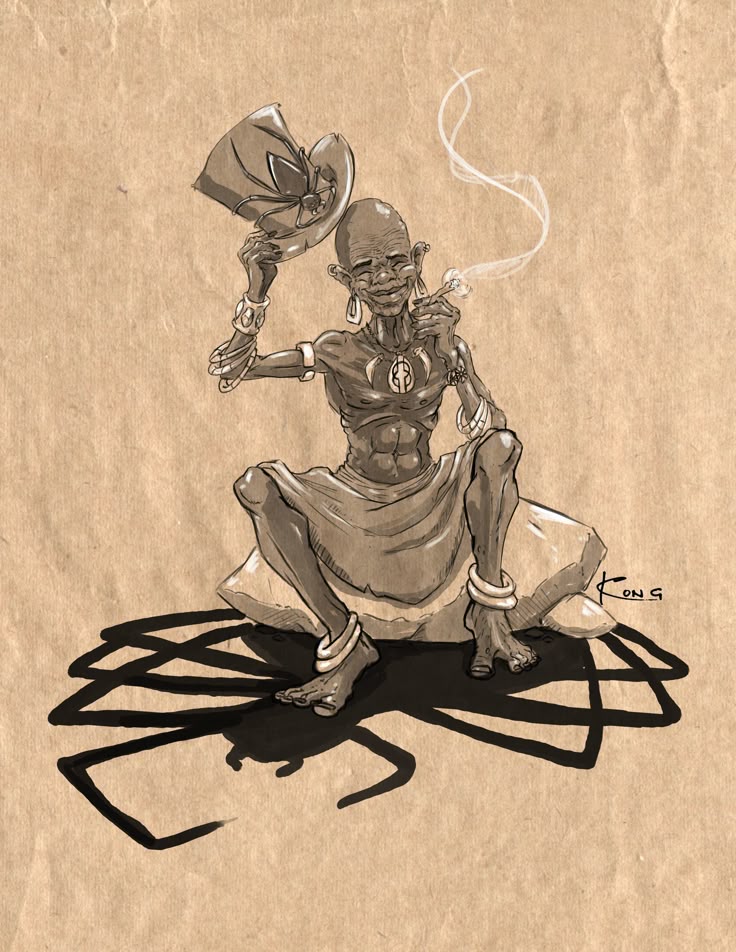
Across West Africa and the African diaspora, few folkloric figures are as beloved and enduring as Ananse (also spelled Anansi). Known as a spider, a man, or sometimes a spider-man, Ananse is the classic trickster—clever, witty, and endlessly resourceful. Through his adventures, generations have learned lessons about wisdom, greed, humility, and the power of storytelling itself.
Ananse stories are not just entertainment; they are cultural archives, moral guides, and living connections to African heritage that continue to resonate today.
Origins of Ananse
Ananse originates from the Akan people of Ghana, where his stories are known as Anansesɛm, meaning “stories of Ananse.” In traditional Akan society, storytelling was a vital part of community life, often shared orally in the evenings. Elders used Ananse tales to educate children, preserve history, and reflect human behavior.
With the transatlantic slave trade, Ananse stories traveled across the Atlantic, taking root in the Caribbean, South America, and North America. In places like Jamaica, Suriname, and Trinidad, Ananse became a symbol of resilience and survival, adapting African wisdom to new and often harsh realities.
Who Is Ananse?
Ananse is best described as a trickster figure—a character found in many cultures around the world. Unlike heroes who rely on strength, Ananse survives through:
Intelligence and strategy Humor and deception Creativity and adaptability
He often challenges stronger animals, gods, or humans and wins through clever plans. However, Ananse is far from perfect. His greed, selfishness, and pride frequently lead to his downfall, making his stories deeply human and relatable.
Famous Ananse Stories How Ananse Got the Stories
One of the most famous Ananse tales explains why stories are associated with him at all. According to the legend, all stories once belonged to Nyame, the Sky God. Ananse desired them and was given seemingly impossible tasks: to capture powerful creatures like the python, the leopard, and a swarm of hornets.
Using wit instead of force, Ananse completed each task and earned the stories, which were then shared with humanity. This tale highlights Ananse’s defining trait—the triumph of intelligence over brute strength.
Why Spider Has a Thin Waist
In another popular story, Ananse’s greed causes him to hide food from his family, tying it around his waist to eat later. When trouble arises, the rope tightens painfully, leaving Spider with a thin waist forever. The lesson is clear: selfishness has consequences.
Themes and Lessons in Ananse Stories
Ananse stories are rich with meaning and often carry important moral lessons, such as:
Wisdom is more powerful than strength Greed and dishonesty lead to trouble Humor can be a form of resistance Mistakes are part of being human
Rather than preaching morality, these stories invite listeners to laugh, reflect, and learn naturally.
Ananse in the African Diaspora
In the Caribbean, Ananse stories took on new significance. Enslaved Africans used these tales as coded lessons in survival, teaching cleverness, unity, and resistance without drawing the attention of slave masters. Ananse became a quiet symbol of outsmarting oppression.
Today, Ananse remains a central figure in Caribbean folklore, children’s literature, music, and theater, keeping African traditions alive across generations.
Ananse in Modern Culture
Ananse continues to inspire modern storytelling. He appears in:
Children’s books and animations Oral storytelling festivals Academic studies of folklore and mythology Contemporary novels and fantasy (often reimagined for new audiences)
Through these adaptations, Ananse proves that ancient stories can still speak to modern challenges.
Why Ananse Still Matters
Ananse reminds us that:
Intelligence can challenge injustice Laughter can carry deep wisdom Stories connect us to our roots
In a world that often values power and dominance, Ananse celebrates cleverness, resilience, and humanity.
Conclusion
Ananse is more than a spider in a story—he is a cultural symbol, a teacher, and a survivor. From the villages of Ghana to the islands of the Caribbean and beyond, his tales continue to educate, entertain, and empower.
As long as stories are told, Ananse will remain spinning his web of wisdom, reminding us that sometimes the smallest voice can carry the greatest truth.